
Why Custom Homes Take Longer: A Builder's Guide
- Yorgo

- Jul 4
- 8 min read

Custom home construction takes longer than volume building because every element, from the floor plan to the fixtures, is designed and built from scratch. Where a volume builder repeats the same plan dozens of times, a custom build starts at zero each time. Custom home projects in Australia typically take 18–30 months total, with construction alone lasting 10–18 months. That timeline surprises most first-time builders, and understanding why custom homes take longer is the first step toward managing your expectations and protecting your budget.
Why custom homes take longer: the core reasons
Custom builds involve a chain of decisions, approvals, and coordination steps that volume homes skip entirely. A volume builder pre-approves a standard design, pre-orders materials in bulk, and runs the same trades through the same sequence every time. A custom build requires a unique design, a site-specific engineering assessment, individual council approval, and a trade schedule built around one-off specifications. Each of those steps adds time, and they often depend on each other.
Delays are more often caused by administrative and decision-making bottlenecks than by the physical speed of construction labor. That is a counterintuitive truth worth sitting with. Your builder’s crew may be ready to work, but a missing council approval or an unresolved design question can halt the site completely. Knowing this shifts your focus to the right places: decisions, paperwork, and planning.
How does design complexity affect the build timeline?
Bespoke architectural features take longer to design, engineer, and build than standard ones. A cantilevered deck, a curved staircase, or a double-height void all require specialist structural engineering, specialist trades, and often custom-fabricated components. Each of those elements adds lead time before a single nail is driven.
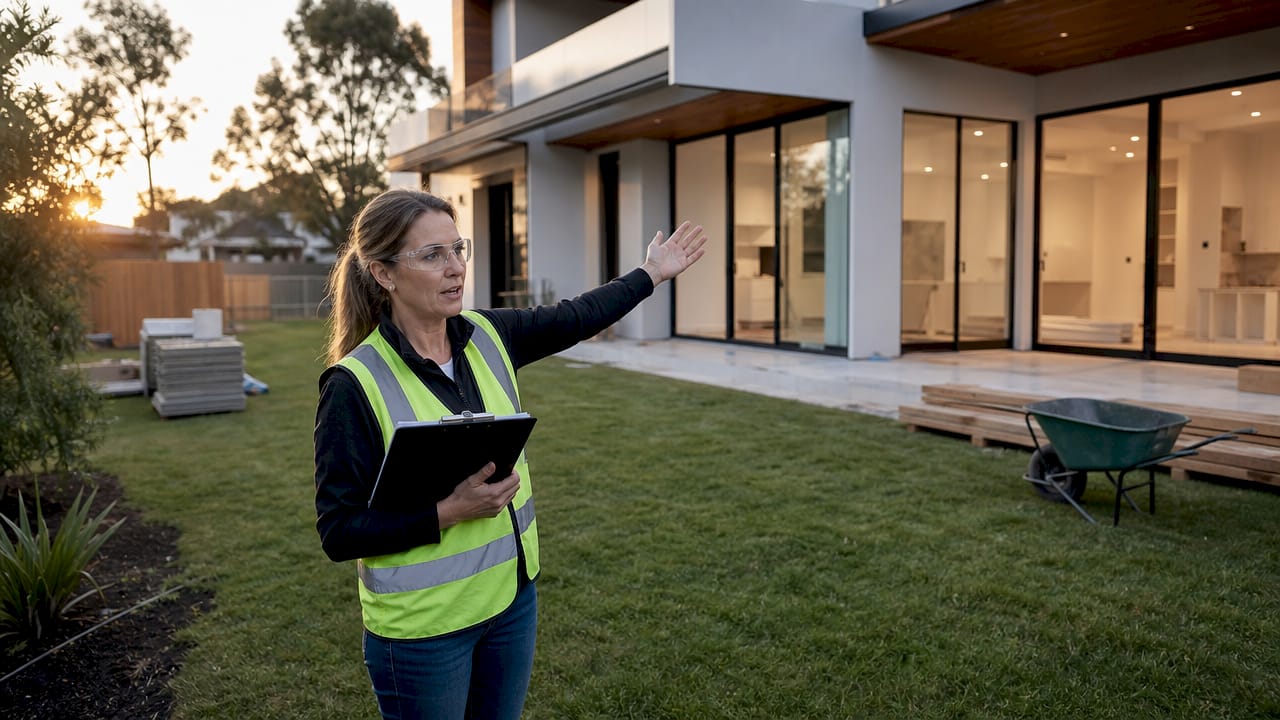
Late-stage design changes can affect up to 30% of project scope and add 4–8 weeks per incident. That figure compounds fast. Two or three significant changes during construction can push your completion date back by three to five months. The rescheduling ripple affects not just the changed element but every trade that follows it.
Common design-related delay triggers include:
Changing kitchen layouts after cabinetry has been ordered
Upgrading window specifications after framing is complete
Adding a bathroom or altering plumbing rough-in locations mid-build
Requesting structural changes that require new engineering certification
Pro Tip: Lock your design and finishes selections before construction begins. Every change made after the contract is signed costs more money and more time than the same change made during the design phase.
The finishing phase compounds this further. The final 10% of build work, including custom joinery, specialty finishes, and bespoke fixtures, often takes longer than the early structural stages. Builders call this “finishing fatigue.” Progress looks slow because the work is detail-intensive, not because momentum has stalled.
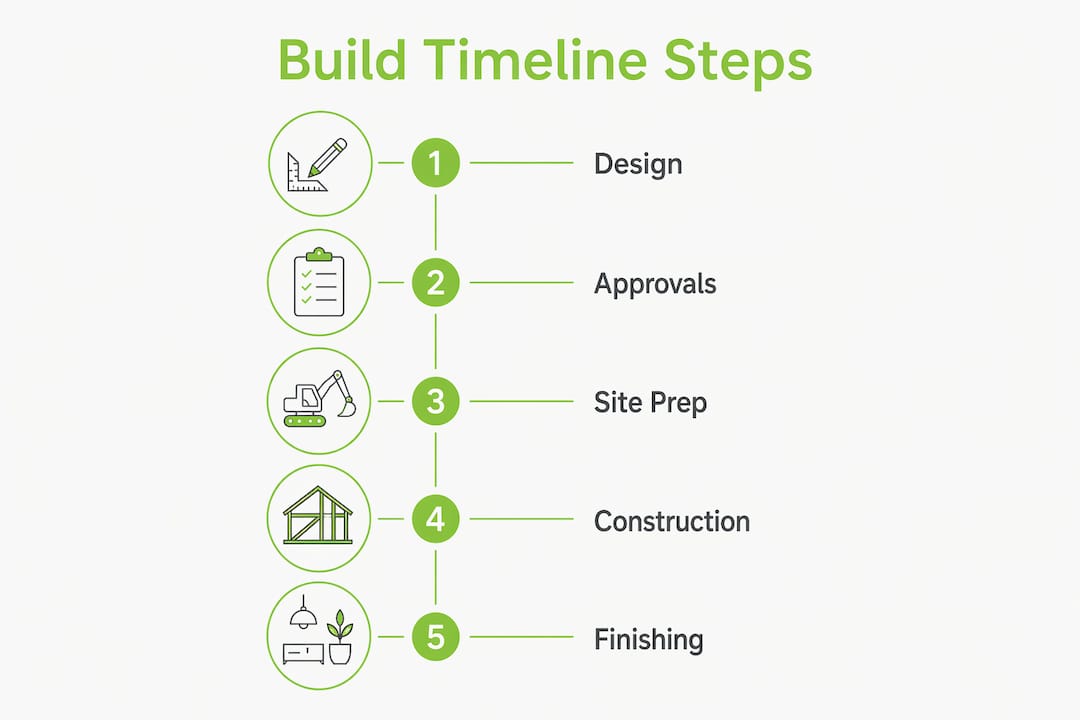
How do regulatory approvals slow down a custom build?
Regulatory compliance is one of the most underestimated factors in custom home project duration. Pre-construction approval phases can add 4–26 weeks depending on your state and the complexity of your design. That window sits entirely outside your builder’s control.
Nearly 88% of small builders report approval delays exceeding 8 weeks, and 1 in 3 experience delays of more than 6 months due to administrative and regulatory compliance. Those numbers reflect the current reality of building in Australia. The National Construction Code 2025 updates have added new compliance requirements around energy efficiency, waterproofing, and structural standards, all of which require additional documentation and assessment time.
The approval process for a custom home typically includes:
Development application (DA) or building permit lodgment
Council assessment, which may include referrals to heritage, flood, or bushfire overlays
Engineering certification for structural and civil elements
Energy efficiency assessment under NCC 2025 standards
Approval of any design variations submitted during construction
Each of these steps involves a third party with its own processing queue. You can choose a local Melbourne builder who knows the local council’s requirements and typical processing times, which reduces the risk of avoidable back-and-forth.
What site conditions cause unexpected delays?
The ground beneath your home tells its own story, and sometimes that story involves surprises. Sloping or complex sites require extended earthworks and foundation work, and when builders encounter unexpected rock during excavation, mechanical breaking adds 4–8 weeks before vertical construction can begin. That delay is impossible to fully forecast until the excavator hits it.
Here is the sequence of site-related delays that commonly stack up on a custom build:
Geotechnical assessment reveals soil conditions requiring a more expensive slab or piling system.
Excavation encounters rock, requiring mechanical breaking over several weeks.
Drainage issues require civil engineering redesign before footings can be poured.
Wet weather halts concrete pours and delays framing, since timber framing cannot be left exposed to prolonged rain.
Retaining walls on sloping blocks require separate engineering and council approval, adding weeks to the pre-slab phase.
Pro Tip: Commission a geotechnical report before signing your building contract. A soil test costs a few hundred dollars and can reveal conditions that would otherwise surface as expensive surprises during excavation.
Weather is a factor that builders plan around but cannot eliminate. Concrete pours require dry conditions and specific temperature ranges. Extended wet seasons in Melbourne can push back the slab and framing stages by weeks, and those delays flow through every subsequent trade.
How do material sourcing and trade coordination extend timelines?
Specialty materials are one of the clearest reasons why custom homes cost more and take longer than standard builds. Material lead times for imported stone, custom glazing, and bespoke fixtures are frequently underestimated by homeowners. An imported stone benchtop may have a 16-week lead time. Custom steel windows can take 20 weeks from order to delivery. If those items are not ordered during the design phase, they become the critical path item that holds up the entire fit-out.
Trade coordination adds another layer of complexity. Custom builds require specialist trades that volume builders rarely use: structural steel fabricators, custom joinery makers, polished concrete finishers, and heritage plasterers. Specialist trade availability and delayed responses to Requests for Information are common delay sources on complex projects. When a trade is unavailable for two weeks, every trade that follows them waits too.
Delay source | Typical impact |
Imported stone or custom glazing | 12–20 week lead time if not ordered early |
Specialist trade unavailability | 2–4 week scheduling gap per incident |
Late RFI responses | Work pauses until design clarification is received |
Design variation requiring re-approval | 4–8 weeks per incident |
Poor communication between the builder, consultants, and trades is the thread that connects most of these delays. Administrative bottlenecks like delayed RFIs and late design modifications requiring re-approval commonly halt site progress despite available labor. A builder with strong project management systems catches these issues before they stop work.
Practical strategies to keep your custom build on track
You have more influence over your build timeline than most homeowners realize. The decisions you make before and during construction directly affect how smoothly the project runs.
Finalize your design before construction starts. Every selection, from tiles to tapware, should be confirmed before your builder breaks ground. Late selections are one of the most controllable causes of delay.
Order long-lead items early. Work with your builder to identify specialty materials and place orders during the design phase, not after the slab is poured.
Understand your approval timeline upfront. Ask your builder to walk you through the pre-construction approval process and give you a realistic estimate of council processing times in your area.
Communicate regularly with your builder. Weekly or fortnightly site meetings keep you informed and give you the chance to make decisions quickly when they are needed.
Use milestone inspections. Independent building inspectors at key stages, including pre-slab, frame, and lock-up, catch issues before they become expensive rework.
Pro Tip: Ask your builder for a master program at the start of construction. A well-maintained program shows you which trades are scheduled when, which materials need to be on-site by which date, and where the critical path sits. It turns a complex build into a readable schedule.
Understanding the key considerations when building a custom home before you sign a contract gives you a significant advantage. Builders who communicate well and manage their programs tightly consistently deliver better outcomes than those who rely on experience alone.
Key Takeaways
Custom home builds take longer because design complexity, regulatory approvals, site conditions, material lead times, and trade coordination each add weeks or months at different phases of the project.
Point | Details |
Design changes are costly | Late-stage variations add 4–8 weeks per incident and affect up to 30% of project scope. |
Approvals take longer than expected | Pre-construction approval phases add 4–26 weeks, and 88% of small builders report delays over 8 weeks. |
Site surprises are common | Rock excavation and drainage issues add 4–8 weeks before vertical construction can begin. |
Specialty materials need early ordering | Imported stone and custom glazing carry 12–20 week lead times that stall fit-out if missed. |
Project management drives the timeline | Most delays come from administrative bottlenecks, not the speed of on-site labor. |
What I’ve learned after nearly 20 years of custom builds
The question we hear most often at Yorcon is some version of: “Why is it taking so long?” And the honest answer is almost never “because the trades are slow.” It is almost always because a decision was delayed, an approval took longer than expected, or a material was not ordered in time.
The misconception that frustrates me most is the idea that a bigger crew means a faster build. On a custom home, throwing more people at the problem rarely helps. What actually moves the needle is having the right information at the right time: confirmed selections, approved drawings, and materials on-site when the trade arrives. That is a project management problem, not a labor problem.
Patience is not passive on a custom build. The homeowners who get the best outcomes are the ones who stay engaged, make decisions quickly, and trust their builder’s program. They ask good questions early, like what to ask your home builder before signing, and they treat the build as a collaboration rather than a transaction. The homes we are most proud of at Yorcon are the ones where the client and the team were genuinely aligned from day one.
— Matthew
Building your custom home with Yorcon
At Yorcon, we have spent nearly 20 years managing the full complexity of custom residential builds across Melbourne. We know where delays hide and how to get ahead of them.
Our architectural home building and design and build services are built around transparent project management, early material procurement, and consistent communication with every client. Whether you are planning a new custom home, a significant extension, or a full renovation, we manage the approvals, the trades, and the program so you are never left wondering what is happening on your site. Contact Yorcon to talk through your project and get a realistic picture of what your timeline looks like from day one.
FAQ
How long does a custom home take to build in Australia?
Custom home projects in Australia typically take 18–30 months in total, with construction lasting 10–18 months and pre-construction approvals adding 4–26 weeks depending on the state and design complexity.
What causes the most delays in a custom home build?
Most delays stem from administrative bottlenecks, late design decisions, and regulatory compliance requirements rather than the speed of on-site construction labor.
Can I speed up the council approval process?
You can reduce approval delays by working with a builder who knows your local council’s requirements, submitting complete and accurate documentation the first time, and avoiding design changes after lodgment.
Why do design changes during construction cause such long delays?
A design change during construction triggers a chain reaction: materials must be reordered, trades must be rescheduled, and the variation may require new engineering certification or council approval, adding 4–8 weeks per incident.
Why do custom homes cost more than volume-built homes?
Custom homes cost more because every element is designed and built once, specialty materials carry higher prices and longer lead times, specialist trades charge premium rates, and the extended project duration increases holding and financing costs.
Recommended


