
The Role of Project Manager in a Home Build
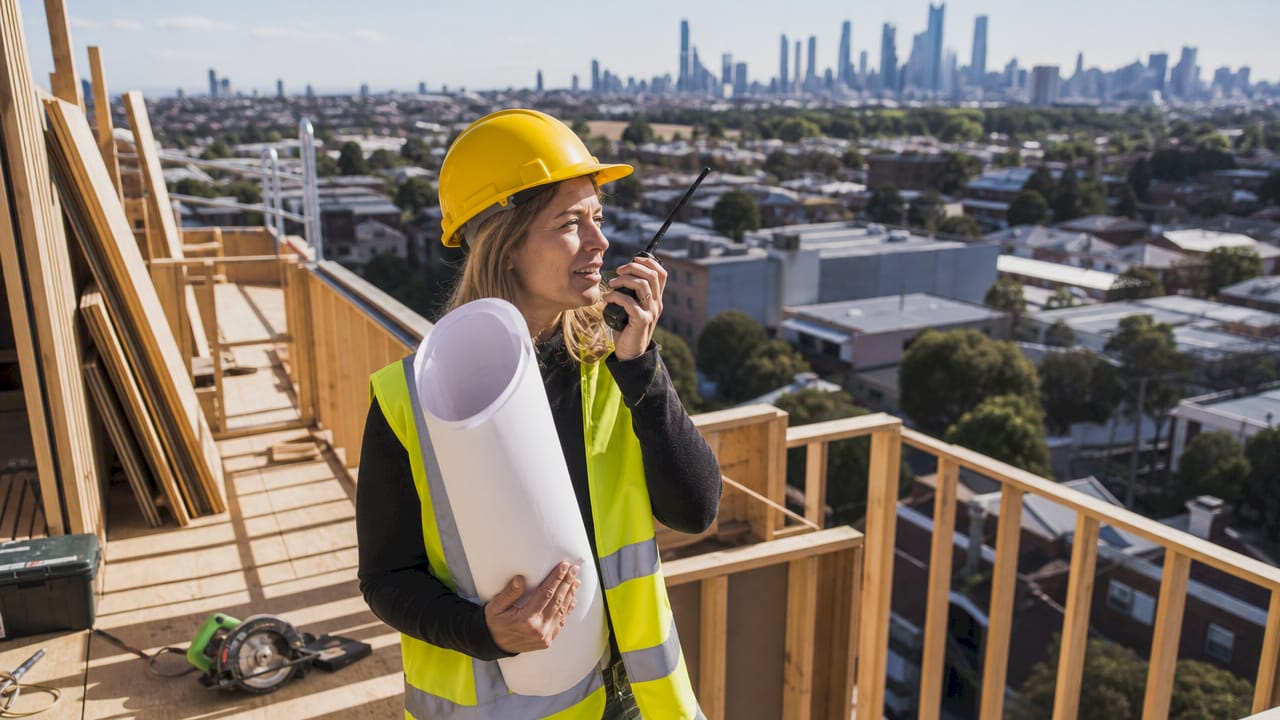
A home building project manager is the dedicated professional responsible for coordinating every phase of your home’s construction. In residential construction, this role is formally known as a Construction Project Manager, and understanding the role of project manager in a home build is the single most important thing a first-time builder can do before breaking ground. This person interprets architectural drawings, schedules subcontractors, tracks your budget, and keeps the whole build moving forward. Without that central coordinator, even well-funded projects lose weeks to miscommunication, missed inspections, and trade conflicts. At Yorcon, we see this play out constantly, and the difference a skilled project manager makes is not subtle.
What are the main responsibilities of a home construction project manager?
A Construction Project Manager handles the entire project lifecycle, from reading the first set of drawings to signing off on the final inspection. That scope is broader than most homeowners expect. It covers procurement, safety compliance, quality control, and direct liaison with local authorities.
Here is what that looks like in practice:
Interpreting architectural drawings. The project manager translates plans into a build sequence that trades can actually follow on site.
Coordinating subcontractors. Framers, electricians, plumbers, and plasterers all need to arrive in the right order. Scheduling conflicts between trades are one of the most common causes of delay.
Managing material procurement and deliveries. Ordering materials too early ties up cash and clutters the site. Ordering too late stalls the build. A project manager times both.
Monitoring building code compliance. Every stage of construction must meet local regulations. The project manager tracks these requirements and arranges mandatory inspections.
Budget tracking. Costs are logged against the approved budget at every stage, so variations are caught early rather than discovered at the end.
Stakeholder communication. You, your architect, your engineer, and your trades all need consistent updates. The project manager is the single point of contact that keeps everyone aligned.
Construction managers act as the steady center of the project, providing controlled answers when delays or changes occur. That stability is exactly what first-time builders need most.
Pro Tip: Ask your project manager to provide a written schedule before construction begins. A clear program with milestone dates gives you a reference point for every conversation that follows.

How does a project manager differ from a builder during a home build?
Many homeowners assume the builder and the project manager are the same person. This misunderstanding blurs responsibilities and creates accountability gaps that can be very costly to untangle mid-build.
The distinction is straightforward. A licensed builder is legally responsible for physically delivering the construction. The builder holds the license, carries the insurance, and employs or subcontracts the trades doing the physical work. A project manager, by contrast, oversees the process. The project manager plans, coordinates, monitors quality, and communicates, but does not replace the licensed builder.
Role | Primary function | Legal accountability |
Licensed builder | Physical construction delivery | Holds builder’s license and statutory warranty |
Project manager | Coordination, planning, and oversight | Manages time, cost, and quality on behalf of the owner |
Site foreman | Daily on-site leadership | Reports to the builder |
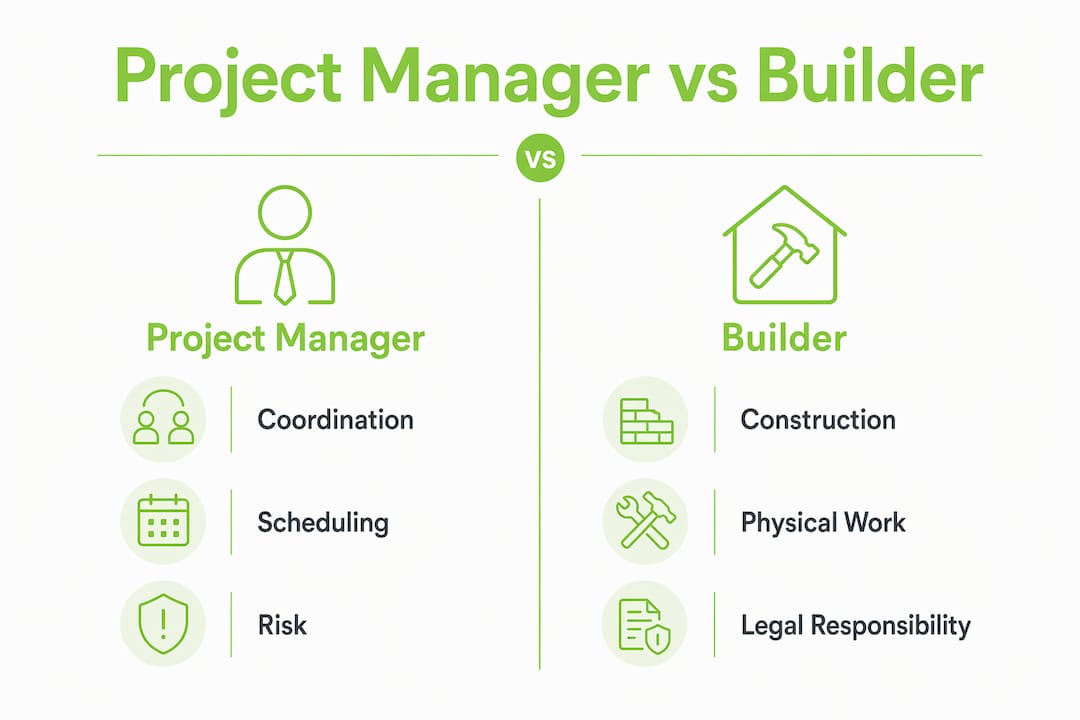
Project managers provide critical oversight and risk identification, but they rely on licensed builders for the physical work. The two roles are complementary, not interchangeable.
For most family homes, the cleanest arrangement is a builder who also provides integrated project management. Engaging a builder with integrated project management yields clearer accountability, simplifies contracts, and aligns planning, approvals, pricing, and on-site supervision under one entity. That setup reduces the number of contracts you manage and the number of phone calls you need to make.
Why is hiring a project manager beneficial for first-time home builders?
The time commitment alone makes professional management worth it. Owner-managed builds require 2,800–3,400 hours of management time for a 220m² home, compared to 80–180 hours when a professional handles it. That is the equivalent of working a full-time job for over a year, on top of your actual job.
The financial case is equally strong. Here is what professional project management protects you from:
Budget overruns. A project manager tracks costs at every stage and flags variations before they compound. Owner-builders often discover overruns only when the money runs out.
Extended timelines. Owner-managed builds may extend from a typical 9–12 months to 16–24 months without professional coordination. Every extra month carries holding costs.
Trade rate inflation. Owner-builders pay a premium of 12–22% on trade rates because they lack the volume purchasing power and contractor relationships that professional builders maintain. That gap quietly erodes any savings from self-managing.
Legal and safety exposure. An owner-builder permit legally transfers all workplace safety, insurance, and building responsibilities to the homeowner. You must verify every subcontractor’s license and insurance across more than 178,000 active trade licenses in Australia.
Resale risk. Owner-built homes sold within six years can carry resale discounts of $80,000–$150,000 due to the absence of licensed builder home warranty insurance. That is a financial consequence most first-time builders never anticipate.
Stat to know: Homeowners commonly underestimate the time and complexity of self-managing a build by 60–80%, which leads to extended timelines and stress well beyond the physical construction phase.
Pro Tip: Before signing any contract, ask your builder or project manager to walk you through the pre-construction workflow. Understanding what happens before the first slab is poured sets realistic expectations for the entire build.
What challenges can arise when working with a project manager?
Working with a project manager is not without friction, especially when roles are not clearly defined from the start. Knowing where the common pressure points are helps you prepare for them.
Blurred accountability. When the builder and project manager are separate parties, disputes over who owns a problem can stall decisions. Define each party’s responsibilities in writing before work begins.
Decision delegation. A project manager will make hundreds of small decisions on your behalf. Agree upfront on which decisions require your approval and which can be made independently. Without that boundary, you either get bottlenecks or surprises.
Change order conflicts. Variations to the original scope are a normal part of any build. The risk is when changes are verbal and undocumented. Require every variation to be submitted in writing with a cost and time impact before approval.
Communication gaps. If your project manager, builder, and architect are not talking to each other regularly, you become the messenger. Set a fixed weekly update cadence and confirm who attends.
Scope creep. Small additions feel harmless in isolation. A project manager tracks cumulative scope changes, but only if you give them authority to flag and price each one.
Clear distinction between the project manager and site foreman avoids communication gaps and improves project control. That clarity starts with the contracts you sign, not the conversations you have on site.
A useful reference for understanding what happens after contracts are signed is Yorcon’s guide on post-contract expectations. It covers the workflow and communication structure that a well-run project manager maintains from day one.
How do you choose and work effectively with a home building project manager?
Choosing the right person for home building project oversight is as important as choosing the right design. Credentials matter, but so does fit.
A useful residential design planning checklist covers the step-by-step workflow that professional project managers follow, which gives you a practical benchmark for evaluating candidates.
When evaluating a project manager, focus on these areas:
Qualifications. Look for formal training in construction management or a related field, plus demonstrated experience with residential projects of similar size and complexity to yours.
Questions to ask. How many projects are you managing simultaneously? Who is your backup if you are unavailable? How do you handle variations and disputes?
Scope clarity. Get the full scope of the project manager’s responsibilities in writing before signing. Ambiguity in the contract becomes conflict on site.
Communication structure. Agree on how often you receive updates, in what format, and who your primary contact is. Weekly written reports are a reasonable minimum.
Cost structure. Project managers typically charge a fixed fee, a percentage of the build cost, or an hourly rate. Understand what is included and what triggers additional fees.
The questions you ask your builder apply equally to a project manager. Accountability, communication style, and experience with your project type are the three things that matter most.
Key Takeaways
A home construction project manager is the single most important coordinator in your build, responsible for keeping time, cost, and quality on track from the first drawing to the final inspection.
Point | Details |
Central coordinator role | The project manager oversees planning, trades, compliance, and communication across every build phase. |
Distinct from the builder | Builders deliver physical construction; project managers oversee the process. Confusing the two creates accountability gaps. |
Time and cost protection | Professional management reduces owner time commitment from thousands of hours to under 200 and prevents budget overruns. |
Legal risk reduction | Owner-builders carry full safety, insurance, and warranty liability. A professional project manager works within a licensed structure that protects you. |
Integrated model works best | A builder who also provides project management aligns all phases under one accountable team and simplifies your experience. |
What I’ve learned after nearly two decades of watching builds succeed and fail
The homeowners who struggle most are not the ones with the smallest budgets. They are the ones who underestimated how much coordination a build actually requires. I have seen people with beautiful designs and solid financing watch their projects drag on for two years because no one was truly in charge of the process.
The most common misconception I encounter is that hiring a builder means the project is managed. It is not. Building and managing are two different skills. A great builder who lacks project management discipline will still deliver a quality home, but it will take longer, cost more, and cause you far more stress than it should.
What actually works is a single accountable party who holds both the builder’s license and the project management responsibility. When those two functions sit under one roof, decisions happen faster, problems get resolved before they escalate, and you spend your weekends living your life instead of chasing subcontractors.
My honest advice: before you sign anything, ask directly who is responsible for the schedule, the budget, and the quality checks. If you get a vague answer, that is your answer.
— Matthew
Yorcon’s approach to home building in Melbourne
Yorcon brings nearly 20 years of experience to every residential project in Melbourne, from home extensions and renovations to full architectural builds and heritage restorations. What sets Yorcon apart is that project management is not an add-on. It is built into every engagement from the first consultation.

For first-time builders especially, that integrated model means one team, one contract, and one point of contact for every question and decision. You get the clarity of knowing exactly who is responsible for your build at every stage. If you are planning a home extension or new build in Melbourne and want to understand what that looks like in practice, Yorcon’s team is ready to walk you through it.
FAQ
What does a project manager do in a home build?
A home construction project manager coordinates every phase of the build, including scheduling trades, tracking the budget, managing compliance, and communicating with all stakeholders. Their role is to keep the project on time and on budget from planning through to completion.
Is a project manager the same as a builder?
No. A licensed builder is legally responsible for physical construction, while a project manager oversees coordination, planning, and quality control. The two roles are complementary, and the clearest setup is a builder who provides integrated project management under one contract.
How much time does self-managing a home build actually take?
Owner-managed builds typically require 2,800–3,400 hours of management time for a standard-sized home, compared to 80–180 hours when a professional project manager handles coordination. That difference represents months of full-time work.
What are the financial risks of not using a professional project manager?
Without professional oversight, owner-builders face trade rate premiums of 12–22%, extended timelines that add holding costs, and potential resale discounts of $80,000–$150,000 due to the absence of licensed builder home warranty insurance.
What qualifications should a home building project manager have?
Look for formal training in construction management, demonstrated experience with residential projects of similar scale, and a clear track record of delivering projects on time and within budget. Always confirm their scope of responsibilities in writing before work begins.
Recommended


