
How to Increase Home Value Through Extension

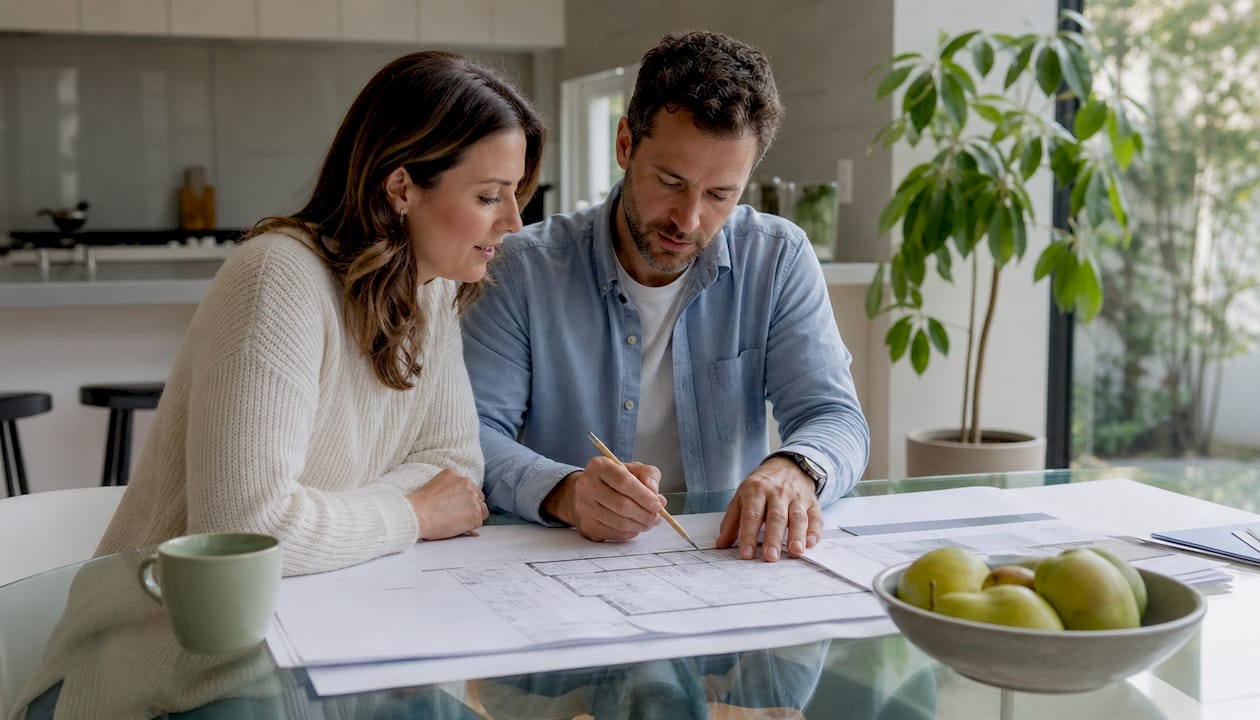
A well-planned home extension is one of the most effective ways to increase home value through extension while improving how you actually live in your property. Unlike cosmetic upgrades, a thoughtfully designed extension adds usable square footage, improves layout flow, and signals quality to future buyers. Adding a fourth bedroom and second bathroom can raise property value by 10–15%. The critical factor is alignment: extensions that match your suburb’s buyer expectations and price ceiling deliver the strongest returns. Get that right, and your extension pays for itself and then some.
What types of home extensions add the most value?
Not all extensions return equal value. The ones that consistently perform best solve a real problem for buyers, whether that’s a missing bedroom, a cramped kitchen, or a lack of outdoor living space.
Here are the extension types that deliver the strongest returns:
Extra bedrooms and second bathrooms. A four-bedroom home with two bathrooms appeals to a much wider buyer pool than a three-bedroom, one-bathroom property. Family homes with two or more bathrooms are consistently favored in resale markets. That preference translates directly into higher offers.
Open-plan kitchen, dining, and living zones. Functional living spaces attract buyers more reliably than oversized additions with poor layout. An open-plan rear extension that connects the kitchen to an outdoor area is one of the most requested configurations in Melbourne’s inner and middle-ring suburbs.
Second-storey additions. Going up can effectively double your usable floor area without reducing your backyard. The cost per square meter is higher than a ground-floor extension, but the value uplift in land-constrained suburbs often justifies it. You can read more about extending up versus out to decide which suits your block.
Covered alfresco and outdoor living areas. Natural light, ceiling height, and outdoor integration have strong impacts on perceived value without large added costs. A covered alfresco connected to an open-plan living zone adds lifestyle appeal that photographs well and sells fast.
Improved layout and storage. Reconfiguring outdated floor plans often yields better ROI than larger additions with poor usability. Buyers notice when a home flows well. They also notice when it doesn’t.
The common thread across all high-value extensions is function. More space only adds value when it solves a real problem.
How do you avoid overcapitalizing on a home extension?
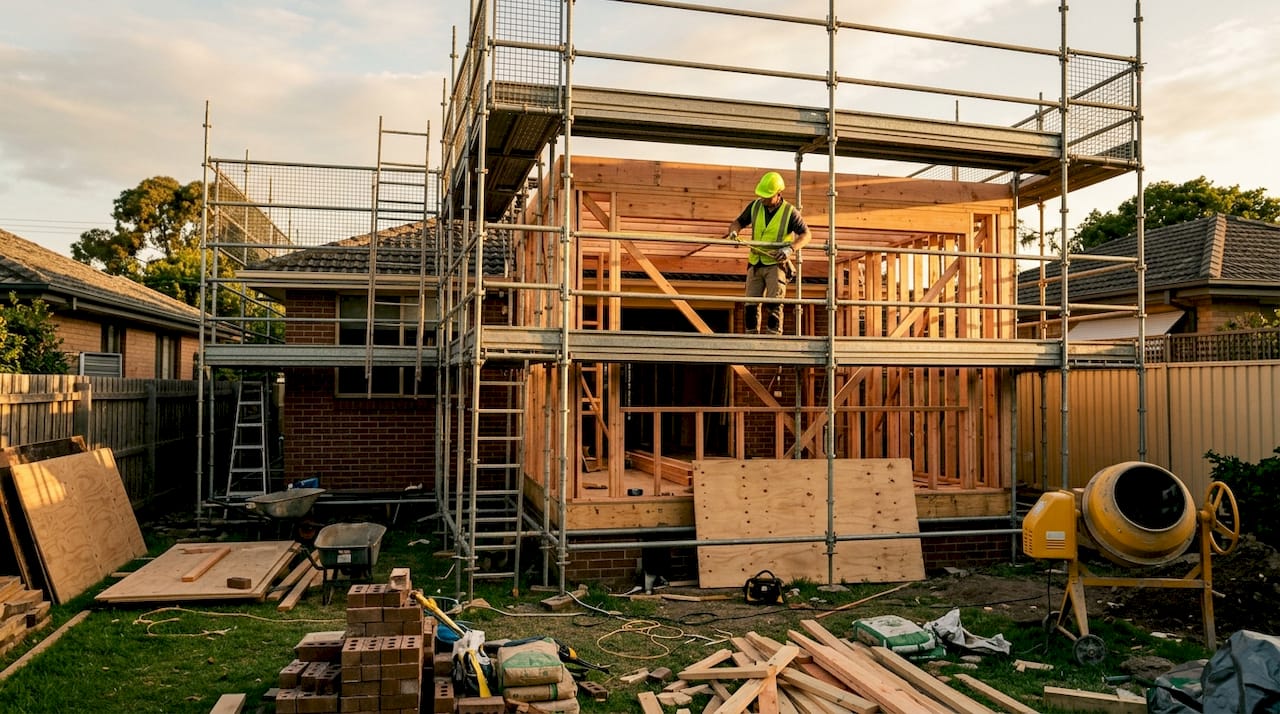
Overcapitalizing is the most common financial mistake homeowners make with extensions. It happens when the total cost of your home, including the extension, exceeds what buyers in your suburb will pay.
Every suburb has a price ceiling. It’s the point beyond which comparable sales simply don’t go, no matter how good the property is. Extending beyond the median street or suburb price results in lower financial recovery. You spend $300,000 on an extension, but the market only rewards you with $150,000 in added value. That gap is money you cannot recover.
The table below shows how market-aligned and overcapitalized extensions compare in practice:
Scenario | Extension cost | Estimated value uplift | Outcome |
Market-aligned extension | $200,000 | $220,000–$260,000 | Positive ROI |
Overcapitalized extension | $350,000 | $150,000–$180,000 | Significant loss |
Budget extension, poor design | $120,000 | $80,000–$100,000 | Marginal return |
Research comparable sales in your street before you commit to a scope. Look at what three-bedroom homes sell for versus four-bedroom homes. That gap tells you the maximum you should spend on adding a bedroom. If the gap is $80,000, spending $200,000 on that addition is a losing bet.
Match your finishes to the neighborhood standard too. Premium stone benchtops and imported tiles belong in a $2.5 million suburb. In a $900,000 suburb, they add cost without adding proportional value. Alignment with the suburb ceiling is the single most critical factor for valuation uplifts after an extension.
How to plan a home extension that adds real value
A value-adding extension doesn’t happen by accident. It requires a clear process from the first conversation to the final inspection.
Get a current property valuation. Know your starting point. A licensed valuer gives you an objective figure and helps you understand your suburb’s ceiling price before you commit to a scope.
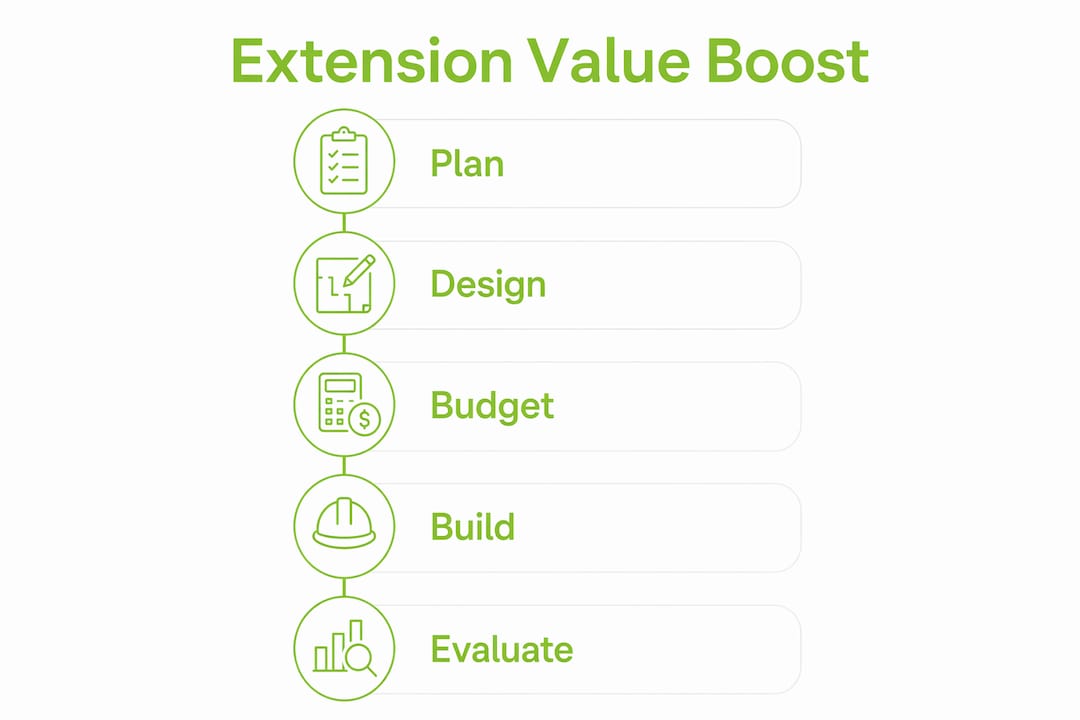
Define your needs and your budget. Be specific about what you need: an extra bedroom, a larger kitchen, a second bathroom. Typical extension costs range from $150,000 to $400,000 depending on size, location, and finishes. Set a realistic budget and add a 10–15% contingency for unexpected costs.
Choose the right extension type. Match the extension to your lifestyle needs and your suburb’s buyer profile. A growing family in a four-bedroom suburb needs a different solution than a couple in an inner-city terrace.
Prioritize design quality over size. Work with a designer who understands how natural light, room adjacency, and storage affect liveability. A smaller, well-designed extension outperforms a larger, poorly planned one every time.
Lock in your scope before construction starts. Changes during the build are expensive. Owner-initiated changes during construction account for roughly 40% of mid-project cost increases. Decide everything before the first nail goes in.
Secure all permits and approvals. Unpermitted work creates legal liability and can block a future sale. Your builder should manage this process, but you should confirm it is done.
Choose a builder with a track record in extensions. Experience matters. A builder who specializes in extensions understands how to integrate new work with existing structure, services, and finishes.
Pro Tip: Ask your builder to show you completed projects in suburbs similar to yours. Seeing how they handle the transition between old and new construction tells you more than any brochure.
Planning step | Key action | Why it matters |
Valuation | Engage a licensed valuer | Sets your suburb ceiling benchmark |
Budget | Add 10–15% contingency | Covers unexpected site or structural costs |
Design | Prioritize light, flow, storage | Improves liveability and buyer appeal |
Scope lock | Finalize all decisions pre-build | Prevents costly mid-project changes |
Permits | Confirm approvals before work starts | Avoids legal issues at resale |
One factor homeowners often overlook is climate control. A well-designed extension should include proper heating and cooling from the start. A new HVAC system can meaningfully improve a home’s appraisal value, particularly when it serves a newly extended living area. Factor it into your design budget rather than retrofitting it later.
Common mistakes that reduce the value of a home extension
Even well-intentioned extensions can fall short when homeowners make avoidable errors. These are the mistakes we see most often, and the ones that cost the most.
Scope creep during construction. This is the single biggest budget killer. You add a skylight here, upgrade the flooring there, and suddenly your $250,000 project becomes a $350,000 one. Maintaining original scope is the most effective way to prevent mid-project budget blowouts.
Ignoring the suburb price ceiling. Spending more than your suburb supports is a financial loss, not an investment. Research your local sales data before finalizing your scope.
Poor integration with the existing home. An extension that feels bolted on, with mismatched ceiling heights, different flooring, or awkward transitions, reduces buyer confidence. Good design makes the new work feel original.
Skipping permits and approvals. Unpermitted extensions are a serious problem at resale. Buyers’ solicitors find them, and they either kill the deal or force a price reduction. Always build to code.
Premium finishes in the wrong suburb. Luxury finishes add cost, not necessarily value. Match your specification to what buyers in your area expect and pay for.
Pro Tip: Before signing off on any variation during construction, ask your builder to calculate the full cost impact and the likely value return. If the numbers don’t stack up, hold the line on your original scope.
Benefits of home extensions compound over time, particularly for homeowners who plan to stay in the property for five or more years. Homeowners staying 5+ years gain the most from extensions, as lifestyle and financial returns build together. That long-term lens also changes how you think about finishes and design: invest in quality that lasts, not trends that date.
Key Takeaways
A well-planned extension aligned with your suburb’s price ceiling delivers the strongest return on investment while improving how you live in your home.
Point | Details |
Extension type matters | Bedrooms, bathrooms, and open-plan living zones add the most measurable value. |
Suburb ceiling is the key constraint | Spending beyond your suburb’s median price cap reduces financial recovery significantly. |
Design beats size | Natural light, storage, and layout flow add more value than raw square footage. |
Lock scope before building | Owner-driven changes cause 40% of mid-project cost increases. |
Long-term occupancy improves ROI | Homeowners staying 5+ years benefit most as lifestyle and financial returns compound. |
What I’ve learned after nearly two decades of building Melbourne extensions
After nearly 20 years working on home extensions across Melbourne, the pattern I keep seeing is this: the homeowners who get the best outcomes are the ones who plan slowly and build fast. They spend real time on design, ask hard questions about their suburb’s price ceiling, and lock in every decision before construction starts. Then they let the build run without interference.
The homeowners who struggle do the opposite. They rush the design phase, make changes mid-build, and end up with a project that costs more and delivers less than they expected. Scope creep is not a builder problem. It’s a planning problem.
The other thing I’d say is this: don’t underestimate the value of a good brief. When you can tell your designer exactly how you want to live in the space, what you cook, how your family moves through the house, where the morning light falls, you get a design that actually works. That kind of design adds value because it solves real problems, not because it looks impressive in a photo.
Moving costs in Sydney can reach 8–10% of the purchase price when you factor in stamp duty and agent fees. Melbourne is similar. For most families, a well-executed extension is a far smarter financial decision than relocating. You keep your neighborhood, your schools, and your community. You just get more room to breathe.
— Matthew
Yorcon’s home extension services in Melbourne
Yorcon has spent nearly 20 years helping Melbourne homeowners build extensions that add real, measurable value to their properties. We manage the entire process, from initial design consultation through to final handover, so you always know where your project stands.
Our team works with you to understand your suburb’s market, your lifestyle needs, and your budget before a single drawing is produced. That upfront work is what keeps projects on scope and on budget. Whether you’re planning a rear ground-floor extension, a second-storey addition, or a full home extension in Melbourne, we bring the experience and transparency that make the difference between a stressful build and a successful one. Reach out to Yorcon to book a consultation and get your extension planned the right way from the start.
FAQ
Does a home extension always increase property value?
A well-planned extension that matches local buyer expectations and stays within the suburb’s price ceiling reliably increases property value. Extensions that overcapitalize or integrate poorly with the existing home can reduce financial returns.
What is the best type of extension for adding value?
Adding a bedroom and a second bathroom consistently delivers strong value uplift, with returns of 10–15% in many markets. Open-plan kitchen and living extensions also perform well by improving layout and buyer appeal.
How much should I budget for a home extension?
Single-storey extensions cost $2,500 to $4,500 per square meter in Australia, with total project costs typically ranging from $150,000 to $400,000. Always include a 10–15% contingency for unexpected structural or site costs.
Is extending my home better than moving?
For most Melbourne homeowners planning to stay five or more years, extending is financially smarter than moving. Stamp duty, agent fees, and moving costs can consume 8–10% of a property’s purchase price, making an extension a more cost-effective way to gain space.
How do I avoid overcapitalizing on my extension?
Research comparable sales in your street to understand your suburb’s price ceiling before finalizing your scope. Keep finishes aligned with neighborhood standards, and avoid spending more on the extension than the local market will reward at resale.
Recommended


