
From $40,000: Lock Heritage Restoration Costs in Melbourne with Fixed Fee Scoping

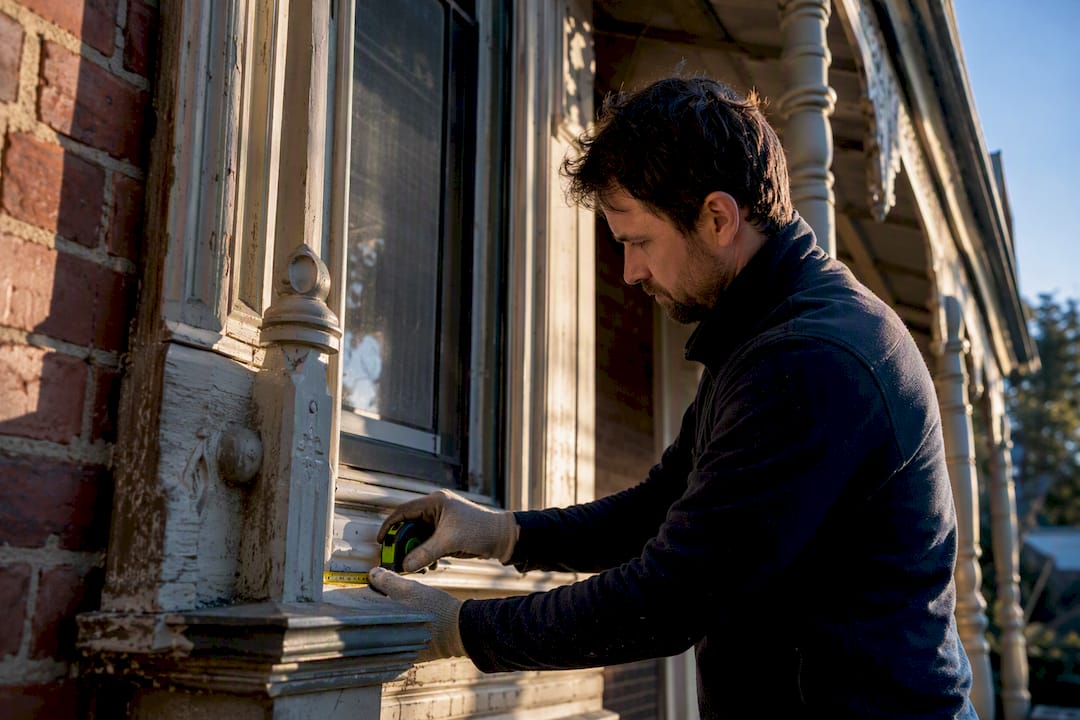
Most Melbourne heritage restorations fall within a broad cost range depending on scope, though full structural work on a large terrace can be significantly more expensive. The single biggest lever on that final figure isn’t the trades, it’s how the job is scoped at the start. Get an architect or heritage consultant to lock in a fixed fee or run a feasibility study before you commit to a build, because permits and specialist trades routinely add months and unbudgeted dollars once walls come off.
TL;DR:
Heritage restoration costs in Melbourne typically range from $40,000 for cosmetic fixes to over $600,000 for structural work on large, heritage-listed homes.
Accurate budgeting requires initial fixed-fee scope assessments and staged contracts to prevent surprise costs from permits, trades, or unforeseen structural issues.
A Heritage Overlay often adds several months to permit approval and requires detailed heritage impact statements and conservation reports with associated fees.
Heritage elements such as leadlight windows, slate roofing, and floor restoration have specific cost ranges that can inform realistic quotes and expense expectations.
Engaging experienced heritage specialists and obtaining multiple fixed-fee scope proposals early can significantly reduce risks and control project costs.
Table of Contents
Heritage restoration cost Melbourne: typical bands by project type
The range is wide because “restoration” covers everything from a paint and repointing job to a full structural rebuild behind a heritage facade. Here is how the bands break down for a typical Victorian or Edwardian terrace or villa in Melbourne’s inner and middle suburbs.
Cosmetic restoration (repainting, minor plaster repair, window and door refurbishment): $40,000 to $90,000. This suits a home in reasonable structural condition where the goal is presentation, not correction.
Sensitive restoration (lath-and-plaster repair, timber floor restoration, roofing, leadlight repair, heritage-matched joinery): $150,000 to $280,000. This is the band most Melbourne heritage renovation projects fall into.
Full services upgrade with restoration (electrical, plumbing, insulation retrofit alongside fabric restoration): $250,000 to $400,000, because you’re paying to modernise a house built before any of that infrastructure existed.
Restoration plus structural work or an extension (underpinning, rear extensions, second-storey additions behind a retained facade): $400,000 upward, sometimes well past $600,000 on larger Victorian-era homes in suburbs like Kew, Hawthorn, or Fitzroy.
Per-square-metre figures get thrown around a lot in general renovation guides, and hipages puts older-home renovation costs at a useful sanity-check range. But per-m2 numbers can mislead on heritage work specifically, because a small heritage bathroom with lead flashing and reinstated cornices can cost more per square metre than a large modern extension next door. Size matters less than what’s being conserved.
What’s actually in a heritage restoration quote
A heritage restoration quote isn’t just labour and materials. It’s a stack of professional fees, statutory costs, and trade work that scale at very different rates, and understanding which line items grow fastest helps you read a quote properly instead of just eyeballing the bottom line.
Architectural and heritage consultant fees. Architects charge either a fixed fee (commonly $15,000 to $60,000 for a heritage project, depending on complexity) or a percentage of construction cost, typically 8% to 15%. Fixed fee is easier to budget against; percentage fees can blow out if the build cost itself grows.
Heritage Impact Statements and conservation reports. Under Clause 43.01 of the Planning Scheme, significant heritage works commonly require a Heritage Impact Statement, and major proposals often need a Conservation Management Plan. Budget a modest amount for a heritage consultant early in the process, a modest cost against the redesign expense it can prevent.
Planning and building permit fees. These vary by council and project value, but expect several thousand dollars once planning permit fees, building permit fees, and any required referrals are tallied.
Major trades and contingency. Lath-and-plaster restoration, Baltic pine floor work, slate roofing, and leadlight repair each carry their own premiums (detailed below). On top of trade costs, allow a contingency of 10% to 20% of total project value, weighted toward the higher end for anything involving demolition of existing linings or excavation near footings.
How the Heritage Overlay changes your cost and timeline
If your property sits under a Heritage Overlay, you’ll almost certainly need a planning permit for exterior works, and in some cases interior work too, depending on what the overlay schedule protects. Melbourne councils apply overlays after formal heritage studies, following a process that includes community consultation, and the resulting schedule to Clause 43.01 varies from one property to the next.
Expect a baseline of several months for permit approval, even when you’ve done pre-application groundwork.
Documentation typically includes a Heritage Impact Statement and, for larger jobs, a full conservation analysis referencing Clause 15.03 of the Victoria Planning Provisions.
Planning Practice Notes note that councils may offer technical or financial assistance to owners navigating overlay requirements, though this varies by municipality.
Council interpretation of the same overlay wording differs from suburb to suburb, which is why a pre-application meeting with the assigned heritage planner is worth the half-day it costs you.
Pro Tip: Book a pre-application meeting before you finalise your design, not after. Heritage planners often have unwritten preferences about materials, window proportions, or extension setbacks that never appear in the overlay schedule itself, and finding out early saves a redesign later.
Scoping and contracting to avoid budget blowouts
Cost variance on heritage jobs rarely comes from bad trades. It comes from vague scoping at the quote stage, where two builders price wildly different assumptions against the same brief.
Commission a fixed-fee feasibility study first. Paying $3,000 to $10,000 upfront for a proper feasibility assessment, covering structural condition, heritage constraints, and rough costings, means every subsequent quote is priced against the same known scope.
Brief every architect the same way. Give each one the same drawings, the same site report, and the same inclusions list. Otherwise you’re comparing three different projects wearing the same address.
Choose a staged contract over a lump-sum guess. Structuring payment around design, permits, demolition and discovery, then construction, means a nasty structural surprise behind the plaster doesn’t blow out the whole contract at once.
Set contingency at 15% minimum on anything built before 1940. Push it to 20% if you haven’t already opened up walls or lifted floors to inspect what’s underneath.
Pro Tip: Ask for a fixed-fee facade scoping proposal before signing anything full-scope. Locking the external restoration cost first gives you a fixed number to plan the rest of the budget around, rather than one moving target attached to another.
Common heritage repair costs by feature
Quotes get easier to sanity-check once you know roughly what individual heritage elements should cost. These ranges reflect typical Melbourne trade pricing for period homes.
Lath-and-plaster: patch repair from $150 to $400 per square metre; full ceiling replacement with matching cornice work from $8,000 to $20,000 per room.
Baltic pine floors: sand and restore from $40 to $70 per square metre; full replacement with matched reclaimed boards from $150 to $250 per square metre.
Leadlight windows: repair of existing panels from $300 to $800 per pane; full re-leading of a feature window from $2,000 to $6,000.
Slate roofing: patch repair from $250 to $500 per square metre; full re-slate on a standard terrace roof commonly runs $30,000 to $60,000.
Tessellated tile porches: relaying or matching original tiles typically costs $3,000 to $8,000 for a standard verandah entry.
One figure worth remembering: heritage consultant input during scoping (that $2,000 to $8,000 fee mentioned earlier) is small compared to what a single failed leadlight window or a botched plaster match can cost to redo.
Is the investment worth it? Financial considerations for owners
Sympathetic restoration tends to protect and often lift resale value in heritage-dense suburbs, where buyers actively pay a premium for retained period features over stripped-back or poorly matched renovations. Return on investment is realistic when the restoration corrects genuine deterioration (roofing, structural, services) rather than purely cosmetic upgrades on a house that was already sound.
Full rebuild rarely beats restoration on a genuinely heritage-significant property, both because overlays constrain what you can rebuild and because buyers pay for authenticity, not replicas.
Cosmetic-only approaches make sense when the fabric is sound and you’re optimising for near-term resale rather than long-term ownership.
Projects over a certain value threshold require a VBA registered practitioner, a written contract, and domestic building insurance, all of which add cost but protect you if something goes wrong mid-build.
Larger heritage projects should always carry contract works insurance specific to the build phase, since standard home insurance rarely covers a property with its roof or walls partially open.
What a heritage restoration specialist actually brings to the table
The company has many years of experience managing residential builds, including heritage restorations where the permit process and trade sequencing are important, particularly within Melbourne service areas provided by Gate Con. That experience shows up most in how a project gets scoped before the first tradesperson arrives.
Fixed-fee facade scoping that gives owners a locked number for the most unpredictable part of a heritage job before committing to full construction.
End-to-end project management spanning design, heritage consultant coordination, permit lodgement, and construction oversight, so owners aren’t juggling separate contracts with separate parties.
A detailed breakdown of Melbourne heritage renovation costs drawn from real local project experience rather than generic renovation averages.
Direct familiarity with how individual Melbourne councils interpret their own Heritage Overlay schedules, which shortens the back-and-forth at permit stage.
Three decisions that change your outcome
Preserve rather than replace wherever the fabric allows it. Buyers reward authenticity, and demolition often costs more than repair once you account for matching materials. Engage a heritage consultant before you finalise a design, not after a knockback. And choose a staged contract over a lump sum, because heritage homes hide their real condition until the walls come off.
— Matthew
Get a fixed-fee heritage scoping proposal before you commit
Yorcon is the practical alternative to signing a lump-sum contract on guesswork. Where many quotes bundle facade restoration into one broad estimate, Yorcon offers fixed-fee facade scoping upfront, so you know the cost of the riskiest part of the job before committing to the rest.
This approach carries through the whole project: heritage consultant coordination, permit lodgement, and construction oversight are handled centrally rather than split across separate contracts. If you’re also weighing a rear extension or second-storey addition alongside the restoration, Yorcon’s home extensions service covers that scope under the same project management model. Whichever builder you choose, get at least two fixed-fee scoping proposals against the same brief before signing anything. To start that conversation for your own property, visit Yorcon’s heritage home renovation service page and request a scoping conversation.
Where to check the official rules yourself
Before finalising a budget, check your own council’s overlay wording directly. Start with the City of Melbourne’s heritage owner’s guide, the Planning Scheme’s Clause 15.03 provisions, and Planning Panels Victoria’s heritage issues summaries for precedent on likely permit conditions.
Sources
FAQ
What is the average cost of a knockdown rebuild in Melbourne?
A standard knockdown rebuild in Melbourne varies widely depending on size and finish level, though heritage-overlay properties usually can’t be knocked down at all without specific council approval.
Is $400,000 enough to build a house?
For a new standard build, $400,000 can cover a modest home depending on land and finishes, but for heritage restoration this budget typically covers a mid-range sensitive restoration or full services upgrade rather than a full structural rebuild.
What is the most expensive line item when restoring a heritage house?
Structural correction, such as underpinning, roof replacement, or rectifying subfloor damage, is usually the most expensive single item, often exceeding the cost of all cosmetic and decorative restoration work combined.
Are heritage homes a good investment?
Heritage homes in well-located Melbourne suburbs generally hold and often grow value strongly, particularly when restoration is sympathetic to the original fabric rather than a full modern strip-out, though returns depend heavily on location and execution quality.
Recommended


