
Melbourne Homeowners: Eight Week Builder Roadmap to Planning Objections


Confirm the council’s acknowledgement letter and check the advertising end date first, this tells you exactly how much time you have. Note the planning application reference number, download every advertised document from the council website, and get in touch with your planning contact or a professional builder straight away. From there, you build a factual written response and a mitigation plan before deadlines close in.
TL;DR:
The objection period lasts at least 14 days, during which councils often hold consultation meetings to resolve disputes before formal decisions.
Genuine planning grounds for objections include impacts on privacy, heritage concerns, tree removal, and overdevelopment, while issues like property value decline are not considered.
Responding effectively involves a detailed point-by-point reply, plan amendments, and expert reports, with timely communication and documentation being critical.
VCAT appeals are limited to permit refusals or unreasonable conditions, with strict deadlines for objectors and applicants to lodge reviews, and detailed notification requirements apply.
Managing objections early with professional support, including liaison, plan revisions, and technical submissions, significantly reduces the risk of delays and disputes escalating.
Table of Contents
What happens after planning objections are lodged in Melbourne?
Once a planning permit application attracts objections, council must advertise it for a minimum of 14 days, during which anyone can lodge a written submission and view what has already been filed. Objections are public documents that can be read by neighbours and other interested parties.
If several objections come in, council often calls a consultation meeting, sometimes called a Planning Information and Discussion Meeting, bringing you, the planning officer, the objectors and occasionally a ward councillor into one room. Nothing gets decided there. It exists purely to find common ground, and in our experience it is where a lot of disputes quietly get resolved before they ever reach a hearing.
After that, council has three broad paths. An immediate permit with no conditions is rare once objections exist. More commonly you’ll receive a Notice of Decision to grant the permit, often with conditions responding to the objections, or a Notice of Refusal setting out grounds and your review rights at the Victorian Civil and Administrative Tribunal. Under the Townhouse and Low-Rise Code, effective 31 March 2025, some Code-compliant applications now carry limited third-party objection and appeal rights, so it’s worth checking early whether your project falls under it.
Which objection grounds actually carry weight?
Not every complaint about your extension is a planning matter, and knowing the difference saves you weeks of wasted effort. Councils weigh objections against Victoria’s planning scheme, particularly ResCode standards and any relevant heritage or neighbourhood character overlays.
Genuine planning grounds include:
Amenity impacts such as overshadowing, overlooking, loss of privacy, noise, and traffic generation
Neighbourhood character concerns, especially where a heritage overlay applies to your street or property
Tree removal and its effect on streetscape or canopy cover in established suburbs
Overdevelopment claims relating to site coverage, setbacks, or building height
What council generally will not weigh: a drop in property value, a general dislike of your design style, or complaints about construction noise and dust, which fall under environmental protection rules rather than planning law. A large number of objections doesn’t automatically sink an application either. Decision makers look at whether the submissions demonstrate a genuine social effect, not simply how many letters arrived.
How should you respond to a planning objection?
Every objection deserves a considered answer, not a defensive one. Council must consider objections as part of its assessment under section 57 of the Planning and Environment Act, so a well-structured response genuinely shapes the outcome.
Start with a point-by-point written reply that addresses each substantive planning ground raised, backed by evidence, and proposes conditions where reasonable. Vague reassurance doesn’t move a planning officer. Specifics do.
Draft a written response addressing each objection ground with supporting evidence and, where appropriate, proposed permit conditions
Amend your plans where a modest change removes the concern entirely, think adjusted setbacks, extra screening, or retaining a mature tree
Bring in a specialist where the objection is technical, an arborist, heritage consultant, or traffic engineer, and attach their brief report to your submission
Consider a conditional withdrawal if an objector agrees your amendments resolve their concern, but always get that agreement in writing
Pro Tip: A short, well-documented email trail with your planner or objector often carries more weight at VCAT than a hastily assembled folder six months later. Keep every exchange dated and filed as you go.
Objectors can withdraw at any point, and a written withdrawal removes their standing to pursue the matter further, so it’s worth pursuing genuinely if you’ve made a change that addresses their concern.
When does a planning dispute go to VCAT?
Two scenarios trigger a VCAT appeal. You, the applicant, can appeal a refusal or contest permit conditions you believe are unreasonable. Alternatively, an objector can appeal council’s Notice of Decision to grant your permit, even after you’ve received it.
Timeframes matter here and can be strict. Objectors typically have a limited time from the Notice of Decision to lodge a review, while applicants have a certain period following refusal to apply for review, though you should check the exact dates on your own notice rather than assume. Miss the window and your rights lapse.
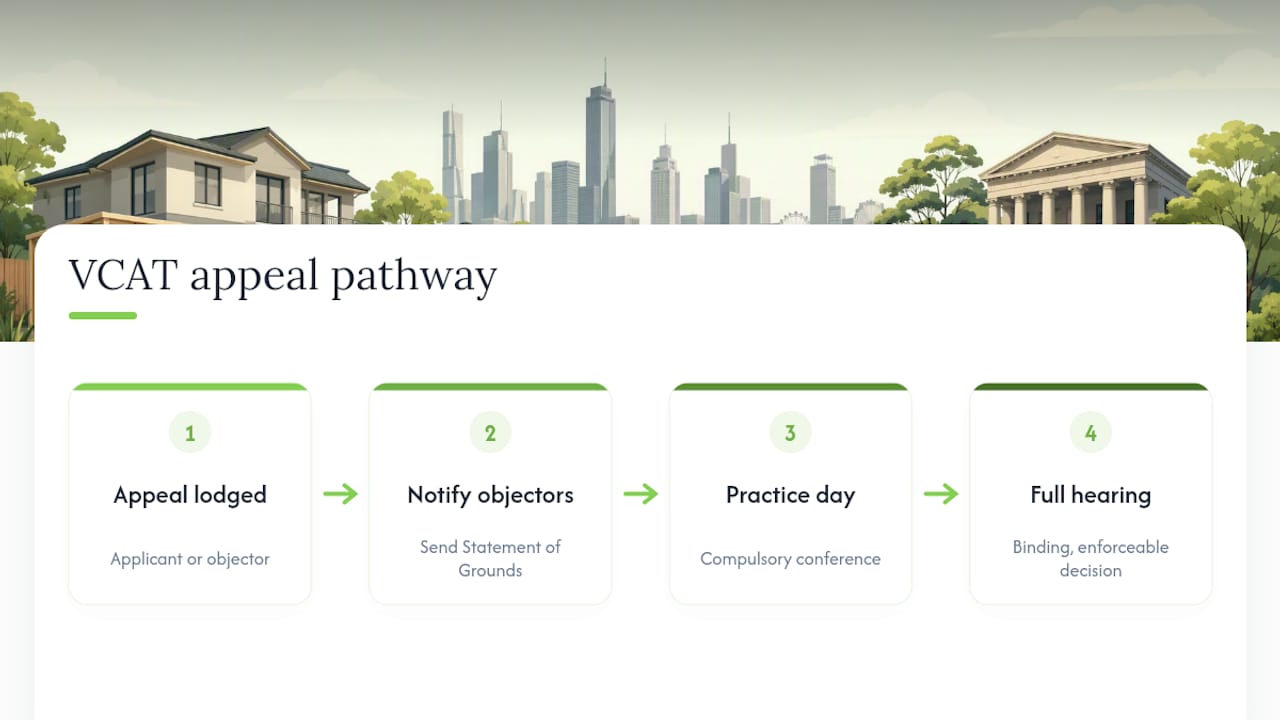
If the matter proceeds, VCAT requires you as the applicant to formally notify every objector, supplying enough information and a Statement of Grounds form so they can decide whether to join the proceeding. From there, VCAT typically runs through a practice day, often a compulsory conference aimed at settlement, and then a full hearing if no agreement is reached. Objectors can present in person or simply file a written statement, and VCAT’s decision is binding and enforceable once handed down.
How Yorcon helps clients manage planning objections
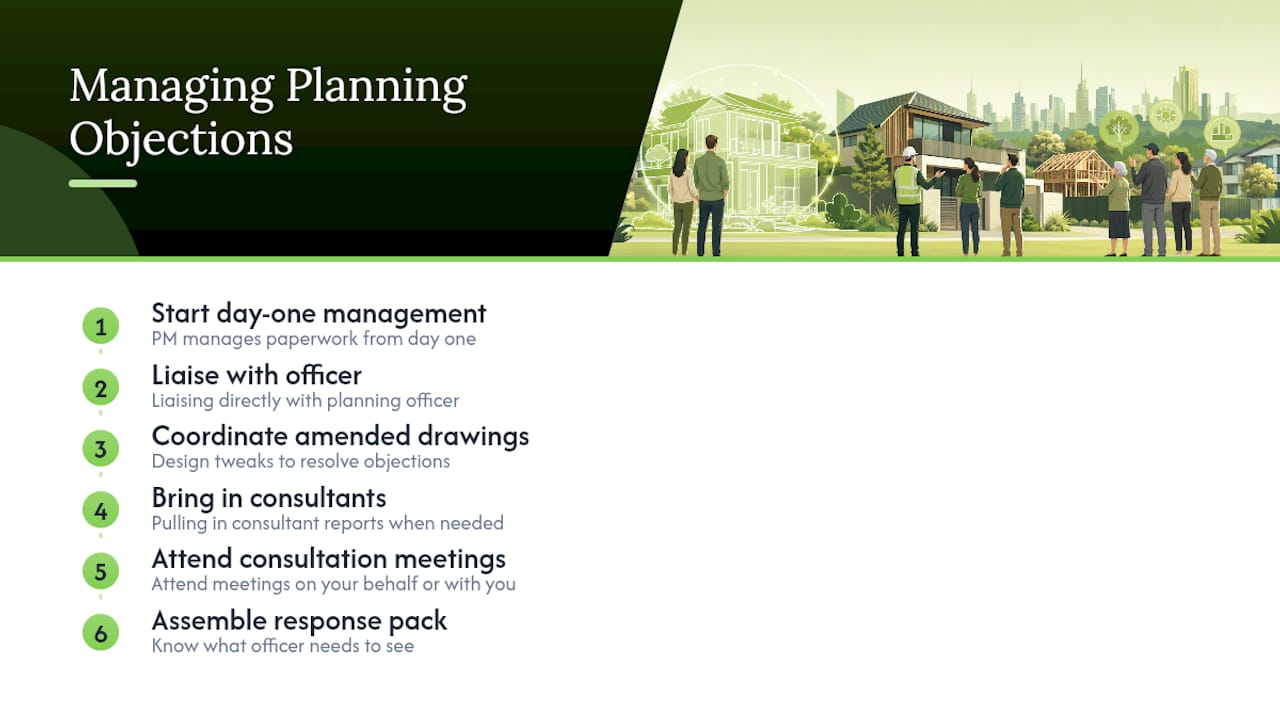
We handle the parts of this process that eat your time and patience. That means liaising directly with your planning officer, coordinating amended drawings when a design tweak resolves an objection, pulling in consultant reports when a technical response is needed, and attending consultation meetings on your behalf or alongside you.
The projects where objections cause the least damage are almost always the ones where someone experienced is managing the paperwork trail from day one, not scrambling to reconstruct it after a refusal notice lands. That’s the value of having a dedicated project manager who has sat through these meetings before and knows what a planning officer actually needs to see in a response pack.
For heritage and character-sensitive projects in particular, where objections tend to cluster around streetscape and conservation concerns, we’ve worked through this exact pattern on heritage renovations across inner Melbourne.
Your step-by-step objection response checklist
Roughly eight weeks separates an objection notice from a resolved outcome in most straightforward cases, though complex or contested matters run longer. Here’s the sequence we recommend clients follow:
Day 0 to 7: Acknowledge receipt, download all advertised documents, confirm your deadline, and contact your planner or Yorcon
Week 2 to 4: Build your response pack, brief any consultants required, and draft amended plans if a design change will help
Week 4 to 8: Monitor council’s decision, prepare appeal materials as a precaution, and track the VCAT review windows closely
Keep four things on hand throughout: your response letter, supporting evidence such as photos and specialist reports, your amended plans, and a dated log of every communication with council and objectors. That log is worth more than most homeowners expect once a matter reaches a hearing.
A project manager’s view from the middle of an objection
One recent extension drew three objections over overshadowing to a neighbouring courtyard. Rather than argue the point, we commissioned a shadow diagram, adjusted the upper floor setback by less than a metre, and shared both directly with the objecting neighbour before the consultation meeting even happened.
Two objections withdrew within a week. The lesson we keep relearning: a specific, evidence backed fix beats a general argument every time, and a documented trail protects you if the matter ever reaches VCAT anyway.
— Matthew
How Yorcon can help: contact for a planning review
Yorcon is the alternative to chasing a planning consultant, an arborist, and a draftsperson separately while your advertising period ticks down. Managing an objection well means moving fast on liaison with your planner, amended plans, consultant coordination, and, if it comes to it, preparing your VCAT documentation, all under one roof rather than three different inboxes.
We handle this as part of our broader design and build service for home extensions across Melbourne, so objections get addressed as a project task with a clear owner, not a separate crisis you’re managing alone on top of everything else. If you’re facing objections right now or want a planning risk review before you lodge, get in touch with a professional builder for a consultation to walk through your specific notice and deadlines with you.
Where to check official rules and forms
For exact forms, deadlines, and statutory wording, go directly to the source. The Department of Transport and Planning covers permit guidance, VCAT sets out appeal procedures, and your local council publishes its own objection and consultation process.
Sources
Recommended


