
Start the cooling off clock on your building contract in Australia

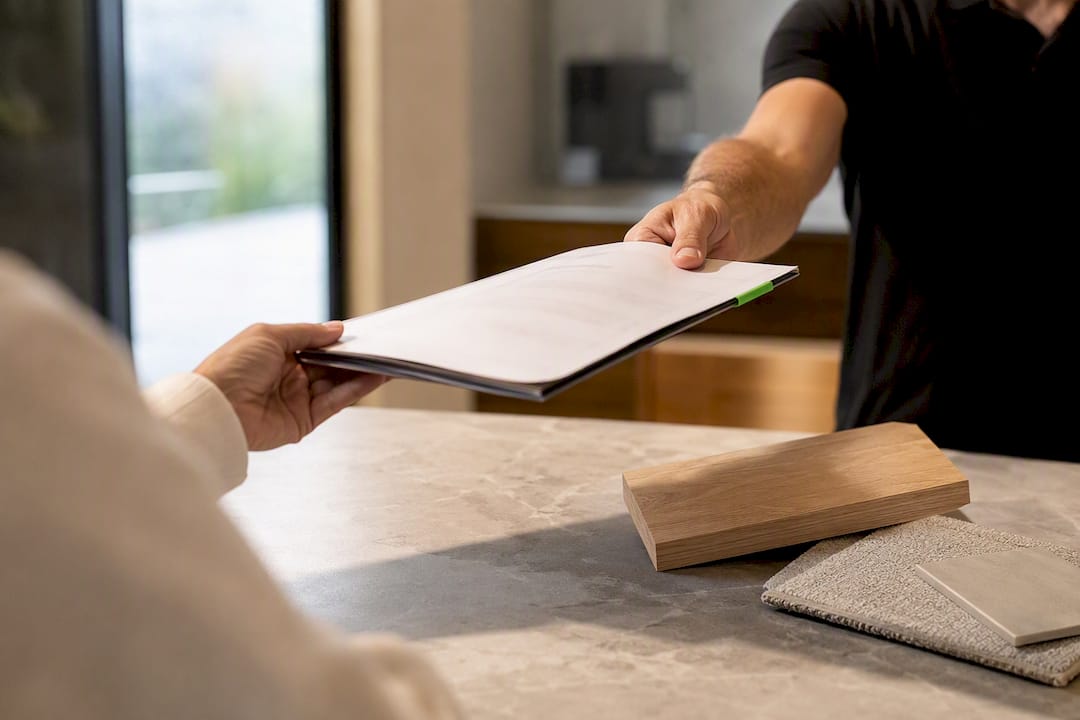
Most Australian homeowners do have a statutory cooling-off right after signing a residential building contract, with the length varying depending on the state, and it starts once you receive the fully signed contract, not when you sign it yourself. The single most important thing to do right now is get a copy of that signed contract in writing and keep every document with a date stamp on it. If you want out, act fast: withdrawal has to be in writing, and rules differ enough between Consumer Affairs Victoria and the QBCC that you can’t assume your interstate mate’s experience applies to you.
TL;DR:
Homeowners must receive and keep a fully signed contract to ensure the cooling-off period actually begins, as it starts upon receipt of the signed copy, not signing it.
Cooling-off periods range from two to five business days depending on the state, but Western Australia and Tasmania have no statutory window, leaving protection only in contract clauses.
If the contract or relevant documents are delayed or missing, the cooling-off clock may be extended, especially in Queensland where receiving the builder’s guide triggers the timer.
Proper delivery of withdrawal notices is crucial, with specific methods required by the contract, and proof of delivery should be kept to prevent disputes.
Short notice windows in some states mean booking inspections before signing is essential, and legal advice before signing can sometimes waive cooling-off rights altogether.
Table of Contents
Cooling off periods by state: what’s actually different
The window you get, and whether you get one at all, depends entirely on where you’re building. Western Australia and Tasmania have no statutory cooling-off period for domestic building contracts, which means your only protection comes from whatever clauses your contract itself contains. That’s a genuinely different starting position to Queensland or New South Wales, where the law hands you a guaranteed window regardless of what the contract says.
A state-by-state breakdown compiled by ReportDecoded lines up the periods like this:
State/territory | Statutory cooling-off period | Notes |
Victoria | 3 clear business days | Clock starts on receipt of fully signed contract |
New South Wales | 5 business days | Standard withdrawal notice rules apply |
Queensland | 5 business days | Consumer guide required for contracts $20,000+ |
South Australia | 2 clear business days | Shortest window in the country |
Western Australia | None | Contract terms govern withdrawal rights |
Australian Capital Territory | 5 business days | Written notice required |
Tasmania | None | No statutory right; check contract clauses |
Northern Territory | 4 business days | Written notice required |
Every jurisdiction waives cooling-off entirely for contracts entered into at auction. If you’ve signed at auction, this whole framework simply doesn’t apply to you, and you need to look at your solicitor’s advice on other exit routes instead.
Queensland’s rule under Schedule 1B of the QBCC Act is worth flagging separately because it’s more document-heavy than most. For contracts worth $20,000 or more, the builder must hand over a QBCC Consumer Building Guide alongside the signed contract, and the five-day clock is tied to receiving both. Miss that guide, and your window hasn’t legally started yet.

Victoria carries its own quirk too. If the contract you received doesn’t include the required cooling-off notice, Consumer Affairs Victoria gives you seven days from the point you discover that omission, not seven days from signing. That’s a meaningful difference if you only notice the missing clause weeks later.
When does the clock actually start ticking?
Here’s the detail that trips up most homeowners: the cooling-off clock doesn’t start when you put pen to paper. It starts when you receive a copy of the contract signed by both parties, and in several states, when you receive certain accompanying documents too.
If your builder hands you the contract to sign but doesn’t get it back to you fully countersigned for another week, your cooling-off period hasn’t begun. That delay works in your favour, because a slow-moving builder effectively extends your decision window rather than shrinking it. This matters most in Queensland, where receiving a signed copy of the entire contract triggers the countdown, and separately, for contracts over $3,300, written contracts including a conspicuous cooling-off notice are mandatory.
What you should expect to receive, and check off, before you assume your clock has started:
A copy of the contract signed by you and the builder, not just your own signed copy
For Queensland contracts of $20,000 or more, the QBCC Consumer Building Guide
Any required cooling-off notice printed conspicuously within the contract itself
Plans and specifications referenced in the contract, if they form part of what you’re agreeing to
Serving or receiving notices correctly matters just as much as timing. Most contracts specify how notices must be delivered, whether that’s hand delivery, registered post, or email to a nominated address. Follow the contract’s own service clause to the letter. A withdrawal notice sent the wrong way can be challenged on a technicality, even if you sent it well within the window.
How to withdraw from a building contract during cooling off
Withdrawing isn’t complicated, but it has to be done properly or you risk the builder disputing whether you ever validly exercised the right at all.
Confirm your window is still open. Check the date you received the fully signed contract (and, in Queensland, the consumer guide) against your state’s period.
Write your notice. State clearly that you are withdrawing from the contract under the applicable cooling-off provision, reference the contract date, and sign and date the notice yourself.
Cite the relevant clause. In Queensland, reference Schedule 1B of the QBCC Act; in Victoria, reference the cooling-off provisions under domestic building contract law.
Deliver it the way the contract requires. Hand delivery with a witness, registered post, or the specific method named in the service clause.
Keep proof of delivery. A registered post receipt, a signed acknowledgement, or a dated email trail.
Expect a modest deduction. The contractor may retain $100 plus any reasonable out-of-pocket expenses already incurred, such as preliminary drawings.
Dispute unreasonable claims. If the builder tries to retain more than that, ask for an itemised breakdown and escalate to your state’s fair trading body or the QBCC if they won’t justify it.
Pro Tip: Photograph or scan your withdrawal notice and its proof of delivery the same day you send it. Builders occasionally dispute the delivery date, and a timestamped copy settles that argument before it starts.
Getting your inspections done before the window closes
South Australia’s two-day window and Victoria’s three-day window leave almost no room to organise a building inspection after you sign. If your state gives you one of these shorter periods, book your building and pest inspector before you sign, not after, so the report lands in your hands while you can still act on it.
A few things make this work in practice:
Call inspectors during the contract negotiation stage and ask directly whether they can turn around a report within 24 to 48 hours
Give the inspector a clear scope: structural issues, moisture, and anything that would justify walking away
Ask your solicitor to flag major red flags verbally before the full written report arrives, if time is tight
There’s a real trade-off buried here. Getting legal advice before you sign is generally excellent practice, but in some circumstances it can waive your cooling-off rights entirely, because the law treats prior legal advice as evidence you didn’t need the statutory safety net. Weigh that carefully with your solicitor before signing anything.
Situations where cooling off simply won’t save you
Cooling-off is a safety net, not a universal escape hatch, and there are common situations where it won’t help you at all.
Contracts signed at auction carry no cooling-off rights anywhere in Australia
Getting independent legal advice before signing can waive your rights in some states
Signing a contract that’s substantially similar to one you’ve previously entered into with the same builder can also exclude the right
Western Australia and Tasmania offer no statutory cooling-off period at all, so your only leverage is whatever’s written into the contract
If cooling-off genuinely doesn’t apply to your situation, look instead for contractual escape clauses, such as a “subject to finance” or “subject to satisfactory inspection” condition. These operate independently of cooling-off law, but they usually carry their own tight deadlines, so read the fine print and act on them immediately rather than waiting.
What good contract handover actually looks like
We’ve sat across the table from enough homeowners at signing to know the cooling-off period only becomes a real issue when paperwork moves too slowly. A properly run handover gives you the signed contract, any required consumer guide, and a clear commencement notice within days, not weeks.
Transparent project management from the outset means fewer late surprises and fewer disputes about when your clock actually started. If you’re mid-contract and haven’t received your documents yet, contact your builder directly and ask for the fully signed contract pack in writing. A reputable builder should turn that around quickly, because they have nothing to gain from delaying your statutory rights.
Want a contract reviewed properly before you commit?
You can consider choosing a building team that manages design, permits, and construction under a transparent process from the start, rather than relying solely on trust that paperwork will arrive on time and the fine print is solid.
If you’re still weighing up whether to proceed with a build, extension, or renovation, a Free Project Feasibility Call is the sensible next move before any contract lands on your kitchen table. It’s a chance to talk through your project, your budget, and your timeline with a builder who documents everything as you go, rather than leaving you to chase paperwork during a three-day cooling-off window.
Whether you’re planning a home extension, a full design and build project, or restoring a heritage property, Yorcon’s approach is built around giving you the signed contract, consumer guides, and commencement details early, so you’re never scrambling to protect a right you shouldn’t need to rely on. Book your feasibility call and get clarity before you sign anything.
This article is general information, not a substitute for advice from a qualified lawyer. Consult a qualified legal professional about your own circumstances before acting on anything here.
Sources
FAQ
When can you pull out of a building contract?
You can generally withdraw during your state’s statutory cooling-off period, which starts once you receive the fully signed contract, not the day you sign it yourself.
Can I cancel a contract after 14 days?
No Australian state gives a cooling-off period longer than five business days for residential building contracts; the ranges run from two business days in South Australia up to five business days in Queensland, New South Wales, and the ACT.
What are the cooling-off periods for contracts in Australia?
They vary by state: three clear business days in Victoria, five business days in Queensland, New South Wales, and the ACT, two clear business days in South Australia, four business days in the Northern Territory, and none in Western Australia or Tasmania.
Can you pull out of a contract once signed?
Yes, within your state’s cooling-off window, provided you serve a written and signed withdrawal notice correctly; the builder may retain $100 plus reasonable out-of-pocket expenses already incurred.
Recommended


