
$250k to $450k: Melbourne Renovation Costs 2026, Per m² & VIC Rules

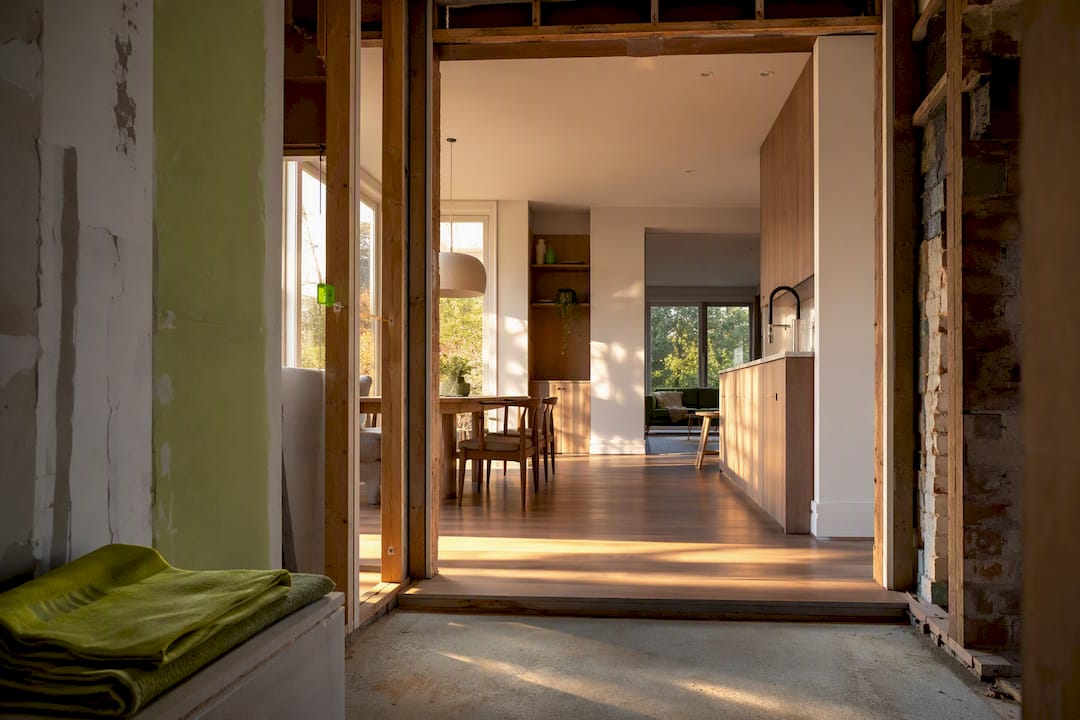
A whole house renovation in Melbourne typically runs from around $162,000 for a cosmetic to mid-range refresh through to $540,000 or more for a large, high-end project with structural work. Where you land depends heavily on your home’s age, its structural condition, and how far you push the finishes. Before you commit to a figure, get quotes from at least two registered builders and build in a genuine contingency. That single step protects more budgets than any spreadsheet ever will.
TL;DR:
Renovation costs for a 180 m² Melbourne home range from $216,000 for basic updates to over $810,000 for high-end structural projects, depending on finishes and scope.
Kitchen renovations typically cost between $25,000 and $90,000, with layout changes significantly increasing expenses; bathrooms usually cost $20,000 to $45,000.
Hidden costs such as asbestos removal, termites, heritage restrictions, and unforeseen structural issues can add 25 to 35 percent to the initial budget.
Soft costs, including design fees, permits, engineering, and project management, often increase total expenses by 10 to 20 percent beyond construction costs.
A typical full renovation in Melbourne averages between $250,000 and $450,000, with factors like home size, structural work, finishes, and hidden surprises influencing final pricing.
Table of Contents
What does whole house renovation cost per square metre in Melbourne?
How much do kitchens, bathrooms and structural work actually cost?
What Victorian rules and insurance affect your renovation budget?
How does a managed design-and-build approach control cost and risk?
What financing options and interest rates are available for Melbourne renovations?
What’s the true average total cost for a Melbourne whole-house renovation?
What does whole house renovation cost per square metre in Melbourne?
Most Melbourne builders and quantity surveyors price renovations on a per square metre basis, then adjust for site access, structural scope and finish level. It’s a useful starting point, but only a starting point.
For 2026, the commonly cited benchmarks sit in three tiers. Cosmetic or budget renovations, think new paint, flooring, and updated fixtures without moving walls, land around $1,200 to $1,800 per square metre. Mid-range renovations, which usually involve some layout changes, new kitchens and bathrooms, and better quality finishes, run $1,800 to $2,800 per square metre. Premium or structural renovations, where you’re removing load-bearing walls, adding a second storey, or doing a full architectural rebuild behind the facade, climb to $2,800 to $4,500-plus per square metre.
Translate that into whole-house numbers and you get a clearer picture of what different home sizes actually cost to renovate.
Home size | Budget tier | Mid-range tier | High-end tier |
2-bedroom (approx. 90 m²) | $162,000–$180,000 | $180,000–$252,000 | $252,000–$540,000 or more |
3-bedroom (approx. 130 m²) | $162,000–$234,000 | $234,000–$468,000 | $252,000–$540,000 or more |
4-bedroom (approx. 180 m²) | $216,000–$324,000 | $324,000–$504,000 | $504,000–$810,000 |
These bands line up with the wider industry view that whole-house renovation totals nationally sit between $150,000 and $500,000-plus, with Melbourne often tracking above the national average because of labour costs and council requirements. Our own detailed cost breakdown for Melbourne renovations unpacks how those figures shift by suburb and building type.
Per square metre pricing falls apart fast on two types of job: heritage homes with overlay restrictions, and anything needing underpinning or major structural correction. Both introduce costs that don’t scale neatly with floor area, so treat these ranges as a planning tool, not a quote.
How much do kitchens, bathrooms and structural work actually cost?
Your headline budget only helps if you know where the money actually goes. Some rooms and trades chew through far more of it than others.
Kitchens typically range from $25,000 for a budget refresh (keeping the existing layout, replacing benchtops and cabinet fronts) to $90,000-plus for a high-end kitchen with custom joinery, stone benchtops and repositioned plumbing. Layout changes are the biggest price lever here. Moving a sink or cooktop away from existing services can add thousands before you’ve chosen a single tile.
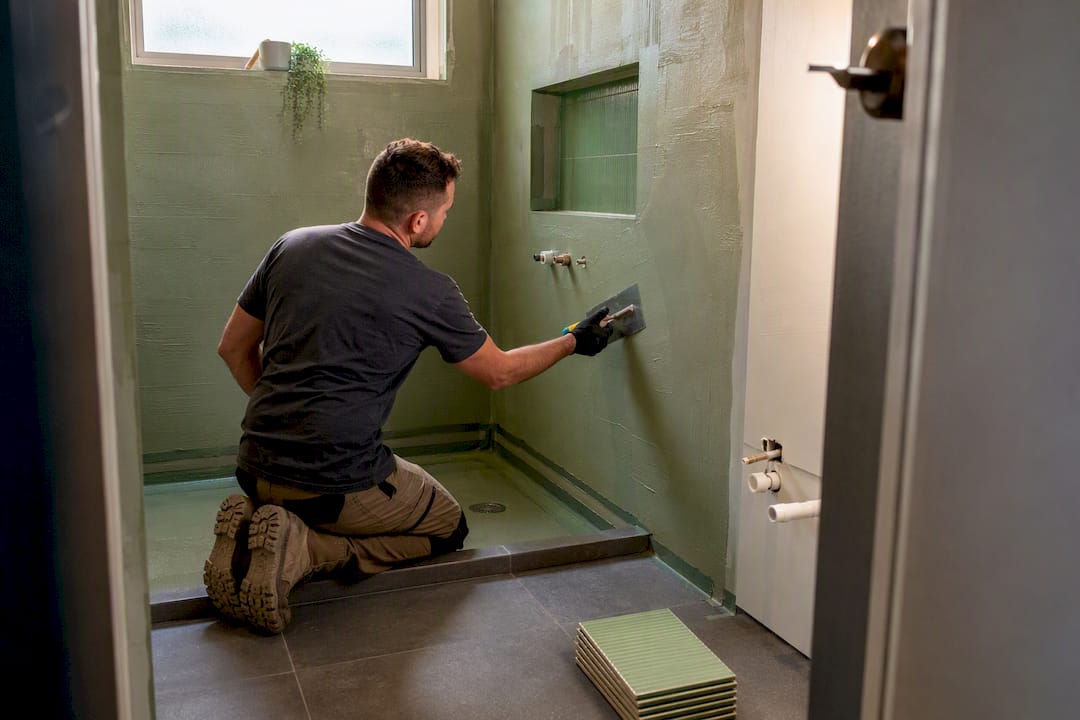
Bathrooms cost more per square metre than almost any other room in the house, often two to three times the whole-house average, because waterproofing, tiling, and plumbing are labour-intensive regardless of the room’s size. A full bathroom renewal in Melbourne generally lands between $20,000 and $45,000, with ensuites at the lower end and family bathrooms with baths and double vanities pushing toward the top.
Structural works carry the widest range of all. A single beam installation to open up a kitchen-living space might cost $8,000 to $15,000. Underpinning for subsidence or foundation issues, common in older Melbourne clay-soil suburbs, can run from $15,000 for a small section to well over $80,000 for a full perimeter.
Services (electrical rewiring, replumbing, switchboard upgrades) are the trades most likely to blow out once walls come off. Key cost drivers include:
House age (pre-1980 wiring almost always needs full replacement, not patching)
Switchboard capacity for modern appliances and air conditioning
Whether plumbing runs need rerouting around a new layout
Access difficulty in double-storey or heritage homes
Pro Tip: Ask your builder for a fixed price on rewiring and replumbing before signing, not an allowance. Allowances are where “surprise” invoices come from later.
Our kitchen renovation cost guide breaks these figures down further by layout and finish level.
What hidden costs catch Melbourne homeowners out?
Melbourne’s housing stock has a lot of character, and a lot of it was built before anyone thought about asbestos, drainage standards, or termite management. That’s not a reason to panic. It’s a reason to plan.
The most common discoveries during demolition in pre-1990 homes include asbestos in eaves, wall sheeting or floor tiles (removal costs vary enormously depending on extent, from a few thousand for isolated areas to tens of thousands for whole-house abatement), ageing switchboards that fail modern safety checks the moment an electrician opens the cupboard, and clay sewer pipes prone to root intrusion and cracking.
Other frequent surprises include:
Termite or timber rot hidden behind wall linings
Undersized footings that won’t support a second storey without strengthening
Heritage overlay conditions that dictate window styles, roofing materials or facade treatments, adding both cost and time
If your suburb sits within a heritage overlay, council requirements can add real cost to what looks like a simple job. Our guide on heritage renovation costs in Melbourne covers what to expect there.
Pro Tip: Commission a structural inspection, asbestos test and drainage camera survey before you finalise your budget, not after demolition starts. A few hundred dollars spent upfront can save tens of thousands in mid-project change orders.
What Victorian rules and insurance affect your renovation budget?
Victoria has specific thresholds that change how your renovation is contracted and insured, and getting this wrong can leave you exposed.
Any building work over $10,000 legally requires a major domestic building contract, which sets out payment stages, variations and dispute processes. From 1 July 2026, Home Warranty insurance becomes mandatory for work exceeding $20,000, replacing the previous Domestic Building Insurance framework. Consumer Affairs Victoria recommends homeowners request written quotes, checkable references and a certificate of currency before handing over a deposit, on any job, not just the big ones.
It’s worth understanding what that insurance actually covers. The Victorian Building Authority is explicit that Home Warranty cover is generally only claimable if your builder dies, disappears or becomes insolvent. It’s not a workmanship guarantee, so don’t let it substitute for proper due diligence on the builder themselves.
If your renovation touches the building envelope significantly, expect NCC 2022’s 7-star energy efficiency minimum to apply. The cost impact is often modest when insulation and glazing choices are made early in design, one modelled example for a single-storey four-bedroom home added roughly $3,310 in construction cost, largely recovered through lower energy bills over time.
Before signing anything:
Confirm the builder’s registration class matches your project scope
Ask for a certificate of currency, not just a verbal assurance
Factor permit processing time into your schedule, not just your budget
Read our Domestic Building Insurance explainer for the full picture
What does a sample 180 m² renovation budget look like?
Numbers mean more when they’re attached to a real-sized house. Here’s how a 180 square metre home, a fairly typical four-bedroom Melbourne footprint, breaks down across the three tiers.
Line item | Budget tier | Mid-range tier | High-end tier |
Core construction | $216,000–$324,000 | $324,000–$504,000 | $504,000–$810,000 |
Pre-construction investigations | $1,200–$1,800 | $1,800–$2,800 | $2,800–$4,500 plus |
Permits and approvals | $25,000–$90,000 | $5,000–$10,000 | $8,000–$15,000 |
Temporary accommodation (if needed) | $8,000–$15,000 | $5,000–$15,000 | $10,000–$25,000 |
Contingency (10–20%) | $20,000–$45,000 | $15,000–$80,000 | $15,000–$80,000 |
Industry guidance commonly recommends a contingency of 10 to 20 percent for whole-house work. Push toward the top of that range, or even beyond it, if your home was built before 1980, sits in a heritage overlay, or already has known structural or drainage issues.
Where you spend within that budget matters as much as how much you spend. Prioritise:
Structural integrity and services (these are the hardest and most expensive to redo later)
Kitchens and bathrooms (they carry the most weight in resale value)
Cosmetic finishes last (they’re the easiest to upgrade down the track if funds run tight)
How does your renovation timeline affect the final cost?
Time and money are tied together on every renovation, and Melbourne’s permit system makes this especially true.
Design and documentation typically takes 4 to 10 weeks, longer for architecturally complex or heritage-affected homes.
Permits and approvals run anywhere from 4 weeks for straightforward building permits to several months where planning permits or heritage sign-off are required.
Demolition and structural work generally takes 2 to 6 weeks depending on scope.
Construction through to completion spans 3 to 9 months for most whole-house projects.
Final inspections and handover add another 1 to 3 weeks.
Permit delays and long trade lead times are the two biggest cost creepers. Every extra month often means another month of temporary accommodation or rent. Locking in approvals early and coordinating trade bookings well ahead of demolition reduces that holding cost considerably.
How does a managed design-and-build approach control cost and risk?
Nearly two decades in Melbourne’s renovation market has taught us that most budget blowouts aren’t caused by expensive finishes. They’re caused by fragmented management, one trade waiting on another, a permit delay nobody flagged, a structural surprise nobody planned for.
That’s the case for a single point of accountability across design, permits and construction. A managed builder who coordinates every trade and approval typically draws down less contingency than a homeowner juggling separate contractors, because problems get caught and resolved before they cascade into delays.
Yorcon’s approach, end-to-end project management from concept through to handover, paired with genuine heritage renovation experience for Melbourne’s older housing stock, exists precisely to close that gap. Clear communication at every stage means fewer surprises land on your desk halfway through demolition.
What financing options and interest rates are available for Melbourne renovations?
Most homeowners fund a whole-house renovation through one of three routes, and the right choice depends heavily on your existing mortgage position and how much equity you’ve built up.
Construction loans are the most common path for larger projects. Lenders release funds in stages as work progresses, verified against builder invoices or inspection reports, rather than as a single lump sum. This protects both parties but means you’ll need a detailed, staged budget from your builder before approval.
Refinancing or a mortgage top-up works well if you’ve got substantial equity in your home already. You borrow against that equity at your existing home loan rate rather than a separate, often higher, personal loan rate.
Renovation-specific personal loans suit smaller projects, kitchen or bathroom-only jobs, for example, but typically carry higher interest rates than secured home loan products, since they’re unsecured.
Interest rates on all three move with the Reserve Bank cash rate and vary by lender and your borrowing profile, so get current quotes from your bank or a mortgage broker rather than relying on a headline rate you’ve seen advertised. What matters more for budgeting purposes is timing: apply for finance early enough that loan approval doesn’t become the bottleneck holding up your construction start date.
What soft costs should you budget beyond construction?
Construction costs get all the attention, but soft costs, the design, engineering and administrative work behind the build, typically add 10 to 20 percent on top of your construction budget. Skip them in your planning and you’ll feel the gap fast.
Design fees for an architect or building designer generally run 8 to 15 percent of construction cost for a full-service engagement covering concept design through to construction documentation. Simpler renovations using a draftsperson instead of a full architect can bring this down toward 5 to 8 percent.
Structural engineering is required whenever you’re removing load-bearing walls, adding a second storey, or dealing with foundation issues. Expect $1,500 to $5,000 for a standard renovation, more for complex structural interventions like underpinning.
Project management costs vary depending on whether you self-manage (time-intensive and risky if you lack building experience) or engage a builder who manages the whole process, in which case it’s typically folded into the head contract rather than billed separately.
Other soft costs worth budgeting for include energy assessments to confirm NCC 2022 compliance, survey fees if boundary or easement details are unclear, and building permit levies charged by your surveyor. None of these are optional extras. They’re the administrative backbone that keeps your construction on schedule and compliant.
What’s the true average total cost for a Melbourne whole-house renovation?
Pull every cost category together, construction, soft costs, contingency, temporary accommodation, and the realistic average for a full house renovation in Melbourne sits between $250,000 and $450,000 for a typical three to four-bedroom home receiving a mid-range renovation with some structural change.
That figure sits comfortably within the wider range reported across Melbourne renovation projects, which spans $162,000 at the cosmetic end to $540,000-plus for large, high-end structural projects. Where your project lands within that band comes down to four factors: home size, how much structural work is involved, finish quality, and how many hidden issues surface once demolition starts.
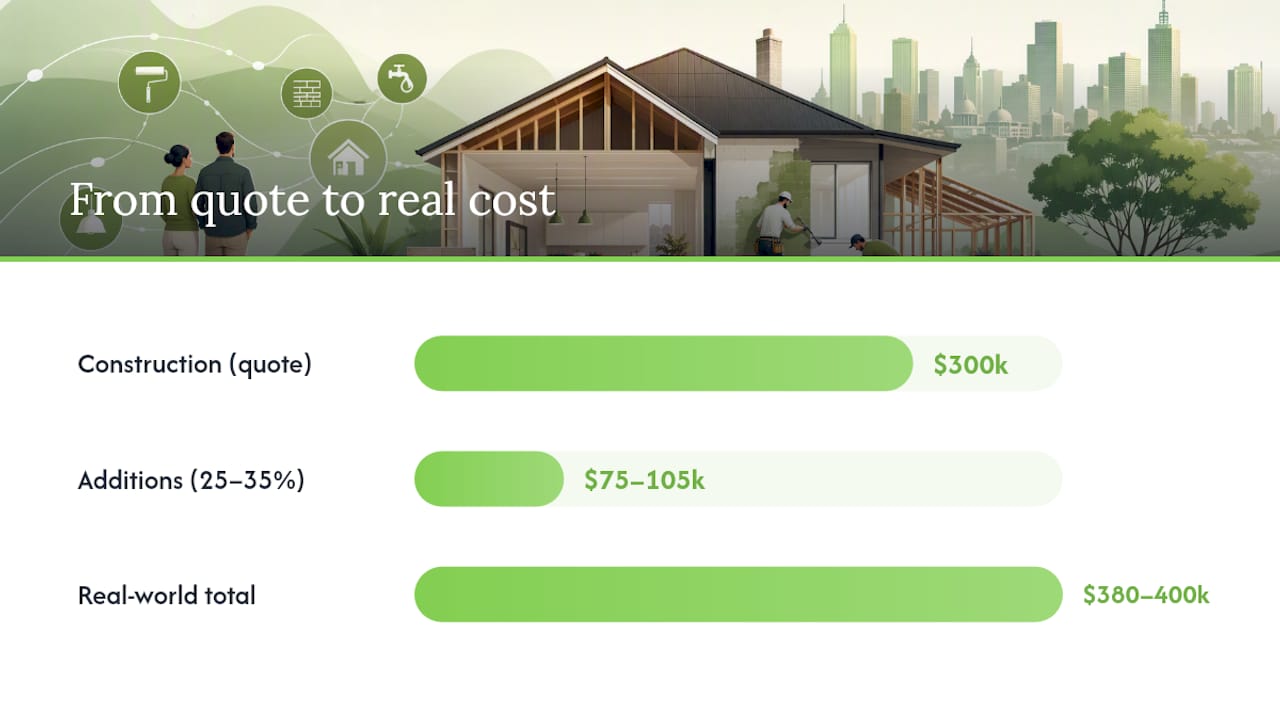
The mistake most homeowners make is anchoring to the construction quote alone and forgetting that soft costs, contingency and possible temporary accommodation can add another 25 to 35 percent on top. A $300,000 construction quote can easily become a $380,000 to $400,000 real-world project once everything is accounted for. Build your headline number from the total, not just the builder’s line item, and you’ll avoid the most common budgeting shock in Melbourne renovations.
Renovate or rebuild: how do you decide?
As a rule of thumb, renovation makes sense when your home’s structure, footings and roofline are sound and you’re primarily changing layout and finishes. Knockdown-rebuild starts to make more financial sense once structural correction, underpinning and compliance upgrades push renovation costs close to rebuild territory.
Ask yourself three questions before committing to either path. Is the existing structure genuinely sound, or are you planning to fix problems that will resurface? Does a heritage overlay limit what you can change anyway, making renovation the only realistic option? And once structural and compliance costs are added, is renovating still cheaper than rebuilding, or are you paying rebuild money for a compromised result?
Get a qualified structural assessment before you decide. It’s the only way to know which side of that line your home actually sits on.
— Matthew
Ready to get a real quote for your Melbourne renovation?
Every range in this guide gives you a planning tool, not a fixed price. The number that actually matters is the one a builder puts against your specific home, your specific suburb, and your specific list of must-haves. That’s where a managed design-and-build partner earns its keep: one team carrying your project from concept through permits to handover means fewer handoffs, fewer surprises, and a contingency that’s far less likely to get eaten alive by mid-project discoveries.
Yorcon has spent nearly 20 years managing whole-house renovations, heritage restorations and architectural builds across Melbourne, with a particular strength in the older housing stock where hidden costs cause the most grief. If your home sits in a heritage overlay or you’re weighing up a full renovation against a knockdown-rebuild, our heritage home renovation and home renovation teams can walk the site with you and give you a scoped estimate grounded in what your specific home actually needs. Get in touch to arrange a site visit and start building a budget you can actually rely on.
Where to check the official rules
Verify current thresholds and standards directly: the Victorian Building Authority on insurance, Consumer Affairs Victoria on contracts, and Energy Victoria on 7-star requirements. Multi-residential projects should also review permit requirements before scoping works.
Sources
Recommended


