
Knockdown Rebuild Cost Melbourne: 2026 Pricing Guide
- Yorgo

- 2 days ago
- 6 min read

A high-end Melbourne knockdown–rebuild typically costs a few thousand dollars per square metre for construction alone, with all-in project totals commonly landing in the mid to high hundreds of thousands. Bespoke architectural builds with premium finishes push well beyond that ceiling.
Mid-range bracket: Most Melbourne knockdown–rebuild projects sit between $510,000 and just over $1 million all-in, once demolition, consultants, permits, and fitout are included.
Example totals using the $2,100–$3,900/m² band:
~150 m² home: $315,000–$585,000 (construction); add $50,000–$80,000 pre-build costs
~220 m² home: $462,000–$858,000 (construction); add $50,000–$80,000 pre-build costs
~320 m² home: $672,000–$1,248,000 (construction); add $50,000–$80,000 pre-build costs
The three biggest cost drivers:
Site constraints and access — sloping or narrow blocks, limited plant access, and irregular lot shapes all add cost
Finish level and custom details — bespoke joinery, imported stone, and architect-specified materials push you toward the $3,900/m² end
Approvals, consultants, and heritage requirements — permits and mandatory reports typically add several thousand dollars in cost; heritage overlays add specialist architect fees and can significantly increase construction costs
Mandatory pre-build costs to budget before construction starts:
Item | Typical Cost |
Demolition | typically $12,000–$40,000; averages around $15,000–$20,000 |
Asbestos removal | $5,000–$15,000 if applicable |
Service disconnections (gas, power, sewer) | $3,000–$6,000 |
Consultants, reports, and permits | $5,000–$25,000 depending on suburb and complexity; heritage architect fees add $3,000–$8,000 if overlays apply |
Contingency (recommended minimum) | at least 10% of total build cost |
GST | 10% on construction |
One financial advantage worth knowing: rebuilding on land you already own usually avoids stamp duty. That can mean roughly $66,000 saved on a $1.2M property, though you should always confirm the specifics with your conveyancer.
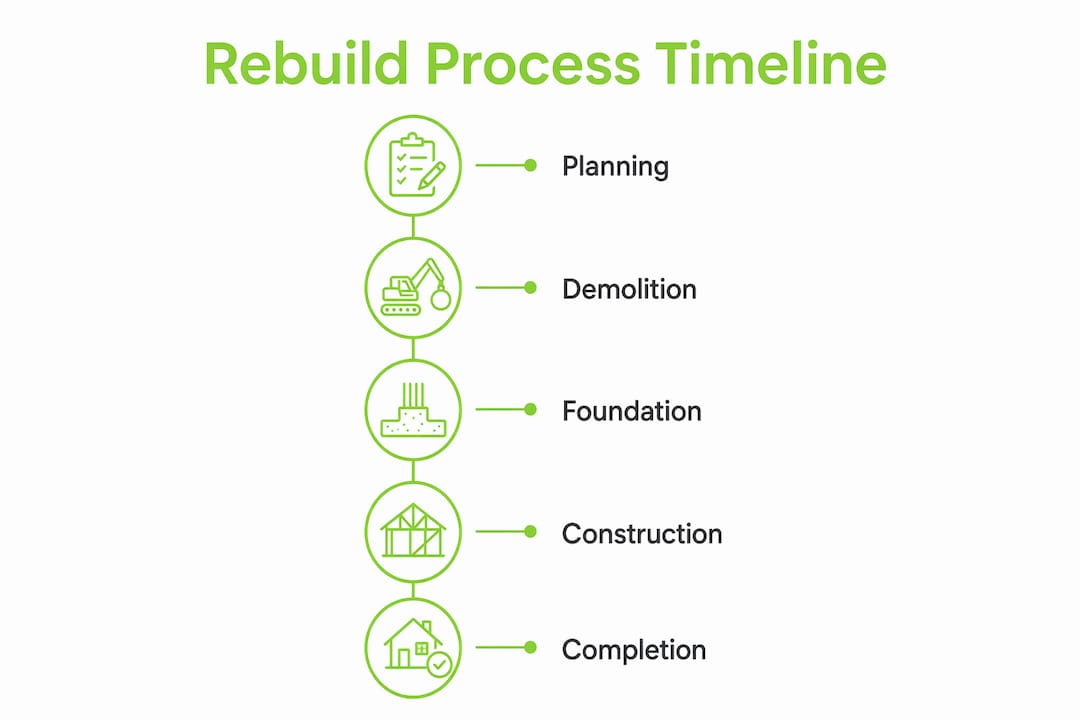
Timeline headline: From demolition to practical completion, most bespoke Melbourne rebuilds run about a year to a year and a half, with council approvals and design documentation often adding several months before construction begins.
Pro Tip: Work backwards from your total budget — including contingency and GST — before you commit to a construction scope. Builders who price a base contract and add costs later are the most common source of budget blowouts.
The only way to convert these ranges into a real number for your project is a site inspection. Book a site inspection with Yorcon for a fixed-price proposal scoped to your block and brief.
Table of Contents
How do Melbourne council approvals affect your rebuild cost and timeline?
Every knockdown–rebuild in Melbourne requires a demolition permit and, in most cases, a building permit for the new structure. If your property sits within a heritage overlay, a Neighbourhood Character overlay, or a Significant Landscape Overlay, council will also require a planning permit before any demolition can proceed — and that process alone can take 3–6 months.
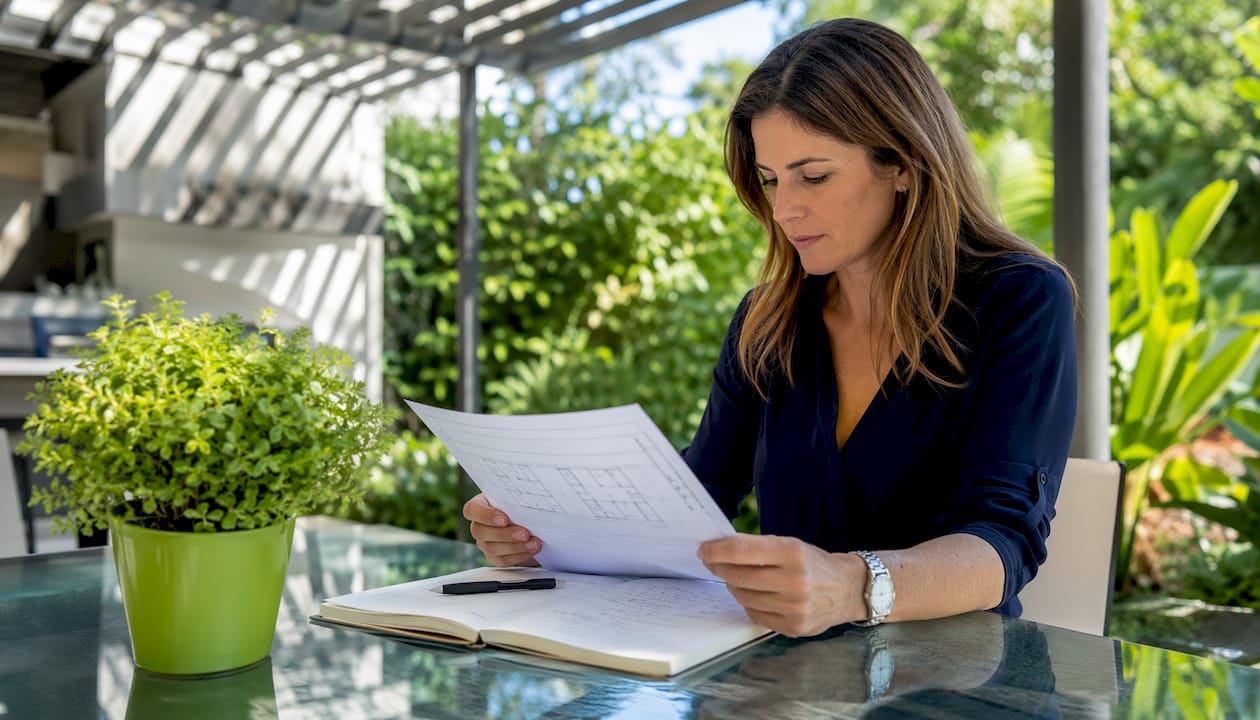
Planning permits trigger a public notice period, during which neighbours can object. Contested applications extend timelines further and may require VCAT hearings. Budgeting $5,000–$25,000 for consultants, soil tests, energy ratings, and engineering reports is standard; heritage suburbs add specialist fees on top.
The practical implication: get your overlays checked early. A heritage architect’s pre-application meeting with council can save months of back-and-forth and flag design constraints before you’ve committed to a full set of drawings.
What hidden costs catch Melbourne homeowners off guard?
Most homeowners significantly underestimate pre-build costs — demolition, service abolishments, and mandatory reports together often total tens of thousands of dollars before construction begins. That figure rarely appears in a builder’s headline quote.
Other costs that surface mid-project:
Unexpected sub-surface conditions — rock, contaminated soil, or high water tables require additional engineering and can add $15,000–$40,000
Provisional sums — allowances in a contract for items not yet fully specified (kitchen joinery, tiles, fixtures) are frequently underestimated and become the primary source of variations
Temporary accommodation — renting while you build in Melbourne typically adds $25,000–$50,000 to the total cost of the project over a 12–18 month build
Landscaping and external works — often excluded from builder contracts; a full landscape package on a bespoke home can run $30,000–$80,000
With construction costs are forecast to rise moderately due to trades shortages, a fixed-price contract with a fully documented scope is your strongest protection against escalation. Provisional sums and post-contract variations are where that protection erodes — so the more detail in your contract, the better.
What financing options are available for Melbourne knockdown–rebuilds?
A knockdown–rebuild doesn’t fit neatly into a standard home loan. Most lenders treat it as a construction loan, which releases funds in progress draws rather than as a lump sum. You’ll typically need to show a fixed-price building contract, council-approved plans, and a licensed builder’s registration before drawdowns begin.
Common financing structures include:
Construction loan with progress payments — funds released in stages (slab, frame, lock-up, fixing, completion); interest charged only on drawn amounts
Land equity loan — if you own your block outright or have significant equity, some lenders will allow you to draw against that equity to fund design and pre-build costs
Owner-builder finance — available but harder to secure; most major lenders prefer a registered builder on the contract
The stamp duty saving on land you already own — potentially saving a significant amount on a million-dollar property — can meaningfully improve your borrowing position. Talk to a mortgage broker who has experience with construction finance in Victoria, as lender appetite and draw schedules vary considerably.
How do you find and verify a qualified Melbourne builder for a bespoke rebuild?
Registration is the baseline, not the benchmark. Every builder in Victoria must hold a Domestic Builder (Unlimited) registration with the Victorian Building Authority (VBA). You can verify this at vba.vic.gov.au before signing anything.
Beyond registration, look for:
A portfolio of comparable projects — bespoke, architect-led homes in established Melbourne suburbs, not volume builds
Transparency on provisional sums — a builder who can’t clearly explain what is and isn’t fixed in their quote is a risk
Local approvals experience — builders who regularly work in your council area understand overlay requirements and have established relationships with certifiers
Domestic Building Insurance (DBI) — mandatory in Victoria for contracts over $16,000; confirm the builder’s insurer and policy before work starts
Red flags: vague or verbal-only scope descriptions, pressure to sign before plans are finalized, and quotes that exclude demolition or service disconnections without explicitly saying so. A builder who resists a site inspection before quoting is also worth approaching with caution.
For heritage-overlay properties, ask specifically whether the builder has worked with your local council’s heritage advisor — that relationship can be the difference between a smooth permit and a protracted objection process.
Yorcon brings nearly 20 years of bespoke Melbourne rebuilds to your project
Yorcon has spent nearly 20 years delivering architect-led, bespoke residential builds across Melbourne’s most demanding suburbs — from heritage-overlay streetscapes to sloping inner-city blocks where access alone requires careful planning. We manage the entire process: design coordination, permit applications, demolition oversight, construction, and fitout, with a single point of contact throughout.
A Yorcon site inspection does more than confirm your block dimensions. We assess site constraints, check overlay status, review your brief and budget target, and use that information to build a fixed-price proposal with clearly listed inclusions, provisional sums, and a transparent project-management plan. You’ll know exactly what’s fixed, what’s an allowance, and what sits outside the contract scope before you sign.
To get the most from your inspection, have these ready: your certificate of title, any recent council notices, a preferred finishes brief (even a rough one), and your total budget target including contingency. Our architectural new build and knockdown–rebuild services are built around fixed-price contracts — because in a market where costs are still moving, a fully scoped contract is the only real protection you have.
Contact Yorcon today to book your site inspection and receive a fixed-price proposal tailored to your block, your brief, and your budget.
Key Takeaways
A typical high-end Melbourne knockdown–rebuild costs $2,100–$3,900 per square metre for construction, with all-in project totals most commonly landing between $510,000 and just over $1 million.
Point | Details |
Construction cost per m² | Melbourne knockdown–rebuilds run $2,100–$3,900/m²; bespoke high-end builds sit at the upper end. |
Pre-build costs are often underestimated | Demolition, service disconnections, and permits together typically total $23,000–$46,000 before construction begins (using typical cost bands for Melbourne knockdown–rebuilds as of April 2026). |
Stamp duty saving | Rebuilding on land you already own usually avoids stamp duty — roughly $66,000 saved on a $1.2M property. |
Fixed-price contracts protect your budget | With construction costs forecast to rise moderately, a fully scoped fixed-price contract is your strongest protection against escalation. |
Yorcon’s approach | Yorcon provides site inspections and fixed-price proposals covering demolition, permits, construction, and fitout for bespoke Melbourne rebuilds. |
Recommended


