
Fixed price building risks: what homeowners must check

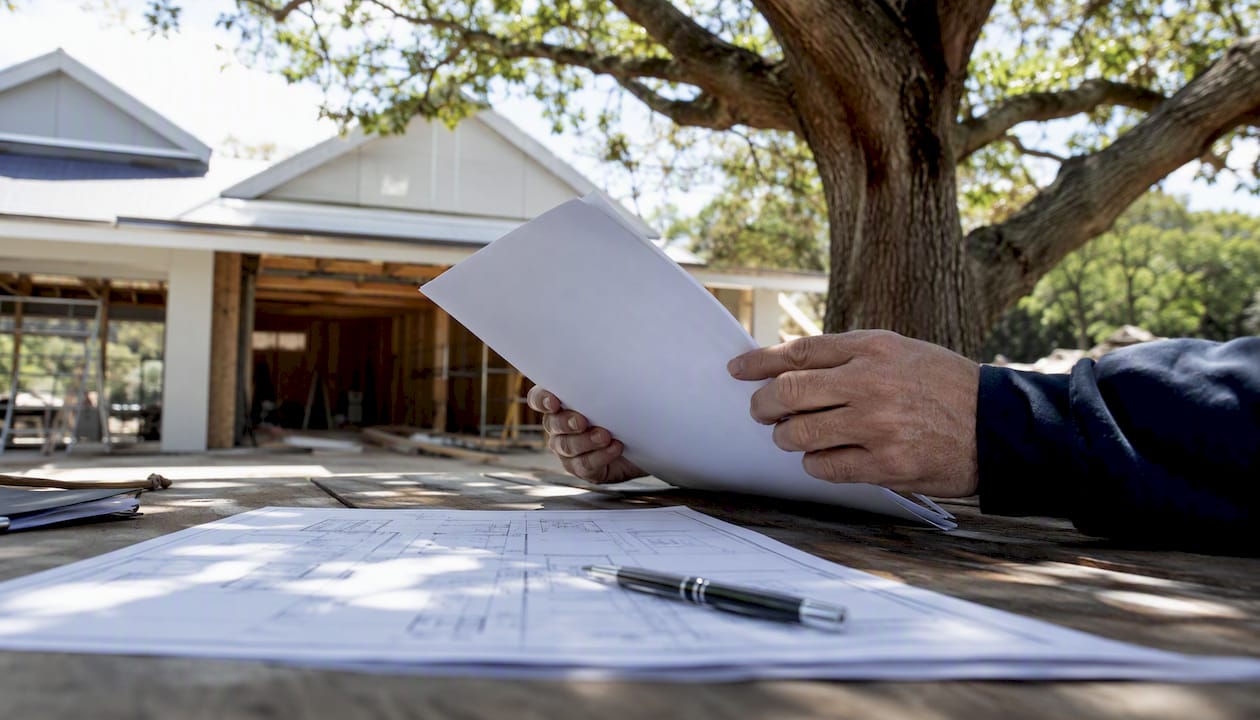
A fixed-price building contract gives you cost certainty on paper, not a guarantee that your final invoice will match the number you signed for. Three things routinely blow that number out: statutory exceptions that let a builder lawfully lift the price, prime cost (PC) and provisional sum (PS) allowances that were never really “fixed” to begin with, and variations that get priced at a premium once work is underway.
None of this makes fixed-price contracts a bad choice. For a project with finalised drawings and locked-in selections, a fixed-price agreement remains one of the more predictable ways to build. The risk sits in the gaps most homeowners never think to check before signing.
Before you sign anything, do three things: read the contract schedule line by line to see what’s genuinely fixed versus what’s covered by an allowance, work out what percentage of your contract price sits in PC and PS items, and confirm your progress-payment schedule matches what you’re legally entitled to. Those three checks catch the majority of nasty surprises.
Statutory price-change exceptions — most state legislation allows a price rise in narrow circumstances, such as a builder-caused delay exception or a change in law affecting materials tax.
Underestimated PC/PS allowances — tiles, appliances, and site works that were never priced firmly can absorb a large share of your contingency.
Variations priced at a premium — once you’re mid-build, a builder holds significant leverage, and variation pricing reflects that.
Read your contract schedule and identify every PC and PS line item.
Add up the allowance total as a percentage of the overall contract price.
Check your progress-payment schedule against your state’s regulated maximums.
Point | Details |
Fixed price has limits | Statutory exceptions and allowances mean the headline price is rarely the final price. |
Allowances are the biggest lever | PC/PS items above 20 to 30 percent of contract value carry materially higher blowout risk. |
Variations need paperwork | A variation only binds both parties once it’s in writing and signed. |
Key takeaways
Fixed price building contracts deliver genuine cost certainty only when allowances are minimised, variations are documented, and statutory exceptions are understood before you sign.
Point | Details |
Minimise PC/PS allowances | Lock in fixtures and finishes before signing to shrink the unfixed portion of your contract. |
Demand invoices for claims | Never release payment against an allowance or variation without receipts to back it. |
Cap your deposit | Follow your state’s regulated deposit maximum; large non-standard deposits raise insolvency risk. |
Verify builder licensing and finances | Check licence status, recent projects, and insurances before signing. |
Require written, signed variations | Verbal agreements to scope changes are not enforceable and fuel disputes. |
Know your termination rights | A price increase above roughly 5% often triggers a statutory right to walk away. |
Get formal contract review for high-value builds | A contract review fee is minor compared to the cost of an unresolved dispute. |
Table of Contents
What is a fixed price building contract and what does it cover?
Prime cost items and provisional sums: where fixed price gets soft
What should you do if your builder raises the price or work stalls?
How can you reduce fixed price building risks before and during construction?
How does a reputable builder manage fixed-price risk in practice?
Fixed price or flexible: what actually matters at the negotiating table
What is a fixed price building contract and what does it cover?
A fixed-price (or lump-sum) building contract sets a single agreed amount for the works described in the contract documents. That’s the theory. In practice, the “fixed” component only covers what’s been fully specified at the time of signing. Anything not yet selected, such as tapware, tiles, or the cost of removing unexpected rock on site, typically sits outside the fixed sum as a prime cost or provisional sum allowance.
The contract schedule is where this distinction lives. It’s the document that ties your plans and specifications to a dollar figure, item by item. A well-drafted schedule separates three categories clearly: the fixed and finalised scope, the PC items (an allowance for a product not yet chosen, like a $2,000 appliance package), and the PS items (an allowance for work that can’t be priced until it starts, like excavation through unknown ground conditions).
Here’s a simplified example of how that schedule might look:
Fixed scope: structural works, framing, roofing as per approved plans — locked at signing.
PC allowance: kitchen appliances, $4,500 allowance pending final selection.
PS allowance: site excavation and rock removal, $6,000 estimated allowance.
A contract that reads as one lump-sum figure can still hide thousands of dollars in unresolved allowances. The number on the front page is only as reliable as the schedule behind it.
Regulated templates take this seriously. The NSW home building contract for work over $20,000 requires the contract price, or the method for calculating it if not fixed, to be displayed prominently on the first page. Queensland’s regulator takes a similar line, requiring PC and PS items to be estimated with reasonable care and skill, not guessed at to make a tender look competitive.
Locate the contract schedule before you sign anything else.
Confirm every line item is marked as fixed, PC, or PS.
Ask for the calculation method behind any amount that isn’t a firm figure.
When can a builder lawfully increase a fixed price?
A builder can only increase your fixed price under narrow, legislated conditions, not simply because material costs have risen since quoting. Genuine “rise and fall” clauses, where a builder can adjust price to reflect market movements, are prohibited in fixed-price residential contracts in most Australian jurisdictions.
Under the Home Building Contracts Act 1991 (WA), a builder may lift the price in two circumstances: where the start of works is delayed beyond 45 days through no fault of the builder, or where a change in law introduces a new tax or duty that affects the cost of the works. Crucially, if that increase exceeds 5% of the total contract price, you have the right to terminate the contract within 10 working days of receiving notice. That’s a real, usable exit, not a theoretical one, and it’s worth knowing the clock starts the moment you’re notified.
Scenario | Lawful price change? | Owner’s protection |
Builder-caused delay to commencement | No | Contract price stands as agreed |
Commencement delayed >45 days, not builder’s fault | Possibly | Increase must be justified; >5% triggers termination right |
New tax or duty introduced by law | Possibly | Same 5% termination threshold applies |
Generic “rise and fall” clause for material costs | Generally unenforceable in fixed-price contracts | Clause may be void under state legislation |
Pro Tip: If a contract includes vague language like “prices subject to market conditions” or “builder reserves the right to adjust for cost increases,” push back before signing. Ask for it removed or replaced with the specific statutory wording your state actually permits. A builder who won’t remove it is telling you something about how they intend to use it.
The termination threshold matters more than most homeowners realise: a lawful price increase above 5% of the contract price gives you a 10 working day window to walk away, according to WA’s Home Building Contracts Act. Even where your state’s exact percentage differs, the principle holds across most templates: unlimited price escalation clauses in domestic fixed-price contracts don’t survive legal scrutiny. Legal commentary on cost increases confirms that outcomes in these disputes often come down to documentation quality and how precisely the contract’s exception clauses were worded.
Prime cost items and provisional sums: where fixed price gets soft
PC and PS allowances are the single biggest reason a “fixed” price contract ends up costing more than the number on the front page. A prime cost item is an allowance for a product you haven’t chosen yet, such as tiles, tapware, an oven. A provisional sum is an allowance for work that can’t be accurately priced until it starts, most commonly site works like rock removal, asbestos disposal, or unknown subsurface conditions.
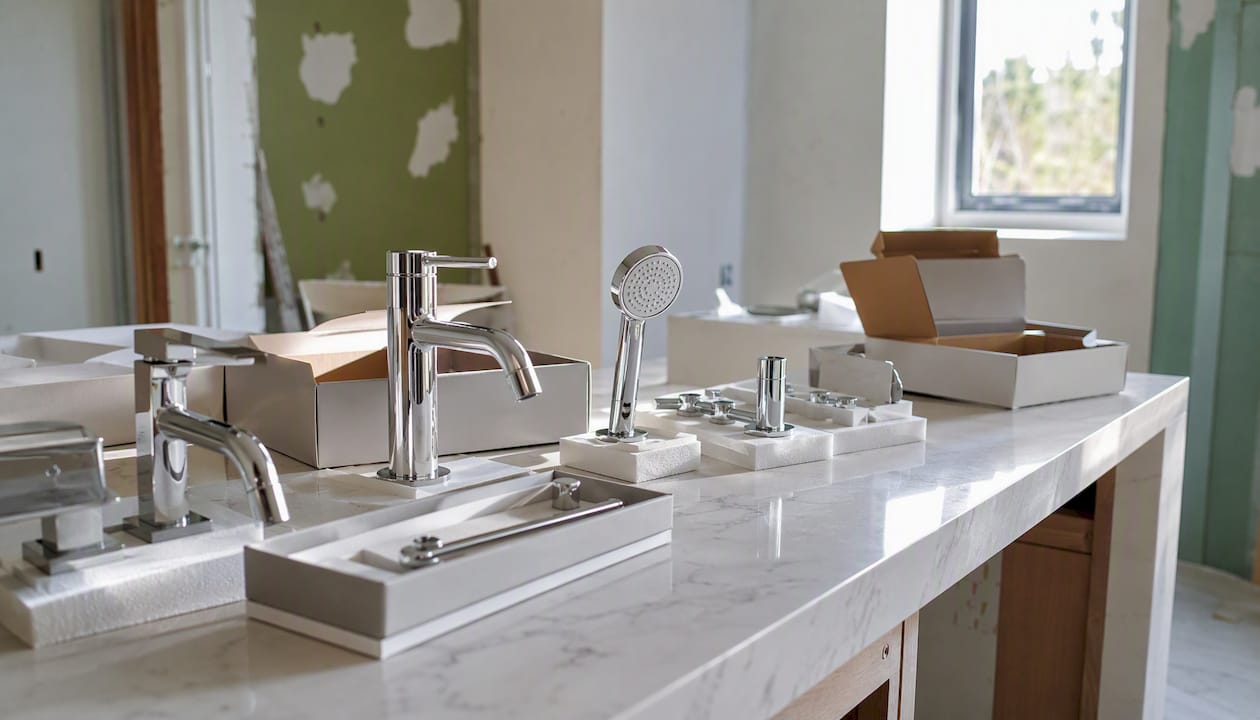
Builders carry a legal duty to estimate both with reasonable care and skill, not to lowball them to win a tender and recover the difference later. That duty is spelled out in QBCC’s guidance for owners and contractors, and it exists precisely because underestimating allowances at quote stage is a known industry pattern. Insiders in the sector are frank about this: deliberately tight PC/PS figures make a tender look sharper on paper, and the shortfall lands on the homeowner once real costs surface.
The risk scales sharply with how much of your contract sits in allowances rather than fixed scope.
Allowance share of contract price | Risk profile | Recommended homeowner action |
Under 10% | Low | Standard due diligence; confirm figures are current market rates |
10 to 20% | Moderate | Request itemised breakdowns and recent supplier quotes |
20 to 30% | High | Demand written justification and consider locking in selections before signing |
Over 30% | Very high | QBCC guidance flags this band as carrying significantly higher blowout risk; renegotiate scope before proceeding |
There’s a second layer to this risk that catches people out: the margin builders apply on top of any allowance overrun. Many standard-form contracts, including common QBCC and HIA-style templates, permit a contractor markup not just on the original PC/PS figure but on any amount that exceeds it. So a $3,000 tiling allowance that turns into $4,200 in actual cost doesn’t just cost you the extra $1,200, it costs you that plus the builder’s margin on the excess. Small underestimates compound quickly this way.
Before signing, demand the following for every PC and PS item on the schedule:
A full cost breakdown, not just a lump allowance figure.
Disclosure of any contractor markup applied to the allowance or to overruns.
A requirement for invoices or receipts to substantiate progress claims tied to allowances.
A written selections timeline so you’re choosing fixtures early, not under time pressure mid-build.
Our guide to prime cost versus provisional sum items walks through practical examples of how these allowances play out on a real Melbourne renovation, if you want to see the mechanics in more detail.
How are variations priced, and why do they cause disputes?
A variation only becomes binding once it’s documented in writing and signed by both you and your builder. Verbal instructions, “just go ahead and do it” conversations on site, and text message approvals create exactly the kind of ambiguity that fuels tribunal disputes. Under the Home Building Act 1989 (NSW), this formality requirement exists specifically because unclear scope changes are one of the most common sources of building disputes brought before tribunals.
Variations also tend to be priced generously in the builder’s favour. Once you’ve committed to a build and a builder is already on site, you have limited leverage to shop the work around.
A properly documented variation should include:
A clear written description of exactly what’s changing and why.
An itemised cost breakdown, not a single dollar figure.
The effect on your overall contract price stated explicitly.
Any impact on the project timeline and completion date.
Never accept a variation quoted verbally, even for a “small” change.
Ask whether the cost includes a margin, and if so, how much.
Get the variation in writing before the work starts, not after.
Pro Tip: When a builder proposes a variation, resist signing on the spot. Ask for an itemised quote and, for anything over a few thousand dollars, get an independent estimate. A reasonable builder will give you the breathing room to check; one who pressures you for an immediate signature is worth questioning. Procurement-focused guidance on avoiding common contractor overspending mistakes covers similar ground on how scope creep compounds when variations aren’t tightly controlled from the outset.
What deposit and payment protections should you expect?
Large upfront deposits are one of the clearest red flags in residential building contracts, and most states cap them for good reason. In NSW, contracts over a set threshold require structured progress-payment schedules rather than one large payment, and deposits on bigger jobs are capped well below what some builders informally request. The NSW home building contract template mandates a progress-payment schedule for any job over $20,000, tying each payment to a defined stage of completed work rather than a builder’s say-so.
There’s a meaningful difference between a fixed staged payment schedule, where you pay a set amount at defined milestones like slab, frame, and lock-up, and an “as invoiced” claim, where the builder bills you as costs are incurred. Both can work, but only if each claim is backed by actual evidence, invoices for materials, receipts for allowance spending, and a clear tie-back to work genuinely completed on site.
Watch for these red flags in any payment structure:
A deposit request noticeably larger than your state’s regulated maximum.
Progress payments requested without invoices or receipts attached.
Payment demanded for a stage before that stage is visibly complete.
Pressure to pay ahead of schedule “to keep the project moving.”
Construction law commentary on fixed-price risk is blunt about this: large non-standard deposits meaningfully increase your exposure if a builder runs into financial trouble mid-project, because recovering funds from an insolvent contractor is difficult and slow.
Pro Tip: Never release a progress payment without sighting evidence the work is complete. For higher-value stages, especially at lock-up or practical completion, consider paying an independent building inspector a few hundred dollars to confirm the claim before you release funds. It’s cheap insurance against a much larger problem.
What should you check in the contract before you sign?
A pre-signing review takes an afternoon and can save you months of dispute. Work through this list before you put pen to paper on any fixed-price agreement:
Contract price display — is the fixed amount, or the calculation method, shown clearly on the first page?
PC/PS schedule — is every allowance itemised with a dollar figure and a description, not bundled into a vague total?
Builder’s margin policy — does the contract disclose what markup applies to allowance overruns and variations?
Variation procedure — does it require written, signed agreement before work proceeds?
Extension of time and liquidated damages — what happens if the build runs late, and who bears that cost?
Termination rights — under what conditions can you or the builder exit, and what notice periods apply?
Dispute resolution clause — does it name mediation, arbitration, or tribunal pathways, and are the steps sequenced sensibly?
Red flags worth walking away from, not just querying:
Rise-and-fall wording dressed up in different language (“subject to adjustment,” “market-dependent pricing”).
No disclosure of contractor markup on PC/PS or variations.
No requirement for invoices or receipts to support progress claims.
Allowances exceeding 20 to 30% of the total contract value with no written justification.
Deposit terms that feel disproportionate to the size or stage of the project.
Point | Details |
Six must-check items | Price display, PC/PS schedule, margin disclosure, variation clause, termination rights, dispute pathway. |
Allowance threshold | Over 20 to 30% of contract value in PC/PS items warrants written justification before signing. |
Print and keep | A one-page pre-signing checklist is worth printing and taking to your contract review meeting. |
For a deeper look at how to interrogate a builder’s process before you commit, our piece on questions to ask your home builder covers the conversation points that complement this checklist well.
What should you do if your builder raises the price or work stalls?
Don’t pay first and ask questions later. If your builder notifies you of a price increase or work grinds to a halt, work through these steps in order:
Request the explanation in writing. A verbal justification isn’t enough; you need something you can hold them to.
Demand a full cost breakdown and supporting receipts. Any legitimate increase should be traceable to a specific, documented cause.
Check whether the increase falls within a lawful exception. Compare it against your state’s legislation, not just the contract wording.
Calculate whether it exceeds your termination threshold. In WA, that’s 5% of the contract price, triggering a 10 working day window to terminate.
Hold off paying until you understand the claim. Paying under pressure weakens your negotiating position if a dispute follows.
If informal resolution stalls, several regulator and tribunal pathways exist depending on your state:
QBCC (Queensland Building and Construction Commission) handles complaints about licensed builders, PC/PS disputes, and defect claims in Queensland.
NSW Fair Trading and NCAT (NSW Civil and Administrative Tribunal) manage building disputes and complaints in New South Wales, including price and variation disagreements.
Department of Mines, Industry Regulation and Safety performs a similar regulatory role in Western Australia.
Keep every piece of correspondence, variation form, invoice, and progress photo from day one. Tribunal outcomes lean heavily on documentation quality.
Escalate to a regulator complaint before considering formal legal action; it’s faster and usually cheaper.
Reserve legal advice for disputes involving significant sums or where a builder disputes your termination rights outright.
The threshold that matters most in practice: a price rise above roughly 5% of your contract value is generally the trigger point for a lawful termination right in jurisdictions with this rule, so knowing your contract’s exact percentage matters far more than it might seem at signing.
How can you reduce fixed price building risks before and during construction?
The most effective risk reduction happens before you sign anything, not after problems appear. Push for full specifications and drawings before contract execution, and minimise how many items sit in PC and PS allowances. Every fixture you select before signing is one less allowance that can blow out later.
Contractually, look for these protections and negotiate for them if they’re missing:
Tighter variation approval steps, requiring written sign-off before any work proceeds.
A stated cap on variation premiums, rather than an open-ended margin.
A requirement for invoices and receipts to substantiate every allowance claim.
A staged retention or defect holdback, releasing a final percentage only after defects are rectified.
On-site controls matter just as much once building begins:
Control | What it does | When to apply it |
Independent stage inspections | Confirms claimed progress matches actual work before you pay | Before every major progress payment |
Regular cost updates | Flags allowance overruns early, while they’re still manageable | Monthly, or at each major stage |
Early fixture selection | Converts PC allowances into fixed costs before construction | Before or immediately after signing |
Approved supplier lists | Reduces price volatility on materials mid-build | Set at contract stage |
A short clause requiring “invoice evidence for any PC/PS claim exceeding the allowance” or “a 10 business day notice-and-negotiation period before any variation is actioned” costs nothing to request and closes off two of the most common dispute triggers.
Pro Tip: Before signing with any builder, verify their licence status, ask to see two or three recent completed projects, and confirm their insurances are current. An unusually low quote often means missing contingency, not a genuine saving, and for larger or higher-risk projects, a performance bond is worth the conversation. An integrated design and build approach helps here too, because resolving design decisions earlier naturally shrinks the allowance component of your contract.
How does a reputable builder manage fixed-price risk in practice?
The best defence against fixed-price risk isn’t a clever contract clause. It’s a process that removes uncertainty before the contract is even signed. Here’s roughly how that looks in practice for a well-run residential build:
Detailed scope and selections happen before contract signing, not after. Fixtures, finishes, and materials are locked in as early as possible, shrinking the PC/PS component to a genuinely minor share of the contract.
PC and PS items are kept deliberately limited, reserved only for genuinely unknowable elements like subsurface conditions, with realistic allowances rather than tender-friendly lowballs.
Progress invoices are issued against completed, verifiable stages, each supported by receipts and a clear description of the work claimed.
Independent stage inspections confirm claimed progress before payments are released.
Any variation is documented, quoted, and signed before work proceeds, with the client seeing the full cost impact upfront.
Yorcon has run this process across nearly two decades of Melbourne home extensions, renovations, and architectural builds, managing design, permits, and construction under one roof so clients aren’t left chasing separate consultants for answers. That end-to-end oversight is what keeps allowance and variation risk manageable rather than something clients discover halfway through a build.
The projects that run smoothest are the ones where selections were finalised months before the first invoice arrived. Every allowance left open at contract signing is a decision deferred, and deferred decisions are where budgets slip.
Pro Tip: Ask any builder you’re considering for a written selections timeline before you sign, not after. If they can’t give you one, that’s worth noting.
This process description is illustrative of best-practice controls in residential construction, not legal advice specific to your contract or state.
Fixed price or flexible: what actually matters at the negotiating table
Fixed-price contracts work best when the design is genuinely finished. If you’ve locked in your drawings, chosen your tiles, tapware, and appliances, and know exactly what you’re building, a fixed-price agreement gives you the cost certainty it promises. Where I think a lot of homeowners get this wrong is signing a fixed-price contract while design decisions are still half-made, then feeling blindsided when those unresolved choices surface as PC allowances and variations later.
That’s not a flaw in fixed-price contracting. It’s a mismatch between the contract type and the project’s readiness. A cost-plus or design-and-build arrangement can suit a project where selections genuinely aren’t finalised, because it’s honest about where the uncertainty sits rather than burying it inside allowances with someone else’s margin attached. The trade-off is real: certainty costs you flexibility, and flexibility costs you certainty. There’s no version of a building contract that gives you both in full.
For property developers running multiple units or a tight financing timeline, price certainty usually outweighs design flexibility, meaning a fixed-price contract with a rigorously minimised PC/PS schedule is often the more sensible route. Owner-occupiers renovating a single family home, by contrast, often value getting the finishes exactly right more than shaving a percentage off the quote, which sometimes makes a bit of built-in flexibility worth the trade.
How Yorcon helps you avoid fixed-price surprises
Most of the fixed-price risks covered above trace back to one thing: decisions left open at contract signing. Yorcon’s approach closes that gap by resolving design, selections, and specifications before the contract price is finalised, so what you sign is genuinely close to what you pay.
As a Melbourne builder managing nearly two decades of home extensions, renovations, and architectural builds, Yorcon runs design, permits, and construction under one team rather than handing you between separate consultants. That means fewer unresolved allowances, transparent progress claims tied to completed work, and a variation process that’s documented and agreed before anything changes on site. If you’re weighing up a fixed-price contract for a renovation or extension and want the risks covered in this guide checked against your own project, start a conversation about your home extension with Yorcon’s team, or get in touch for a pre-contract review before you sign anything.
Sources
Keep these on hand when reviewing any building contract, and remember that laws differ meaningfully by state, so confirm the specific rules that apply where you’re building.
Where your project sits outside NSW, WA, or Queensland, seek advice specific to your state’s building legislation. The mechanics covered here, PC/PS risk, variation formality, and deposit caution, hold broadly across Australia, but the exact percentages and notice periods differ by jurisdiction.
This article is general information, not a substitute for advice from a qualified lawyer. Consult a qualified legal professional about your own circumstances before acting on anything here.
Recommended


