
Do you need a demolition permit in Melbourne?

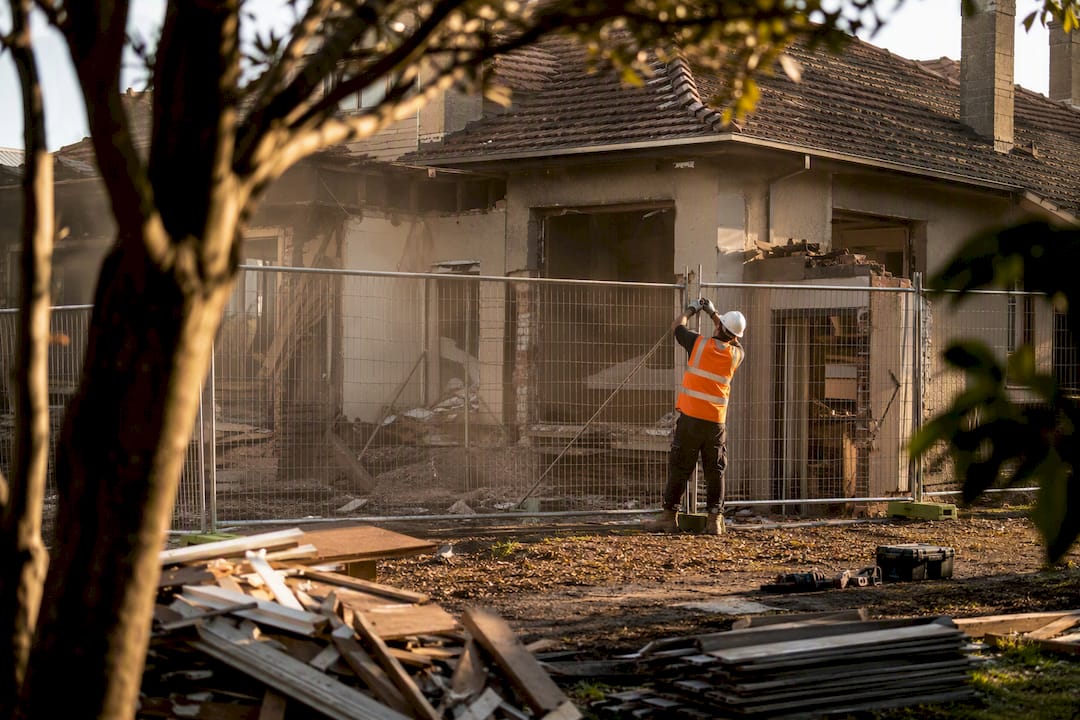
Yes, in almost every case. Victorian law requires a building permit before you demolish all or part of a building, and depending on your property, you may also need council report and consent under Section 29A and a planning permit if heritage controls apply. Get the sequencing wrong and you risk fines, stop-work orders, or a rejected application months into planning.
TL;DR:
A building permit is mandatory before demolition regardless of project size, and a report and consent may be required if over 50% of the building’s volume is removed within three years.
Demolitions affecting street-facing walls, heritage overlays, or exceeding 50% volume removal trigger additional permits and sequencing considerations, especially for heritage-controlled properties.
Licensed asbestos assessors must inspect pre-2004 buildings before demolition, and utility disconnections should be confirmed early to avoid delays.
Proper sequencing involves engaging a surveyor first, then obtaining asbestos clearance and utility disconnections before applying for permits, preventing costly refusals or delays.
For demolitions affecting public spaces, extra approvals like Regulation 116 and Construction Management Plans are necessary, with the correct order of submission crucial to avoid hold-ups.
Table of Contents
What permits and consents do you actually need for demolition permit Melbourne applications?
Who has to sign off: surveyor, demolisher and asbestos assessor
What about Regulation 116, Construction Management Plans and street works?
How do you sequence a demolition permit application in Melbourne, step by step?
What mistakes cause demolition permit refusals, fines or delays?
How Yorcon manages permits and demolition on Melbourne projects
What permits and consents do you actually need for demolition permit Melbourne applications?
A building permit is non negotiable. Under the Building Act 1993, a building permit is mandatory for demolition work, whether you’re pulling down a garage or the whole house. Your building surveyor issues this permit, and they won’t sign off until every other box is ticked.
That’s where Section 29A comes in. Councils require report and consent when a demolition exceeds 50% of a building’s volume within three years, or touches a street-facing façade. Knock down a rear extension and you might dodge this test. Take out the front wall of a Victorian terrace, and you won’t.
Then there’s the planning permit question, which trips up more homeowners than any other step. If your property sits inside a Heritage Overlay, you’ll likely need a planning permit before demolition can proceed at all. Sequencing here isn’t optional. The Building Act’s Section 29A provisions mean a council must refuse report and consent if a required planning permit hasn’t been secured first.
Three checks worth running before you go further:
Does your demolition footprint exceed 50% of the building’s volume within a three year window?
Is any part of a street-facing wall coming down?
Does a Heritage Overlay or planning scheme control apply to your property?
Answer yes to any of these, and your pathway gets more involved. Our guide to planning permits in Melbourne breaks down heritage overlay triggers in more detail.
Who has to sign off: surveyor, demolisher and asbestos assessor
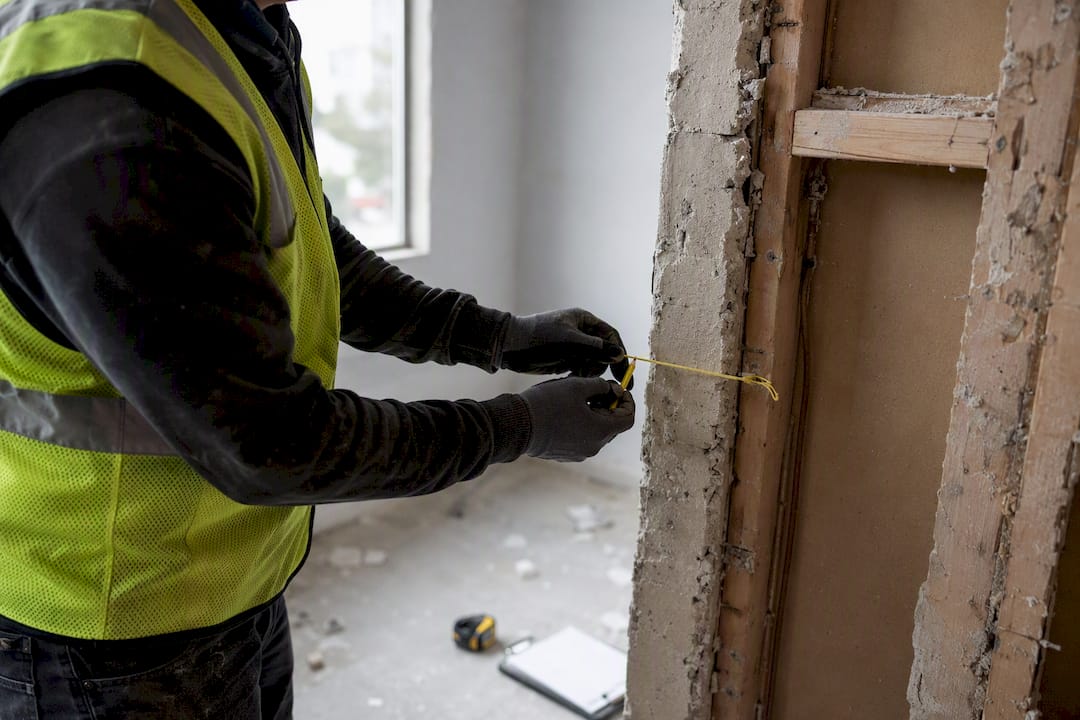
Three professionals carry legal weight in a Melbourne demolition, and skipping any of them isn’t an option.
Your building surveyor is the gatekeeper. They assess your application, check it against planning requirements, and issue (or refuse) the permit. If a planning permit is needed but missing, the surveyor will refuse the building permit outright rather than let the project proceed on a technicality.
Your registered demolisher carries out the physical work and must hold current registration, since Victorian law requires registered demolishers for all demolition works. Ask to see their registration number and confirm it on the Victorian Building Authority’s public register before you sign anything.
Your asbestos assessor matters enormously if your home was built before 2004. WorkSafe Victoria requires an asbestos audit for any structure built before 31 December 2003, carried out by a licensed assessor.
Building surveyor: assesses and issues the permit
Registered demolisher: carries out the physical works
Licensed asbestos assessor: audits pre-2004 structures before any work starts
Pro Tip: Book your asbestos audit before you get quotes from demolishers. A confirmed audit result changes both the scope of work and the price, so getting it done early stops you comparing apples with oranges.
What documents, fees and timelines should you plan for?
Councils and building surveyors want a fairly consistent paper trail. Expect to supply:
A current certificate of title
Site and demolition plans
Your asbestos audit report (if the building predates 2004)
Evidence that services (power, gas, water, telecommunications) have been disconnected
Your building surveyor’s details and appointment
Your planning permit number, where one applies
Fees vary by council and by project scale, but you can get a real sense of the numbers from published schedules. City of Boroondara lists a $96.70 application fee for a standard Section 29A report and consent application, on top of any building permit levy your surveyor calculates.
Timelines split roughly two ways. A standard building permit with no planning trigger can move relatively quickly once your surveyor has a complete application. Add a planning permit for heritage controls, though, and you’re looking at a longer track. Under the demolition practice note governing Section 29A, a reporting authority that doesn’t respond within 15 business days is deemed to have consented, unless a planning permit is required, in which case silence counts as refusal. That single rule catches a lot of homeowners out.
What about Regulation 116, Construction Management Plans and street works?
If your demolition touches a footpath, road, or any public space, expect a second layer of approvals beyond your building permit.
Regulation 116 covers public protection where works affect a public place, hoarding, scaffolding, or a crane oversailing the street. The City of Melbourne requires report and consent under Regulation 116 before this kind of activity can start, and other councils, including the City of Port Phillip and City of Boroondara, run comparable processes.
A Construction Management Plan (CMP) is often the next document your council wants, covering things like truck movements, working hours, noise management and site security. Here’s the catch: councils often won’t process a CMP until the Regulation 116 report and consent is already in hand. Lodge them out of order and you’ll simply wait longer.
Beyond these two, you may also need:
An asset protection permit if your works risk damaging council infrastructure
A temporary vehicle crossing permit for machinery access
A street occupation permit if bins, hoardings or skips will sit on the nature strip
None of these are exotic requirements. They’re standard for inner Melbourne demolitions, and skipping them is one of the more common causes of on-site delays.
How do you sequence a demolition permit application in Melbourne, step by step?
Getting the order right saves weeks. Here’s the sequence that avoids the most common hold-ups:
Engage a building surveyor early. Ask them directly whether Section 29A or a planning permit applies to your property before you commit to anything else.
Commission your asbestos audit if the building predates 2004, and confirm utility disconnections with your providers.
Appoint a registered demolisher. Get at least two quotes, and check registration and insurance details before signing.
Lodge your building permit application, along with any Section 29A report and consent or planning permit, in the correct order. Planning permits, where required, must come first.
Lodge public-protection consents and your CMP once the building permit pathway is confirmed.
Pro Tip: Ask your building surveyor for a written summary of every consent your project needs before you lodge anything. A single page listing each approval and its dependency saves you from lodging a Section 29A application that gets bounced back for a missing planning permit.
What mistakes cause demolition permit refusals, fines or delays?
The single biggest error is starting demolition before the building permit, or a required planning permit, is actually issued. Councils and the Victorian Building Authority treat unauthorised demolition seriously, and stop-work orders and fines follow quickly once work is reported.
Skipping the asbestos audit, or using an unlicensed assessor, is the second most common trap. It’s also the costliest to fix retrospectively, since work often has to stop entirely while a proper audit and remediation plan are arranged.
Never demolish before your building permit (and planning permit, if required) is issued
Never skip the asbestos audit on a pre-2004 building, and always verify the assessor’s licence
Confirm utility disconnections and lodge your CMP early, since councils won’t fast-track it later
How Yorcon manages permits and demolition on Melbourne projects
We coordinate your building surveyor, registered demolisher and asbestos assessor from the outset, rather than bringing them in one at a time as issues surface. That sequencing is where most delays actually happen.
On a typical knockdown–rebuild or major renovation, we prepare the demolition plans, gather service-disconnection evidence, and manage CMP coordination directly with council, so you’re not the one chasing three different departments for sign-off…
Where the standard advice on demolition permits falls short
Most guides on this topic treat each approval as its own checkbox: get your building permit, get your asbestos audit, get your Section 29A. That framing misses the real risk, which is sequencing, not compliance. Homeowners rarely fail because they skipped a step outright. They fail because they lodged things in the wrong order, then watched a Section 29A application sit for weeks because a planning permit hadn’t cleared first.
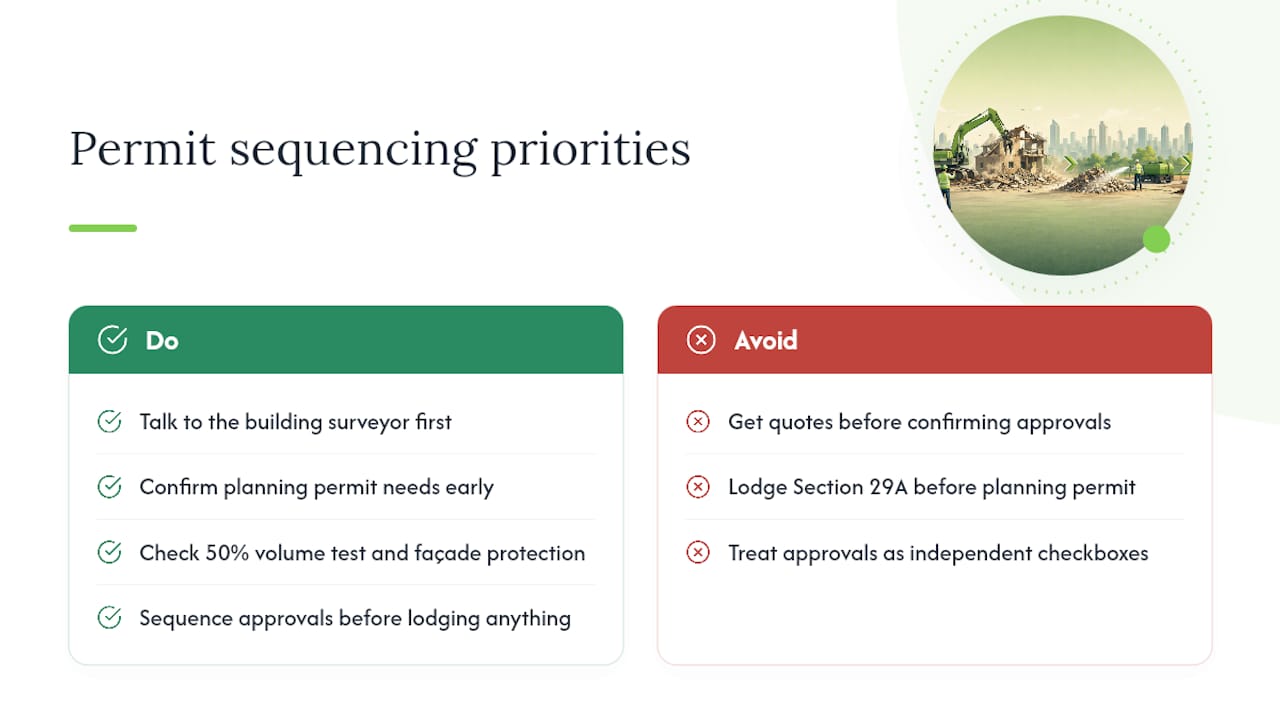
If there’s one priority the research here supports above all others, it’s this: talk to your building surveyor before you talk to anyone else. They’re the one person who can tell you, in a single conversation, whether your property needs a planning permit, whether the 50% volume test applies, and whether your façade is protected. Skip that conversation and everything downstream becomes guesswork.
The conventional advice to “get quotes first” is backwards for anything beyond a simple backyard shed removal. Quotes mean nothing until you know the actual scope of approvals your project requires.
— Matthew
Thinking about a knockdown–rebuild in Melbourne?
Yorcon manages demolition, permits and rebuild as one connected project, rather than leaving you to coordinate a surveyor, a demolisher and a council planner on separate tracks. That matters most on knockdown–rebuild jobs, where a missed planning permit or a late-lodged CMP can push your build back by months before a single brick is laid.
We handle building surveyor liaison, asbestos audit coordination, Construction Management Plan lodgement and the demolition itself, so the paperwork moves in the right order the first time. If your Melbourne property needs demolition before a rebuild, heritage renovation or major extension, our knockdown rebuild service is the place to start. Get in touch for a project assessment and we’ll map out exactly which permits and consents apply to your site before you commit to anything.
Where to check the official rules yourself
Start with the Victorian Building Authority for permit basics, WorkSafe Victoria for asbestos rules, and your local council’s Section 29A and Regulation 116 pages for forms and current fees.
Sources
Recommended


