
15 Minute Field Tested Checklist for Choosing a Builder in Melbourne

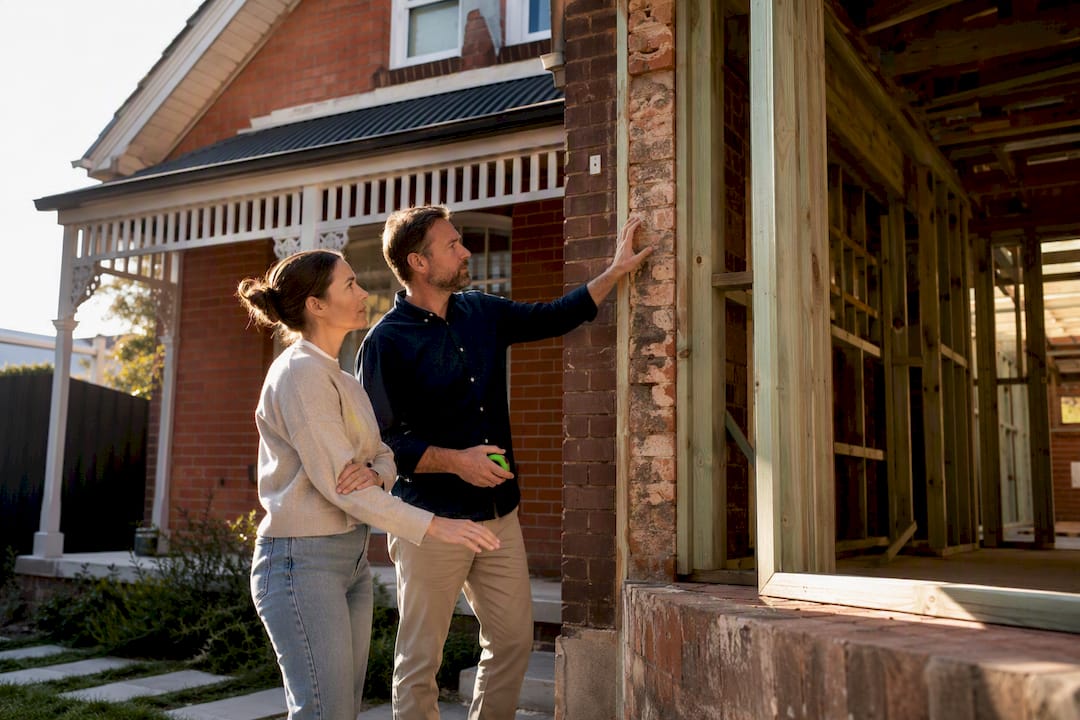
Hire a registered domestic builder and verify their Domestic Building Insurance (or Home Warranty) before you pay a cent. Check the Building and Plumbing Commission’s Practitioner Search, request the DBI certificate, and ask for two recent referees you can actually call. Do those three things first, and the rest of choosing a builder in Melbourne becomes a matter of comparing quotes, not crossing your fingers.
TL;DR:
Builders over $16,000 in Victoria must provide a valid Domestic Building Insurance certificate before accepting a deposit, or they are operating outside legal requirements.
Confirm registration class matches your project scope, and verify the builder’s insurance, address, and disciplinary history through official registers before proceeding.
Avoid paying large upfront deposits; instead, insist on staged payments based on actual work completion and comprehensive, independent contract review.
Visiting ongoing sites and asking detailed referee questions ensures the builder handles project challenges responsibly, not just delivers good results.
For projects over $10,000, a written major domestic building contract and documented variation process are legally required and help prevent disputes.
Table of Contents
Choosing a builder in Melbourne: the non-negotiable checklist
How do I verify a builder’s registration and insurance in Victoria?
What should a builder’s contract and payment schedule include?
What are the priority questions to ask a builder at the first meeting?
What drives the timeline and cost of a Melbourne building project?
Why an experienced Melbourne builder manages these risks better
How do building permits and council approvals work in Melbourne?
Choosing a builder in Melbourne: the non-negotiable checklist
Before you shortlist anyone, run this quick screen. It takes fifteen minutes per builder and it will save you months of grief if something’s off.
Confirm registration class matches the job. A builder registered for limited trades cannot legally take on a full new build or complex renovation. Check the class listed against the scope of your project before you go further.
Get the DBI certificate before any deposit changes hands. Domestic Building Insurance protects you if the builder can’t finish the job or fix defects due to insolvency, death, or disappearance.
Ask for public liability and professional indemnity proof. A legitimate operator hands these over without hesitation, usually within a day.
Request a physical address and ASIC trading history. A mobile number and a PO box is not a business, it’s a warning sign.
Insist on a major domestic building contract for anything over $10,000, with staged payments tied to work actually completed, not calendar dates.
None of this is about distrust for its own sake. It’s about making sure the person holding your deposit is who they say they are, and covered if things go sideways.
How do I verify a builder’s registration and insurance in Victoria?
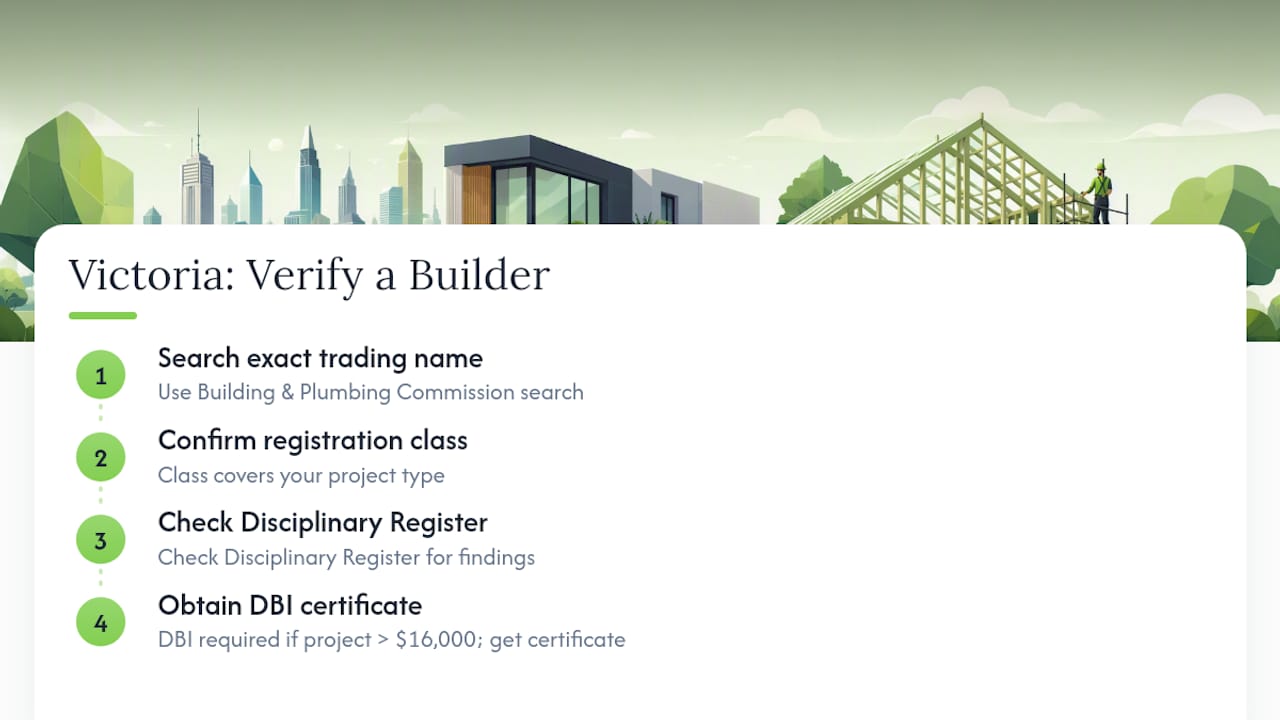
Every registered practitioner in Victoria appears on the Building and Plumbing Commission’s Practitioner Search, and the same portal shows disciplinary history if there’s any to see. Search the exact trading name, confirm the registration class covers your project type, and check the Disciplinary Register for any past findings. The Victorian Building Authority’s Find a Practitioner tool is a mirror of the same data and worth a second look if a name doesn’t come up cleanly.
The trigger point that matters most:
If your domestic building project is valued at over $16,000, your builder must arrange Domestic Building Insurance on your behalf and hand you the certificate before taking a deposit. Home Warranty rules are set to change from 1 July 2026, so confirm current requirements at the time you sign.
Work carried out by an unregistered practitioner carries no DBI protection at all, no matter how good the price looks. If a builder can’t produce a valid certificate on request, that’s your answer. Walk away and keep looking.
What should a builder’s contract and payment schedule include?
Get these four things sorted before a hammer touches a single stud:
A major domestic building contract for any work over $10,000, as required under Victorian consumer law, along with the Domestic Building Consumer Guide handed to you before you sign anything.
Independent legal review of the contract, even a quick one. A building lawyer will spot vague variation clauses that a homeowner might miss entirely.
A deposit that’s reasonable, not front-loaded, with the rest released in stages tied to completed work, and a written process for pricing any changes along the way.
A full document set collected upfront: the DBI certificate, the registration number, and current insurance certificates, all filed somewhere you can find them again.
A contract that skips any of these isn’t a bargain, it’s a liability wearing a nice quote.
How do you check a builder’s track record before signing?
Online reviews tell you almost nothing about how a builder handles a difficult Tuesday on-site. Referees do.
Ask referees the specific questions, not the vague ones: did the project finish close to the original timeline, how were variations priced and communicated, and would they hire this builder again for a second project.
Visit a site in progress if you can. Look past the tidy hero shots and check finish quality, whether trades are actually present and working, and any signs of rework being quietly patched over.
Check ASIC for trading history and business longevity. A builder who’s traded under three different names in five years is telling you something, even if they never say it out loud.
Favour a local physical address over a builder who operates from a mobile number and a spare bedroom. Local presence tends to mean local accountability.
Pro Tip: Ask a referee what the builder was like to deal with when something went wrong, not just when everything went right. Every project hits a snag somewhere. How it’s handled tells you more than the finish itself.
What are the priority questions to ask a builder at the first meeting?
Keep the first conversation focused. These questions, in this order, tell you almost everything you need to know within twenty minutes:
What’s your registration number, and which class does it fall under?
Can you show me your current DBI certificate of currency?
Who manages subcontractors on-site, and how often will I hear from them?
What’s your realistic estimated timeline for a project like mine?
How are variations priced, approved, and documented?
Who signs off on each stage before payment is released?
Watch how they answer, not just what they say. Vagueness around documents, pressure to lock in a large deposit on the spot, or reluctance to put anything in writing are the three clearest signals to walk away.
What drives the timeline and cost of a Melbourne building project?
New builds typically run through site prep, slab, frame, lock-up, fit-out, and handover, and a renovation follows a compressed version of the same sequence. Extensions sit somewhere between the two, depending on how much of the existing structure is touched.
Site conditions matter more than most people expect. Sloping blocks, tricky access, and older services can add weeks before a single wall goes up.
Council permit timing is often the biggest variable outside the build itself, particularly on heritage-overlay properties or tight inner suburban lots.
Material and finish selections shift both cost and schedule, especially anything custom or imported.
Get at least three written quotes on the identical specification, with exclusions like appliances, driveways, and landscaping spelled out explicitly, so you’re comparing the same job three times, not three different jobs.
Why an experienced Melbourne builder manages these risks better
Building and renovating homes across Melbourne includes bespoke extensions and heritage restorations through to architectural new builds. That length of time on the tools and in council offices teaches you where projects usually go wrong, and how to head it off before it costs a client money or sleep.
End-to-end project management is the difference. When one team handles design, permits, and construction under one roof, with documented stage reporting at every milestone, there’s no gap for miscommunication to hide in. That model is built to address common homeowner frustrations with the building process elsewhere.
What are your rights if a dispute happens during the build?
Disputes happen even with a good builder, usually over variations, timing, or the standard of finish. What matters is knowing the path before you need it, not scrambling to find one mid-argument.
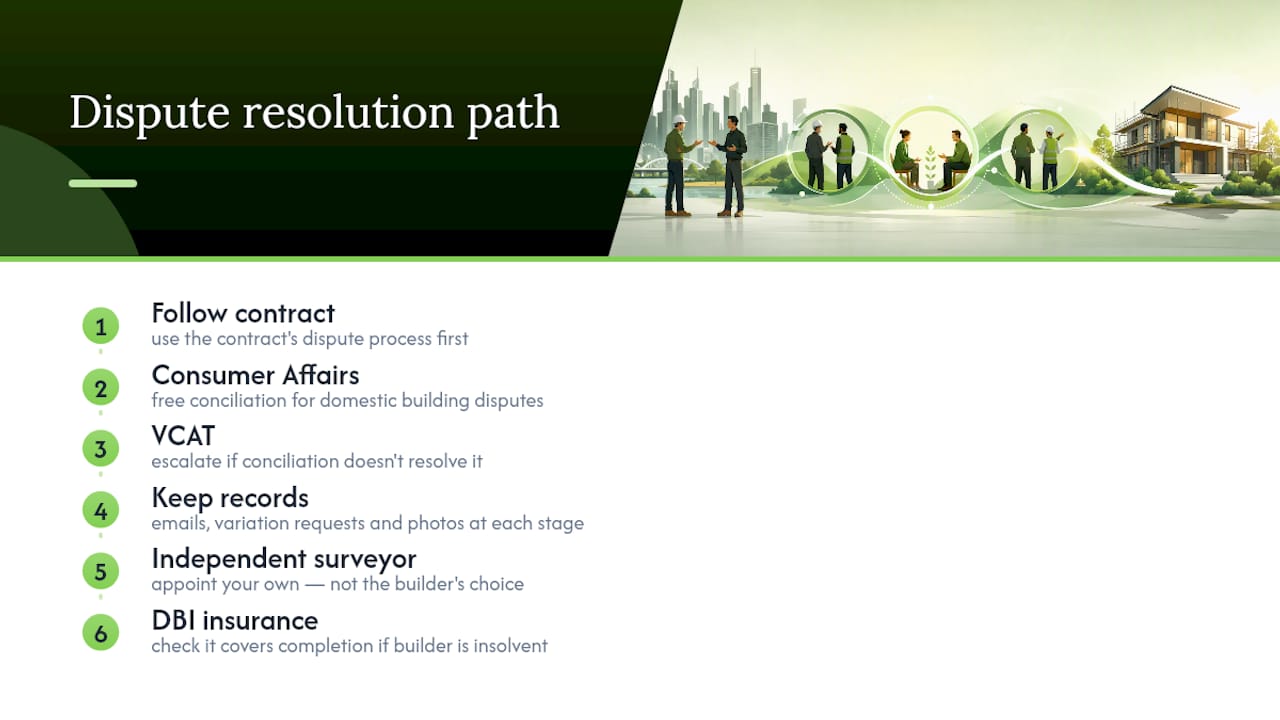
Start with the contract itself. A proper major domestic building contract sets out a dispute process, and most disagreements get resolved faster by following that process than by escalating straight to a formal complaint. If the builder is unresponsive or the issue is serious, Consumer Affairs Victoria provides conciliation services specifically for domestic building disagreements, and it’s a free first step before anything more formal.
For unresolved matters, homeowners can escalate to the Victorian Civil and Administrative Tribunal, which handles domestic building disputes when conciliation doesn’t resolve things. Keep every email, every variation request, and every photo of work at each stage. That paper trail is what makes a dispute resolvable quickly rather than dragging on for months.
This is also where an independent building surveyor earns their fee. Homeowners are entitled to appoint their own surveyor rather than accept whoever the builder suggests, and an independent surveyor has no incentive to smooth over a defect just to keep the project moving. If DBI applies to your project and the builder becomes insolvent or disappears mid-build, that insurance is what covers completing the work or fixing what’s already been done. Knowing that safety net exists, and confirming it’s actually in place before you sign, is what separates a manageable setback from a genuine crisis.
How do building permits and council approvals work in Melbourne?
Almost every new build, extension, and major renovation in Victoria needs a building permit before work starts, issued either by your local council’s building surveyor or a private registered building surveyor. Your builder should be managing this process, not leaving you to chase it, but you should still understand roughly what’s happening and when.
The permit confirms the design meets the National Construction Code and relevant Victorian regulations, covering everything from structural adequacy to fire safety and energy efficiency. Heritage overlays add another layer entirely. Many established Melbourne suburbers such as parts of Fitzroy, Carlton, and Brunswick sit within heritage precincts, where council planning approval is required on top of the building permit, often with strict controls on street-facing changes, materials, and roof form.
Timing is the part that catches people out. Planning approval through council can take considerably longer than the building permit itself, particularly if a heritage overlay, a tree protection zone, or an objection from a neighbour is involved. Ask your builder early how they sequence permit applications, because a builder who understands local council quirks, response times, and common objection points in your specific municipality will often shave real weeks off the front end of a project. This is one area where local experience genuinely pays for itself, well before the first slab is poured.
Quick checklist: one page to keep by the phone
Before you commit, run through this: check registration on the Practitioner Search, confirm DBI is in place, call two referees, collect three comparable written quotes, get the contract reviewed independently, and consider your own building surveyor. Drop any builder who has no ABN, no physical address, no DBI certificate, or who pressures you for a large deposit upfront. When in doubt, check the official registers before you sign anything.
— Matthew
How Yorcon can help once you’ve done your checks
If you’ve worked through the checklist and you’re after a builder who manages the entire process rather than handing you off between trades, a company providing end-to-end project management may fit that need. Projects are run end to end, design through construction, with a consistent team accountable from first sketch to final handover.
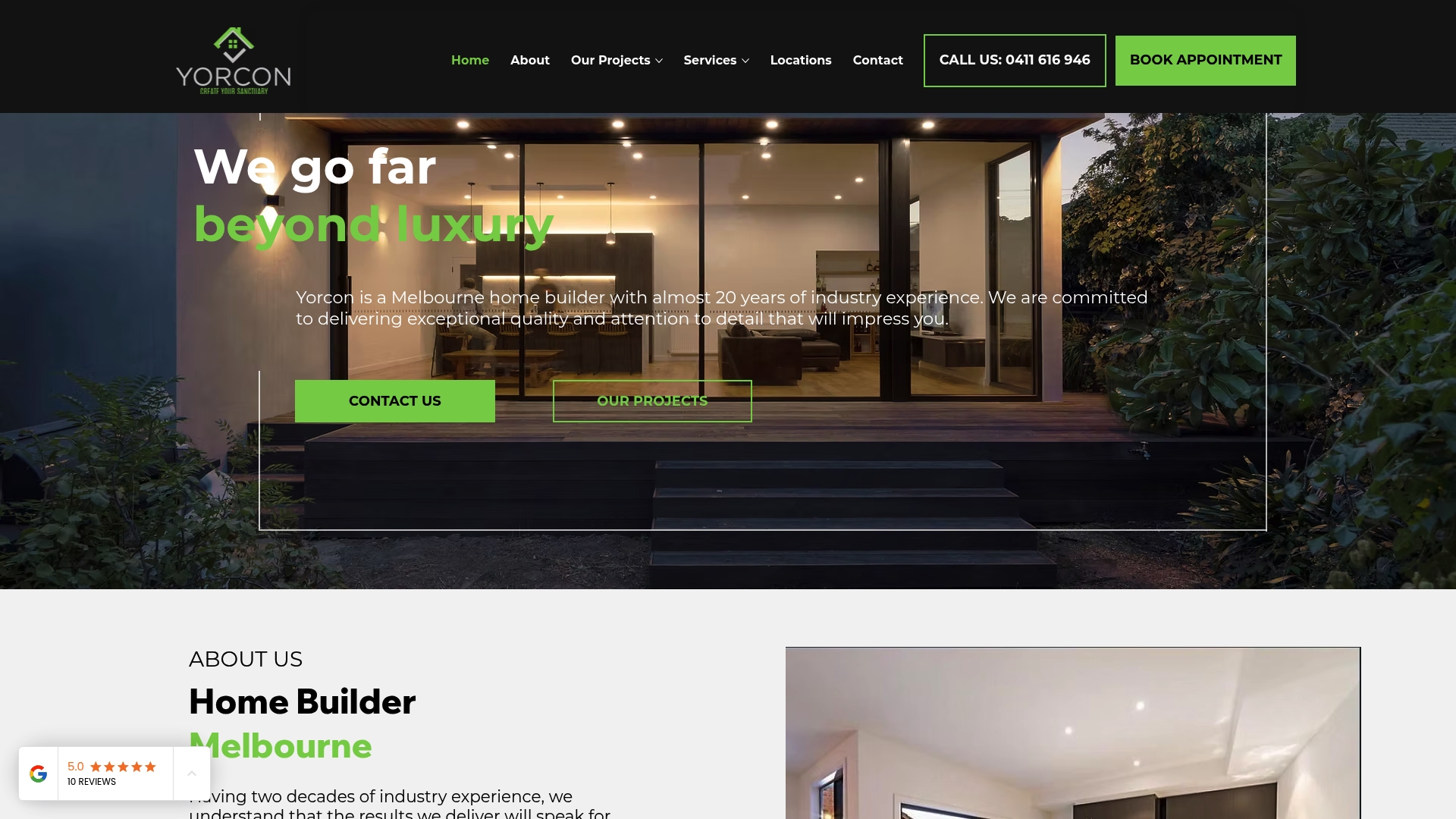
Yorcon’s services cover Architectural House Designs, Home Extensions, Home Renovations, Design & Build, Heritage Home Renovations & Restorations, Knockdown Rebuild, Loft & Attic Conversions, and New Luxury Home builds. Whatever stage a project is at, from an early idea to a permit-ready design, registration and insurance documentation can be provided on request.
The easiest next step is a free project feasibility call, where we talk through your site, your budget range, and what’s realistic before any commitment is made. Book that call and find out where your project actually stands.
Official registers and guidance worth bookmarking
BPC Practitioner Search and Disciplinary Register — verify registration and check disciplinary history.
Domestic Building Insurance guidance — thresholds and certificate requirements.
Domestic Building Consumer Guide — contract rights and checklist.
Yorcon’s Domestic Building Insurance explainer for a fuller walkthrough.
Sources
FAQ
Is $400,000 enough to build a house in Melbourne?
It depends heavily on land, location, and finish level, but a budget under $450,000 is generally tight for a full custom new build once council permits, site works, and fittings are factored in. It stretches further on a well-planned extension or renovation. Get comparable written quotes early so you know what that budget actually buys on your specific site.
What should you look for when choosing a builder?
Confirm registration on the BPC Practitioner Search, check the DBI certificate is current, and call at least two recent referees before signing anything. Communication style during that first meeting predicts how smoothly the build will run, often more reliably than the initial quote itself.
Is it cheaper to buy or build a house in Melbourne?
It varies by suburb, land value, and how much of the build you customise, so there’s no single answer. Buying an established home avoids permit timelines and construction risk, while building lets you shape the layout and finishes to your own brief. A managed builder can run feasibility numbers against a specific site before a decision is made.
Which home builder has the best reputation in Australia?
Reputation is best judged project by project rather than by brand name alone, using registration checks, referee calls, and site visits rather than online ratings in isolation. Builders with long, documented local histories and transparent processes tend to hold up best under that kind of scrutiny.
How much does Yorcon charge for a project?
Pricing depends on scope, and most services don’t carry a published rate beyond Architectural House Designs, which have a defined price range depending on project complexity. The best starting point can be a free project feasibility call, where project scope and numbers can be discussed.
Recommended


