
Top Englehart.com.au Alternatives for Melbourne Homeowners
- Yorgo
- 14 hours ago
- 12 min read

If you’re searching for luxury custom home builders in Melbourne that offer a comparable level of craftsmanship to Englehart Homes, six firms consistently stand out: Latitude 37, Thomas Archer, Mazzei, Envy Abode, Yorcon, and a handful of other architect-led specialists. The single most important selection cue is service model — whether you want an architect-led firm that hands off to a separate builder, or a design-and-build team that manages everything under one roof. Your first move should be to request a preliminary scope document and recent portfolio from each shortlisted firm before any conversation about price.
Here’s a quick map of who fits what:
Latitude 37 — best for high-end bespoke new builds with a strong architectural design focus across Melbourne’s inner suburbs.
Thomas Archer — suits clients who want a builder-led design-and-build process with a reputation for contemporary luxury finishes.
Mazzei — a strong choice for architecturally detailed custom homes where material quality and joinery craftsmanship are priorities.
Envy Abode — well regarded for luxury new builds and renovations with a focus on lifestyle-driven design outcomes.
Yorcon — a compelling option for architectural builds, heritage renovations, extensions, and knockdown–rebuild projects, backed by nearly 20 years of residential construction experience across Melbourne.
Master Builders Victoria (MBAV) membership and compliance with YourHome guidance on environmentally preferred materials are two early verification steps worth adding to your checklist before you commit to any firm.
Table of Contents
Profiles of the top alternative luxury builders in Melbourne
How do you choose the right luxury custom home builder in Melbourne?
Why Yorcon is a strong alternative to Englehart Homes for Melbourne luxury projects
What should you do after shortlisting your preferred builders?
What I’ve learned about choosing a luxury builder in Melbourne
Yorcon brings design and construction together for Melbourne luxury projects
How do these Englehart alternatives compare at a glance?
The table below maps each firm across the seven dimensions that matter most when you’re choosing between luxury custom builders. Budget bands are indicative; final costs depend on architectural complexity, finish quality, material lead times, and site conditions such as slope and access.
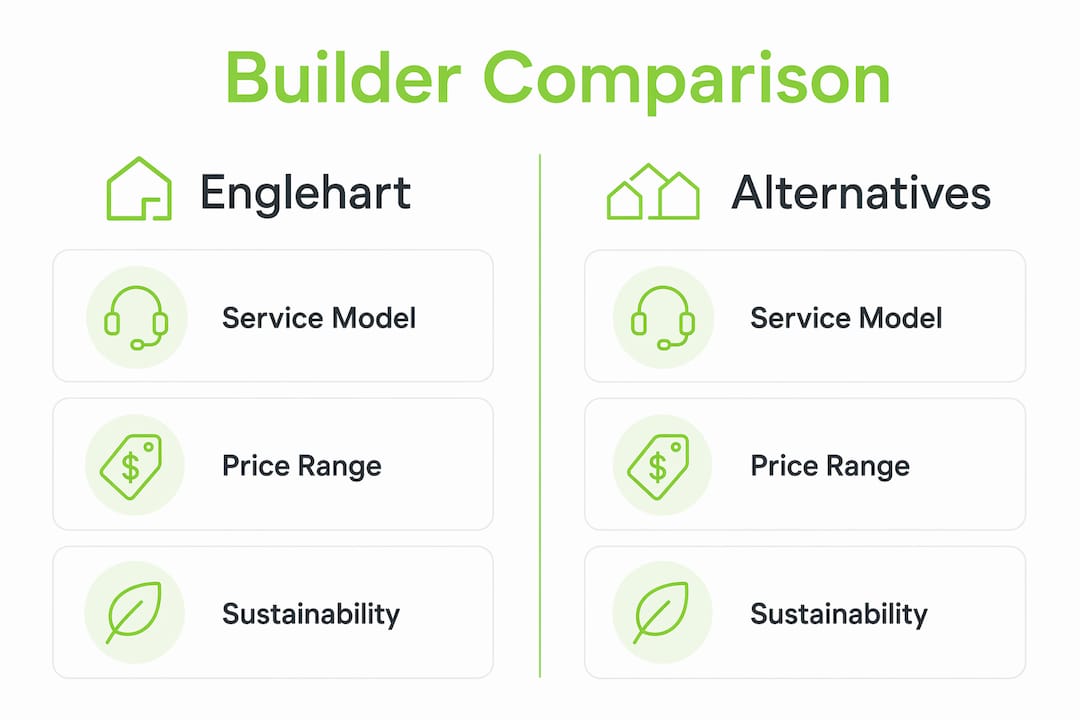
Builder | Best for / Specialization | Service model | Typical budget band | Est. timeline | Melbourne areas | Warranty / credentials | Client experience |
Englehart Homes | Bespoke luxury new builds | Architect-led design & build | Premium ($1M+) | 10–18 months (construction phase varies by project) | Inner suburbs, bayside | MBAV member; statutory + extended warranty | Structured process, published team leadership |
Latitude 37 | High-end architectural new builds | Architect-led design & build | Premium ($1M+) | 10–18 months (construction phase varies by project) | Inner east, inner south | MBAV member | Portfolio-led, design-focused consultation |
Thomas Archer | Contemporary luxury builds | Builder-led design & build | Premium | 10–18 months (construction phase varies by project) | Broad Melbourne metro | MBAV member | Streamlined brief-to-build process |
Mazzei | Architecturally detailed custom homes | Architect-builder collaboration | Premium | 10–18 months (construction phase varies by project) | Inner Melbourne | Industry awards; MBAV | Craft-focused, high-touch communication |
Envy Abode | Luxury new builds & renovations | Builder-led design & build | Premium | 10–18 months (construction phase varies by project) | Melbourne metro | MBAV member | Lifestyle-driven design consultation |
Yorcon | Architectural builds, heritage renovations, extensions, knockdown–rebuild | Design-and-build / builder-led | Mid-premium to premium | 10–18 months (construction phase varies by project) | Broad Melbourne (Kew, Malvern, St Kilda, Fairfield) | Nearly 20 years’ experience; statutory warranty | Transparent, communication-first project management |
A few things to verify before you commit to any of these firms:
Check that the portfolio includes projects completed within the last three years — older photos may not reflect current team capability or material availability.
Confirm current MBAV or Master Builders Association (MBA) membership directly with the association, not just from the builder’s website.
Ask for warranty documentation in writing, including the process for defects inspections at 60–90 days post-handover and the clause covering post-handover defects management.
Request at least two client references from projects of a similar type and budget to yours.
The biggest red flag across all these firms is vague communication protocols. Transparency about timelines and milestone reporting are the most commonly cited pain points in luxury custom builds — ask each builder how they handle it before you sign anything.
Profiles of the top alternative luxury builders in Melbourne
Englehart Homes
Englehart is the benchmark you’re measuring against. They specialize in bespoke luxury new builds with a structured design-and-build process and a published leadership team that signals organizational stability. Their portfolio skews toward inner-suburban and bayside Melbourne, with a strong emphasis on architectural detailing and premium finishes.
Who this suits: Buyers seeking a well-established firm with a long track record in high-end new builds and a formal project management structure.
What to expect in the first meeting: A structured briefing process covering site, budget, and design aspirations, followed by a preliminary scope proposal.
One verification step: Request the most recent three completed projects with client references and confirm MBAV membership status.
Latitude 37
Latitude 37 positions itself as an architect-led luxury builder with a design-first philosophy. Their work tends to feature strong material palettes, considered spatial planning, and a close relationship between the design and construction teams. They’re a natural fit if you want the feel of a bespoke architectural practice without managing a separate architect-builder handoff.
Who this suits: Clients who want architectural quality and a single point of accountability from concept through to handover.
What to expect in the first meeting: A design-led conversation about lifestyle, site, and aesthetic direction before any discussion of construction methodology.
One verification step: Ask to see joinery and material detailing in portfolio photos — it’s where the quality gap between firms shows up most clearly.
Thomas Archer
Thomas Archer is a builder-led design-and-build firm with a reputation for delivering contemporary luxury homes efficiently. Their process tends to be more structured and less bespoke than architect-led alternatives, which suits clients who have a clear brief and want a reliable, well-managed build rather than an experimental design process.
Who this suits: Buyers with a defined brief who prioritize delivery certainty and a proven construction process over maximum design flexibility.
What to expect in the first meeting: A practical conversation about inclusions, site conditions, and timeline, with early cost guidance.
One verification step: Request a sample contract and check how provisional sums and allowances are handled — this is where budget surprises typically originate.
Mazzei
Mazzei brings a craft-focused approach to luxury residential construction, with a particular emphasis on material quality, joinery, and architectural detailing. They tend to work on projects where the client has a strong design vision and wants a builder who can execute it with precision rather than simplify it for cost.
Who this suits: Clients with a detailed brief and a genuine interest in material and craft quality, who are comfortable with a longer, more collaborative process.
What to expect in the first meeting: A deep conversation about materials, finishes, and design intent, with an emphasis on understanding the brief before discussing budget.
One verification step: Look for landscaping integration and external material continuity in portfolio photos — these details reveal how holistically a builder thinks about the finished home.
Envy Abode
Envy Abode covers both luxury new builds and high-end renovations, with a lifestyle-driven design approach that appeals to clients who want their home to feel as good as it looks. Their process tends to be collaborative and design-forward, with a focus on how spaces are actually used rather than just how they photograph.
Who this suits: Homeowners who want a builder that thinks about livability and spatial quality alongside aesthetics, for both new builds and significant renovations.
What to expect in the first meeting: A lifestyle and brief conversation that explores how you use your home before moving to design options.
One verification step: Ask specifically about renovation projects in their portfolio — some luxury builders are stronger on new builds than on working within existing structures.
Yorcon
Yorcon is a Melbourne-based design-and-build firm with nearly 20 years of residential construction experience, covering architectural builds, heritage renovations, home extensions, and knockdown–rebuild projects. What sets Yorcon apart is the emphasis on managing the entire building process in-house, which reduces the handoff risk between design and construction that can erode finish quality on highly detailed luxury projects. Their geographic footprint spans inner-east suburbs like Kew and Malvern through to St Kilda and Fairfield.
Who this suits: Homeowners who want a single point of accountability from design through to handover, particularly for heritage homes, extensions, or architecturally detailed new builds.
What to expect in the first meeting: A transparent briefing process covering site conditions, brief, and budget, with clear guidance on what the first paid design stage will deliver.
One verification step: Review Yorcon’s architectural home building services and request examples of projects in your suburb or of a similar project type.
Pro Tip: When reviewing any portfolio, look beyond the hero shots. Check the transition details — how joinery meets walls, how external materials wrap corners, how landscaping integrates with the building line. These details are where the real quality gap between builders becomes visible.
How do you choose the right luxury custom home builder in Melbourne?
Prioritize service model fit and proven delivery on your specific project type first, then use price as a tiebreaker — not the other way around. Here’s a practical sequence to follow.
1. Clarify your brief and budget range before you contact anyone. Write down your project type (new build, renovation, extension, knockdown–rebuild), your non-negotiables on design, your realistic budget range, and your preferred timeline. Builders give more accurate early guidance when you arrive with a clear brief.
2. Check portfolios for your project type specifically. A builder with an outstanding new-build portfolio may not be the right choice for a heritage renovation, and vice versa. Look for completed projects that match your brief in type, scale, and suburb.
3. Request a staged quote and a concept fee. A preliminary design stage typically costs between $5,000 and $20,000 depending on scope. This stage locks in your brief, produces preliminary pricing, and forces the builder to outline provisional sums and allowances up front — making it far easier to compare proposals like-for-like.
4. Compare contract scope carefully. Two quotes can look similar on the surface while covering very different levels of finish, site costs, and service. Ask for a full breakdown of inclusions, exclusions, and allowance-based items. Site costs — driven by soil classification, slope, drainage, and easements — are the most common source of budget blowouts.
5. Verify credentials and warranty terms in writing. Confirm MBAV or MBA membership directly. Ask for statutory warranty documentation plus any extended workmanship warranty, and check the process for defects inspections at 60–90 days post-handover. A builder who hesitates on this step is telling you something.
6. Schedule a site visit and a second meeting. The first meeting is about the brief. The second is about process, communication, and fit. Ask how the builder handles variations, who your day-to-day contact will be, and how milestone reporting works.
Questions worth asking at first contact:
What are the main cost drivers for a project like mine, and how do you handle provisional sums?
Do you use your own trades or subcontractors, and how do you manage quality on site?
Who is my project manager, and how often will I receive progress updates?
What is your defects and warranty process after handover?
Can you walk me through a recent project of similar type and budget?
On sustainability: Specifying environmentally preferred materials early in the brief is one of the most effective ways to secure better environmental outcomes without significant cost premiums. Ask each builder whether they have experience with passive design principles, certified sustainable materials, or energy-efficiency measures such as high-performance glazing and thermal mass. Some firms mention NABERS or Green Star credentials; verify these claims with the relevant certification body rather than taking marketing language at face value.
A realistic timeline for a luxury custom build in Melbourne looks something like this:
Brief and concept → 1–3 months | Design development → 2–4 months | Planning and building approvals → 2–6 months | Construction (varies by project complexity, typically 10–18 months) | Handover and defects → 1–3 months
The custom home design and build timeline varies significantly with architectural complexity, so treat these ranges as a planning guide rather than a guarantee. Build in a contingency buffer of at least 10–15% on both budget and timeline.
Pro Tip: Ask your builder to distinguish between fixed-price items and provisional sums in the contract. Provisional sums are estimates, not guarantees — and they’re where most luxury build budgets drift. The fewer provisional sums in your contract, the more predictable your final cost.
Why Yorcon is a strong alternative to Englehart Homes for Melbourne luxury projects
Yorcon’s core strength is integrated project management: the same team that develops the design brief manages the construction, which means fewer handoff gaps and more consistent delivery on finish quality. For clients who’ve been frustrated by the disconnect between what an architect draws and what a builder actually delivers, that single-point-of-accountability model makes a real difference.
Core services and specializations:
Architectural home builds — design-integrated new builds with a focus on material quality and spatial detail
Design-and-build — end-to-end management from concept and approvals through to construction and handover
Heritage and Victorian home renovations — sympathetic restoration of period homes, including lime mortar work and heritage-compliant detailing
Home extensions — high-end additions that integrate architecturally with the existing structure
Knockdown–rebuild — full site redevelopment for clients whose block outgrows the existing home
Trust signals to verify:
Nearly 20 years of residential construction experience across Melbourne
Transparent, communication-first project management approach with clear milestone reporting
Geographic coverage across inner-east, inner-south, and north Melbourne suburbs including Kew, Malvern, St Kilda, and Fairfield
Getting started with Yorcon: Prepare a brief that includes site photos, block dimensions, your project type, a realistic budget range, and any council overlays or heritage controls that apply to your property. Yorcon’s first paid design stage will produce a concept, preliminary pricing, and a clear scope — giving you a solid basis for a final go/no-go decision.
[Client testimonial placeholder — to be populated with a verified Yorcon client reference upon publication.]
What should you do after shortlisting your preferred builders?
Once you have two or three firms you’re genuinely considering, the next steps are straightforward — but they matter.
Prepare a concise brief and budget range. One page is enough: project type, site address, block dimensions, key design priorities, budget range, and preferred timeline. Builders who receive a clear brief give more accurate early guidance.
Request portfolios and two staged quotes. Ask each firm for a portfolio of recent comparable projects and a preliminary design fee proposal. Comparing staged quotes forces each builder to outline their scope assumptions, making the comparison meaningful.
Arrange site meetings. Walk the site with each builder. How they respond to site conditions, constraints, and opportunities tells you more about their capability than any brochure.
Check references and warranty documentation. Call at least two references from comparable projects. Ask specifically about communication during construction and how defects were handled post-handover.
Schedule a design-phase start agreement if satisfied. Once you’ve chosen a builder, formalize the design-phase engagement in writing before any work begins — including scope, fee, deliverables, and timeline.
Who else to involve: If you’re working with an architect-led firm, your architect will typically manage the builder relationship. For a design-and-build model like Yorcon’s, a building surveyor is still worth engaging independently for permit and inspection oversight. On larger projects, an independent project manager can add a useful layer of accountability regardless of the service model.
Documents to have ready before requesting quotes:
Certificate of title and title plan
Existing floor plan or as-built drawings (if renovating)
Site photos (all elevations, street frontage, neighboring properties)
Written brief with budget range
Any council planning overlays, heritage controls, or covenants
For guidance on digital marketing for general contractors and what to expect at each stage, Yorcon’s resources are a practical starting point.
Key Takeaways
Choosing the right alternative to Englehart Homes comes down to matching service model to project type, verifying credentials independently, and using a staged quote to compare proposals on equal terms.
Point | Details |
Service model is the first filter | Decide between architect-led and design-and-build before comparing firms — the model shapes everything from cost to communication. |
Staged quotes protect your budget | A preliminary design stage ($5,000–$20,000) locks in scope and forces builders to itemize provisional sums, making cost comparisons meaningful. |
Verify credentials independently | Confirm MBAV membership and warranty terms directly — don’t rely on marketing copy alone. |
Portfolios should be recent and project-matched | Look for completed work within the last three years that matches your project type, not just your aesthetic. |
Yorcon offers integrated delivery | With nearly 20 years of experience across architectural builds, heritage renovations, and extensions, Yorcon manages design through to handover under one team. |
What I’ve learned about choosing a luxury builder in Melbourne
The conventional wisdom says to get three quotes and compare on price. In practice, that approach almost always leads to a frustrating experience on a luxury custom project — because the quotes aren’t comparing the same thing. One builder’s $1.2M proposal might include full architectural documentation, fixed-price trades, and a dedicated project manager. Another’s $980K figure might be built on provisional sums that quietly expand to $1.4M by the time you reach lock-up.
The single most useful thing you can do before signing anything is ask each builder to walk you through their last three projects: what the original contract price was, what the final cost was, and why the difference exists. Builders who’ve delivered consistently close to contract price will answer that question confidently. Those who haven’t will change the subject.
Communication is the other underrated factor. On a build that runs 18–24 months, the quality of your weekly or fortnightly update matters as much as the quality of the joinery. A builder who is great at construction but poor at communication will leave you anxious and second-guessing decisions throughout the process. Ask specifically how milestone reporting works, who calls you when something changes, and what the variation approval process looks like. The answer tells you a great deal about how the relationship will actually feel.
For heritage projects in particular, the gap between firms is significant. Working with lime mortar, matching original brick profiles, and navigating heritage overlay requirements demands genuine specialist knowledge — not just goodwill. Verify that the builder has completed comparable heritage work, not just that they’re willing to try.
Yorcon brings design and construction together for Melbourne luxury projects
If you’ve spent time comparing the firms above and you want a builder who manages the entire process under one roof, Yorcon is worth a direct conversation. The real advantage isn’t just convenience — it’s that design-integrated teams reduce the handoff risk between architect and builder on highly detailed finishes, which is exactly where luxury builds tend to lose quality.
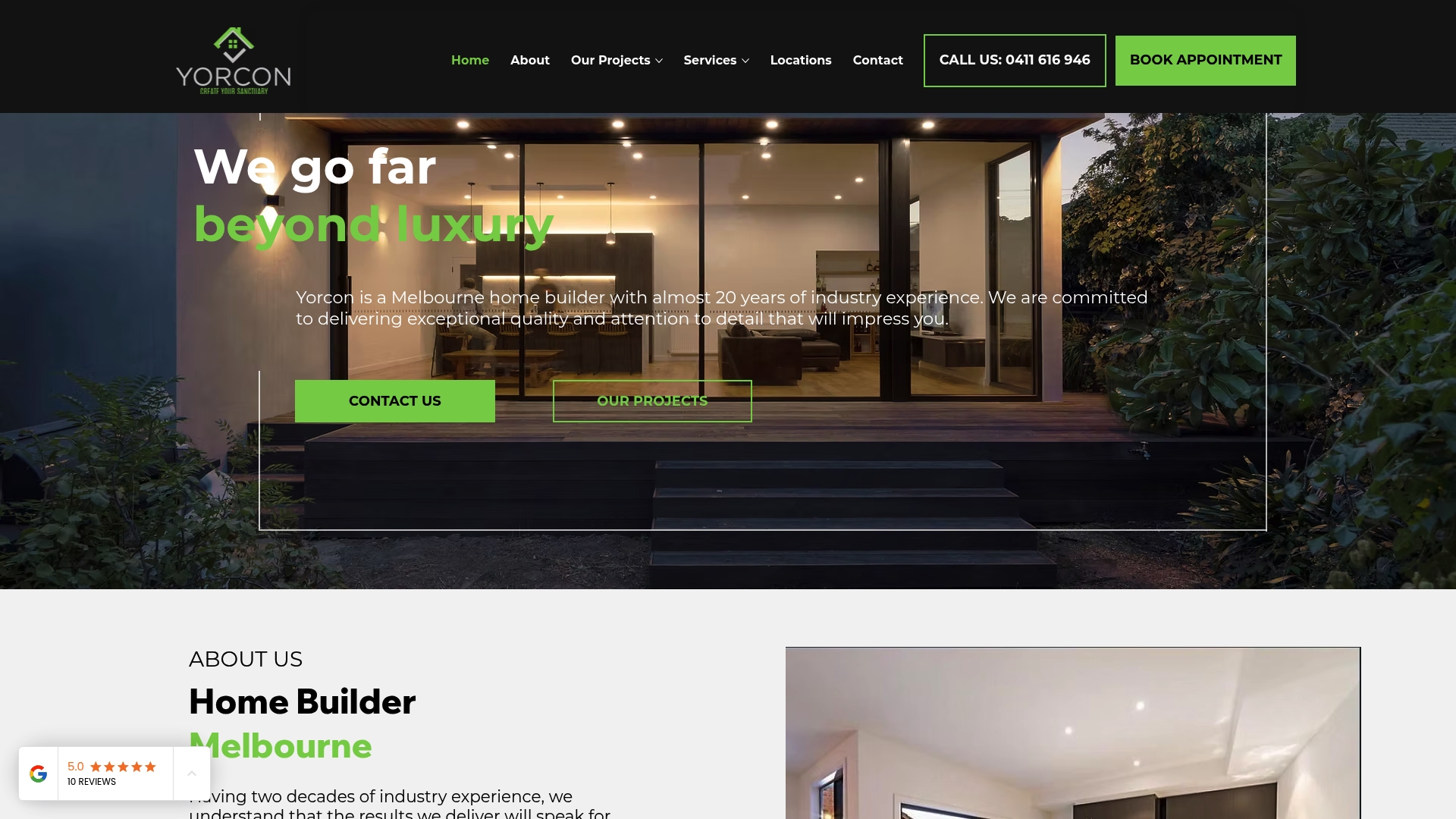
Yorcon covers architectural new builds, heritage renovations, high-end home extensions, and knockdown–rebuild projects across Melbourne, with nearly 20 years of experience and a transparent, communication-first approach that addresses the frustrations most homeowners encounter on complex builds. Whether you’re working with an existing heritage home or starting from a cleared site, the process starts with a clear brief and a paid concept stage that gives you real pricing before you commit.
Ready to see what’s possible for your project? Request a tailored quote from Yorcon’s architectural building services team and get a preliminary scope that reflects your brief, your site, and your budget.
Recommended


