
Homeowners: Three Contract Musts for Builder Communication Expectations


Expect three things from any builder before you sign a thing: a named single point of contact, regular written updates at least weekly, and a signed process for every variation. These three habits, backed by QBCC guidance and standard industry practice, are what stop small misunderstandings from turning into delays, disputes, or surprise costs. A reputable builder should build its client process around a framework like this.
TL;DR:
Clear written communication expectations should be established upfront, including scope, pricing, variation authority, and licensing, to prevent disputes.
Weekly written updates and designated channels are essential for maintaining transparency and avoiding misunderstandings during the project.
Every variation must be documented with itemized costs and signatures before work begins to protect both parties in case of future issues.
Address delays or defects immediately with phone contact followed by a written plan within 48 hours to ensure timely resolution.
Schedule inspections at each progress payment, verify work against expectations, and collect all project documents to facilitate smooth handover and warranty claims.
Table of Contents
Core communication expectations to set at the start of a build
What to ask and agree at the pre-construction kickoff meeting
Regular inspections, final walk-through and handover expectations
Yorcon perspective: how a project-managed builder keeps clients informed
How Yorcon helps clients set and keep communication expectations
Core communication expectations to set at the start of a build
Before any concrete is poured, get these expectations down on paper. Vague verbal promises are where good renovations go wrong, and a builder worth hiring won’t flinch at putting these in writing.
Scope, inclusions and exclusions. Every fixture, finish, and square metre should be spelled out. If something isn’t included, the contract should say so explicitly, not leave it implied.
Price and payment structure. Agree whether you’re on a fixed-price or cost-plus contract, what the contingency allowance covers, and how milestone payments are triggered.
Variation authority. Decide upfront who can approve a change, how its cost and time impact gets documented, and who signs off before work proceeds.
Licensing and regulatory checks. Confirm your builder’s licence is current, and read the QBCC homeowner guide before you sign, since it outlines your rights around defects, delays, and dispute pathways.
Get these four things nailed down at contract stage, and most of the arguments that plague renovations simply never get a chance to start.
Communication cadence, channels and response times
A weekly written update should be your baseline, not an occasional nicety. It doesn’t need to be an essay. A short email or app note covering progress, upcoming milestones, and anything decision-worthy is enough to keep you oriented without pulling your builder off the tools every day.
Reserve the phone for anything urgent, a burst pipe, a structural surprise, a delivery gone wrong. For everything else, written channels give you a record you can actually search later.
Site supervisor: your day-to-day contact for what’s happening on site this week.
Project manager: your contact for contract matters, variations, and anything involving cost or schedule.
Response time targets: 48 hours for routine questions, same day for anything urgent.
Preferred channels: email or a shared project app, both of which log dates and content automatically.
Pro Tip: Ask your builder which platform they use for written updates before you sign, and get it in the contract. A promise made in a sales meeting is worth far less than one baked into your agreement.
Clear, regular communication reduces misunderstandings far more reliably than good intentions alone.
Documenting decisions, variations and keeping a paper trail
Every variation deserves its own form, and that form should be plain language, not builder jargon. It needs an itemised cost, a stated timeline impact, and both signatures before the work starts, not after.
Send a “confirming our conversation” email after any verbal discussion, summarising what was agreed and asking for a reply if anything’s wrong.
Store everything, photos, invoices, approvals, in one shared folder or client portal both parties can access.
Date every document, even informal ones, so the sequence of decisions is never in dispute later.
Keep the trail even for small changes; a $200 tap upgrade is exactly the kind of thing that gets forgotten by handover.
This habit matters most when something goes wrong months after moving in. A defect or warranty claim is far easier to resolve when there’s a documented record of what was agreed, rather than two people’s competing memories of a conversation on site.
How to handle delays, defects and difficult conversations
Bad news should never arrive by silence. The right sequence looks like this:
Immediate phone call from the project manager, the same day the issue is identified.
Written plan within 48 hours covering the cause, the timeline impact, and the cost impact if any.
Documented follow-up once the fix is underway, confirming what was agreed and when it will be resolved.
If a defect goes unaddressed, QBCC guidance recommends giving written notice with a reasonable rectification timeframe, typically around two weeks, before escalating to a regulator.
Communication, not workmanship, is often the real fault line. Formal expectation-setting packages and consistent weekly updates have been shown to have been shown to reduce warranty claims and improve referral rates for builders who commit to them properly.
Staying calm helps too. Active listening and simply restating a client’s concern back to them can de-escalate a dispute long before it needs formal intervention.
What to ask and agree at the pre-construction kickoff meeting
The kickoff meeting is your one chance to lock in expectations before the noise of a live build takes over. Walk in with this list:
Who is my single point of contact, and what’s their response time for urgent versus routine questions?
What exactly will the weekly update cover, and on what day will it land?
What are my decision deadlines for selections, and what happens if I miss one?
How are variations approved, and what does the progress payment schedule look like?
Get answers to all four in writing before the first wall goes up. A signed communication charter at this stage removes almost all the ambiguity that causes friction later.
Regular inspections, final walk-through and handover expectations
Schedule an inspection at every progress claim, not just at the end. Each one is a chance to check that the work matches what’s been paid for so far.
At practical completion, walk the property with a written defects list and confirm nothing’s missing from it before signing off.
Collect all certificates, warranties, and compliance documents, and file them with your project correspondence, not in a separate pile you’ll lose.
Ask what the defect rectification window looks like and who to contact if something surfaces post-handover.
Expect a proactive follow-up around a month after handover; homeowners who get one report higher satisfaction even when small defects remain.
Yorcon perspective: how a project-managed builder keeps clients informed
Most of what breaks trust between homeowners and builders isn’t bad workmanship. It’s silence. A missed update, a variation nobody signed, a phone call that never came. Yorcon’s approach is built around removing that silence entirely: one named point of contact for the life of the project, regular written updates at least weekly as standard, and a variation process that requires a signature before a single extra dollar gets spent.
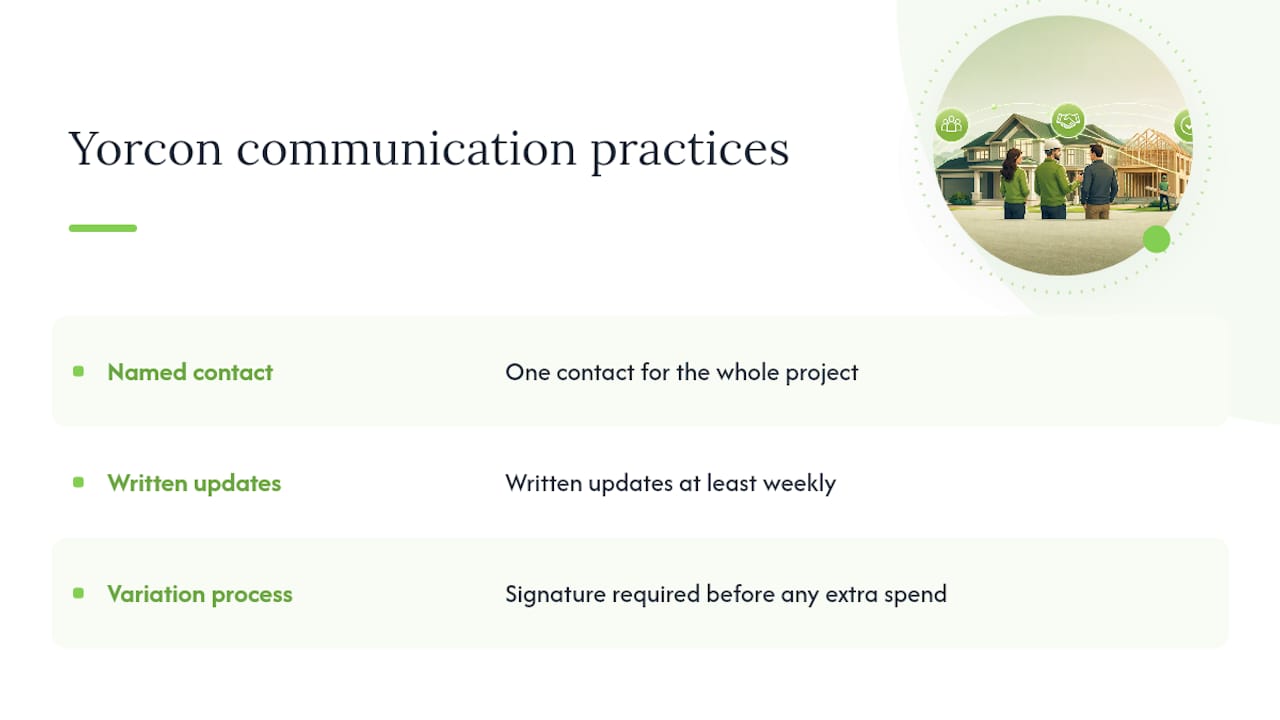
What this buys a homeowner isn’t just peace of mind, it’s practical protection. Fewer surprises during the build. A handover with no ambiguity about what’s finished and what’s outstanding. And when a defect does turn up, a documented history that makes rectification a formality rather than an argument.
— Matthew
How Yorcon helps clients set and keep communication expectations
Some builders go quiet for weeks and then blame the trades. Every project, whether it’s a home extension or a full design and build, runs through a single project manager, weekly written updates, and a documented variation process from day one.
That structure means clients can know who to call, what’s happening each week, and what changes might cost before they happen. If you’re weighing up a renovation or a new build and want a communication process you can actually rely on, get in touch with Yorcon to talk through your project and see what a properly managed build looks like from the first meeting.
Sources
Recommended


